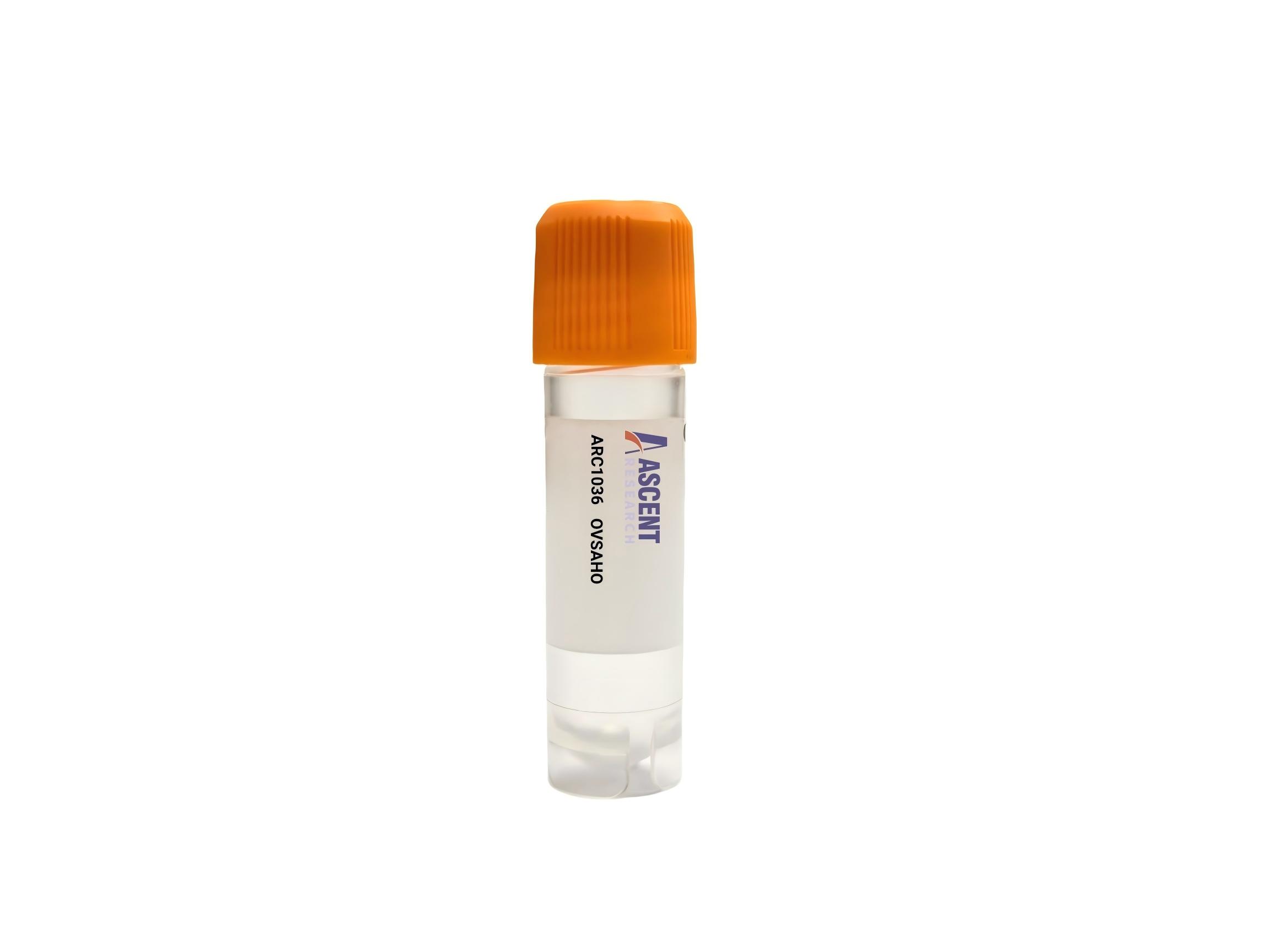
Cancer (Tumor) Cell Lines
Homo sapiens (Human)
Ovary
Adherent
OVKATE is a human ovarian cancer cell line established from the primary ovarian tumor of a 40-year-old female with serous papillary adenocarcinoma. At the time of establishment, OVKATE cells were tumorigenic in nude mice after both Intraperitoneal and subcutaneous (s.c.) transplantation. However, more recent studies have shown that OVKATE forms only after subcutaneous implantation[1]. The cells harbor an R282W mutation in the TP53 gene, resulting in a loss of TP53 function. OVKATE cells have been also reported to be resistant to platinum-based agents[2].
OVKATE is a significant cancer cell model of primary high-grade serous adenocarcinoma (HGSOC). The generation of xenograft models OVKATE enables a deeper understanding and preclinical drug development for ovarian cancer research.
[1] A. K. Mitra et al., “In vivo tumor growth of high-grade serous ovarian cancer cell lines,” Gynecol. Oncol., vol. 138, no. 2, pp. 372–377, Aug. 2015, doi: 10.1016/j.ygyno.2015.05.040.
[2] S. Yamaguchi, Y. Maida, M. Yasukawa, T. Kato, M. Yoshida, and K. Masutomi, “...... Targets Human Telomerase Reverse Transcriptase in Ovarian Cancer Cells,” PLoS ONE, vol. 9, no. 11, p. e112438, Nov. 2014, doi: 10.1371/journal.pone.0112438.
 C6orf47 Knockout NCI-H1975 Polyclonal Cells
Cat. No. ARG31417
C6orf47 Knockout NCI-H1975 Polyclonal Cells
Cat. No. ARG31417
 Human Synovial Fibroblast Culture Medium - 2
Cat. No. ARM1040
ATOX1 Knockout HGC-27 Polyclonal Cells
Cat. No. ARG29658
BCS1L Knockout SK-HEP-1 Polyclonal Cells
Cat. No. ARG32360
NME1 Knockout Raji Polyclonal Cells
Cat. No. ARG896
Human Synovial Fibroblast Culture Medium - 2
Cat. No. ARM1040
ATOX1 Knockout HGC-27 Polyclonal Cells
Cat. No. ARG29658
BCS1L Knockout SK-HEP-1 Polyclonal Cells
Cat. No. ARG32360
NME1 Knockout Raji Polyclonal Cells
Cat. No. ARG896
 Human Aortic Endothelial Cells
Cat. No. ARP0020
Human Aortic Endothelial Cells
Cat. No. ARP0020
Complete description is available upon request.