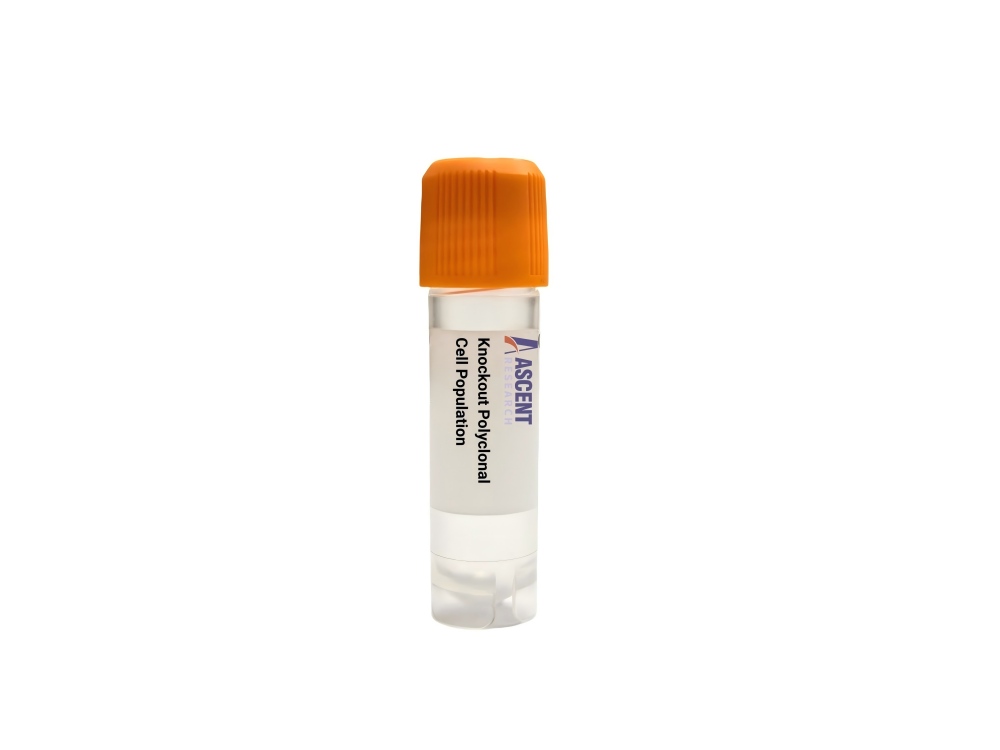
Polyclonal Cell Population
Homo sapiens (Human)
Bone
Suspension
The NR1H3 Knockout Raji Polyclonal Cells constitute a CRISPR/Cas9-edited population of Raji B lymphocytes with targeted disruption of the NR1H3 gene, which encodes the liver X receptor alpha (LXRα). This nuclear receptor, activated by oxysterols and heterodimerizing with RXR, transcriptionally regulates key cholesterol efflux proteins (ABCA1, ABCG1) and lipogenic genes (SREBP1c) while suppressing inflammatory NF-κB pathways. With a host cell background of EBV-transformed Burkitt’s lymphoma B cells crucial for humoral immunity, this model enables dissection of LXRα functions in lipid homeostasis, immune cell signaling, and disease contexts such as atherosclerosis, autoimmunity, and lymphomagenesis. Applications include cholesterol efflux assays, RT-qPCR, luciferase reporter, western blotting, and lipid raft analysis.
 NHLRC3 Knockout NCI-H1975 Polyclonal Cells
Cat. No. ARG16396
CDKN2C Knockout A549 Polyclonal Cells
Cat. No. ARG10716
ITGB2 Knockout Hela Polyclonal Cells
Cat. No. ARG26296
AMBRA1 Knockout huh-7 Polyclonal Cells
Cat. No. ARG27881
NFKBIA Knockout CaSki Polyclonal Cells
Cat. No. ARG9891
EPCAM Knockout 786-O Polyclonal Cells
Cat. No. ARG5369
NHLRC3 Knockout NCI-H1975 Polyclonal Cells
Cat. No. ARG16396
CDKN2C Knockout A549 Polyclonal Cells
Cat. No. ARG10716
ITGB2 Knockout Hela Polyclonal Cells
Cat. No. ARG26296
AMBRA1 Knockout huh-7 Polyclonal Cells
Cat. No. ARG27881
NFKBIA Knockout CaSki Polyclonal Cells
Cat. No. ARG9891
EPCAM Knockout 786-O Polyclonal Cells
Cat. No. ARG5369
“The NR1H3 Knockout Raji Polyclonal Cells are a CRISPR/Cas9-edited polyclonal knockout cell population derived from the Raji B lymphocyte line. This product enables the study of loss-of-function effects of the NR1H3 gene (encoding LXRα) through targeted gene disruption. The polyclonal nature provides a heterogeneous population representing various editing outcomes, allowing researchers to assess averaged phenotypic consequences in a cellular context relevant to humoral immunity and lipid biology.
Raji cells are a well-established human B lymphocyte model originating from a Burkitt’s lymphoma patient, immortalized by Epstein-Barr virus (EBV) transformation. These cells constitutively engage in processes critical to adaptive immunity, including antibody secretion, antigen presentation, and proliferation. Their transformed phenotype and ease of culture make them a robust platform for investigating molecular mechanisms in lymphomagenesis, immune signaling, and lipid metabolism within B cells.
NR1H3 encodes the nuclear receptor LXRα, which functions as a ligand-activated transcription factor pivotal in maintaining cholesterol and lipid homeostasis. LXRα is activated by endogenous oxysterols such as 22(R)-hydroxycholesterol and 24(S)-hydroxycholesterol, and it heterodimerizes with retinoid X receptor (RXR) to bind LXR response elements in target gene promoters. Key downstream targets include ATP-binding cassette transporters ABCA1 and ABCG1, which promote cholesterol efflux; apolipoprotein E (ApoE); and lipogenic genes sterol regulatory element-binding protein 1c (SREBP1c) and fatty acid synthase (FASN). LXRα also transrepresses inflammatory mediators via inhibition of NF-κB signaling, interacting with corepressors like SMRT and NCoR, and coactivators such as SRC-1 and PGC1α to modulate gene expression in response to cellular lipid status.
In Raji B cells, LXRα-mediated regulation of cholesterol flux and inflammatory responses is particularly relevant, given the importance of lipid raft formation in B cell receptor signaling and antigen presentation. Disruption of NR1H3 in this model eliminates LXRα-dependent control of lipid homeostasis, potentially altering membrane composition, immune receptor function, and cytokine production. This creates a valuable system to dissect the intersection of lipid metabolism and adaptive immunity, with implications for lymphoproliferative disorders, atherosclerosis, and autoimmune conditions where B cells play a pathogenic role.
Researchers can employ this polyclonal knockout population in diverse experimental paradigms, including cholesterol efflux assays to measure ABCA1/ABCG1 function, Oil Red O staining for neutral lipid accumulation, and RT-qPCR quantification of key LXRα targets (ABCA1, SREBP1c). Additional applications involve luciferase reporter gene assays to monitor LXRα transcriptional activity, western blotting for LXRα protein expression, and flow cytometry to assess lipid raft dynamics. These tools facilitate mechanistic studies of LXR signaling in B lymphocytes, high-throughput screening of LXR agonists/antagonists, and functional investigations into the roles of cholesterol metabolism in cancer and inflammatory diseases. For further details, please contact Ascent Research.”