Genome-edited Cells
Prostate
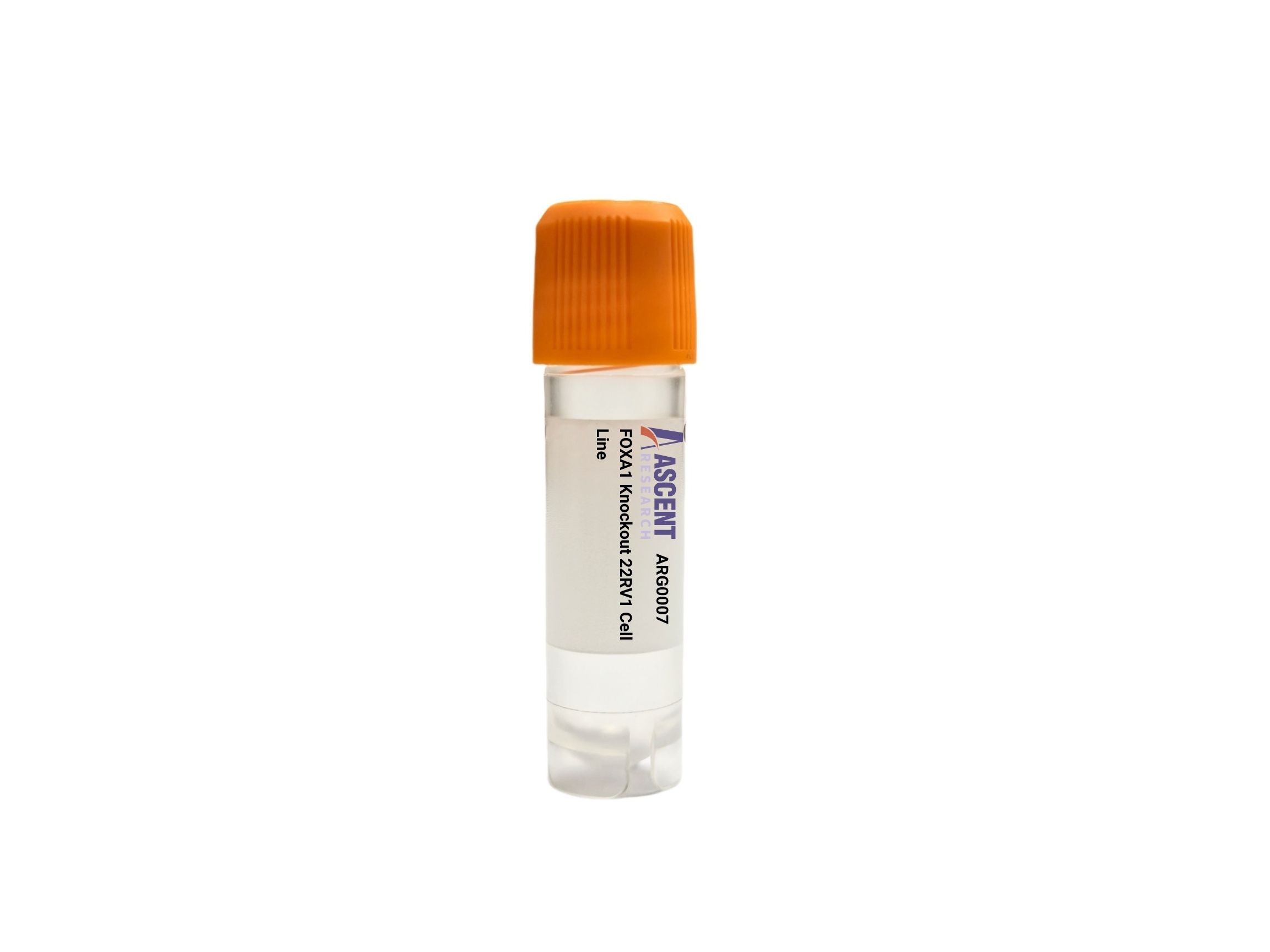
FOXA1 Knockout 22RV1 is a human CRISPR/Cas9-edited prostate carcinoma epithelial cell line with disruption of the pioneer transcription factor FOXA1 in an androgen-responsive, castration-resistant prostate cancer model. In 22RV1 cells, FOXA1 normally facilitates chromatin accessibility and AR occupancy at lineage-specific regulatory elements, acting with factors such as HOXB13, GATA2, EP300, and CREBBP to regulate androgen-responsive genes including KLK3, TMPRSS2, and FKBP5. This model supports studies of AR cistrome remodeling, transcriptional reprogramming, chromatin accessibility, endocrine response, and drug sensitivity using RNA-seq, ChIP-seq, ATAC-seq, RT-qPCR, and phenotypic assays.
 DBT Knockout A2780 Polyclonal Cells
Cat. No. ARG18587
CGN Knockout NCI-H1975 Polyclonal Cells
Cat. No. ARG16778
PBX1 Knockout NCI-H1299 Polyclonal Cells
Cat. No. ARG17504
ACOT8 Knockout SK-HEP-1 Polyclonal Cells
Cat. No. ARG32074
CCL15 Knockout HAP1 Polyclonal Cells
Cat. No. ARG43162
CA5B Knockout Hela Polyclonal Cells
Cat. No. ARG41658
DBT Knockout A2780 Polyclonal Cells
Cat. No. ARG18587
CGN Knockout NCI-H1975 Polyclonal Cells
Cat. No. ARG16778
PBX1 Knockout NCI-H1299 Polyclonal Cells
Cat. No. ARG17504
ACOT8 Knockout SK-HEP-1 Polyclonal Cells
Cat. No. ARG32074
CCL15 Knockout HAP1 Polyclonal Cells
Cat. No. ARG43162
CA5B Knockout Hela Polyclonal Cells
Cat. No. ARG41658
The FOXA1 Knockout 22RV1 Cell Line is a human CRISPR/Cas9-engineered prostate carcinoma epithelial model in which the FOXA1 gene has been disrupted to eliminate functional FOXA1 expression. This stable in vitro knockout line is generated in the 22RV1 background, enabling targeted investigation of FOXA1-dependent transcriptional control in an androgen-responsive tumor context. Because FOXA1 is a central pioneer transcription factor in prostate epithelial biology, this model is suited for studies examining chromatin accessibility, steroid receptor-driven gene regulation, and transcriptional network reprogramming following loss of a key lineage-associated regulator.
22RV1 is a human prostate carcinoma cell line derived from a castration-resistant prostate cancer xenograft and is widely used as an experimental system for androgen receptor signaling. The line is particularly valuable for studying prostate cancer transcriptional regulation and therapy response because it expresses both full-length androgen receptor (AR) and constitutively active AR splice variants. As a tumor epithelial model with persistent androgen pathway relevance, 22RV1 supports investigation of disease mechanisms linked to castration resistance, endocrine therapy response, metastatic progression, and alterations in prostate lineage state.
FOXA1 functions as a pioneer forkhead transcription factor that binds compacted chromatin and increases accessibility at lineage-specific enhancers and promoters. In prostate cancer cells, FOXA1 facilitates AR chromatin occupancy and helps organize transcriptional programs downstream of androgens and AR. Its activity is regulated within networks involving NKX3-1, GATA2, epigenetic chromatin state, and broader pioneer factor circuitry. FOXA1 interacts with AR, HOXB13, GATA2, EP300, CREBBP, histones, and chromatin remodeling complexes to shape enhancer activity and transcriptional output. These regulatory interactions influence expression of androgen-responsive genes including KLK3, TMPRSS2, FKBP5, and NKX3-1, linking FOXA1 to androgen receptor signaling, steroid hormone receptor transcription, chromatin remodeling, and cell-cycle-associated programs relevant to prostate cancer and castration-resistant disease.
Within the 22RV1 background, FOXA1 loss provides a mechanistically informative system for examining how pioneer factor depletion alters AR cistrome organization and reprograms tumor cell identity. Because 22RV1 models androgen-responsive yet castration-resistant prostate cancer biology, FOXA1 disruption can be used to investigate how lineage-defining chromatin accessibility states support AR-dependent enhancer selection, how transcriptional dependencies shift after pioneer factor loss, and how these changes may influence growth behavior or therapeutic response in hormone-driven cancer cells.
This knockout cell line is applicable to western blotting and RT-qPCR for confirmation of FOXA1 loss and downstream target perturbation, including KLK3, TMPRSS2, FKBP5, and NKX3-1. RNA-seq can be used to define transcriptome-wide reprogramming, while ChIP-qPCR or ChIP-seq for AR, HOXB13, GATA2, EP300, or CREBBP can characterize altered chromatin occupancy. ATAC-seq is well suited to quantify changes in chromatin accessibility at prostate lineage enhancers. Additional use cases include immunofluorescence and co-immunoprecipitation to examine nuclear regulatory complexes, reporter assays for androgen-responsive transcription, and cell proliferation, colony formation, apoptosis, or drug sensitivity studies to assess FOXA1-dependent phenotypes during endocrine response or pathway-targeted treatment. Researchers may contact Ascent Research for additional technical information, product details, or related gene-edited cell models.