Genome-edited Cells
Prostate
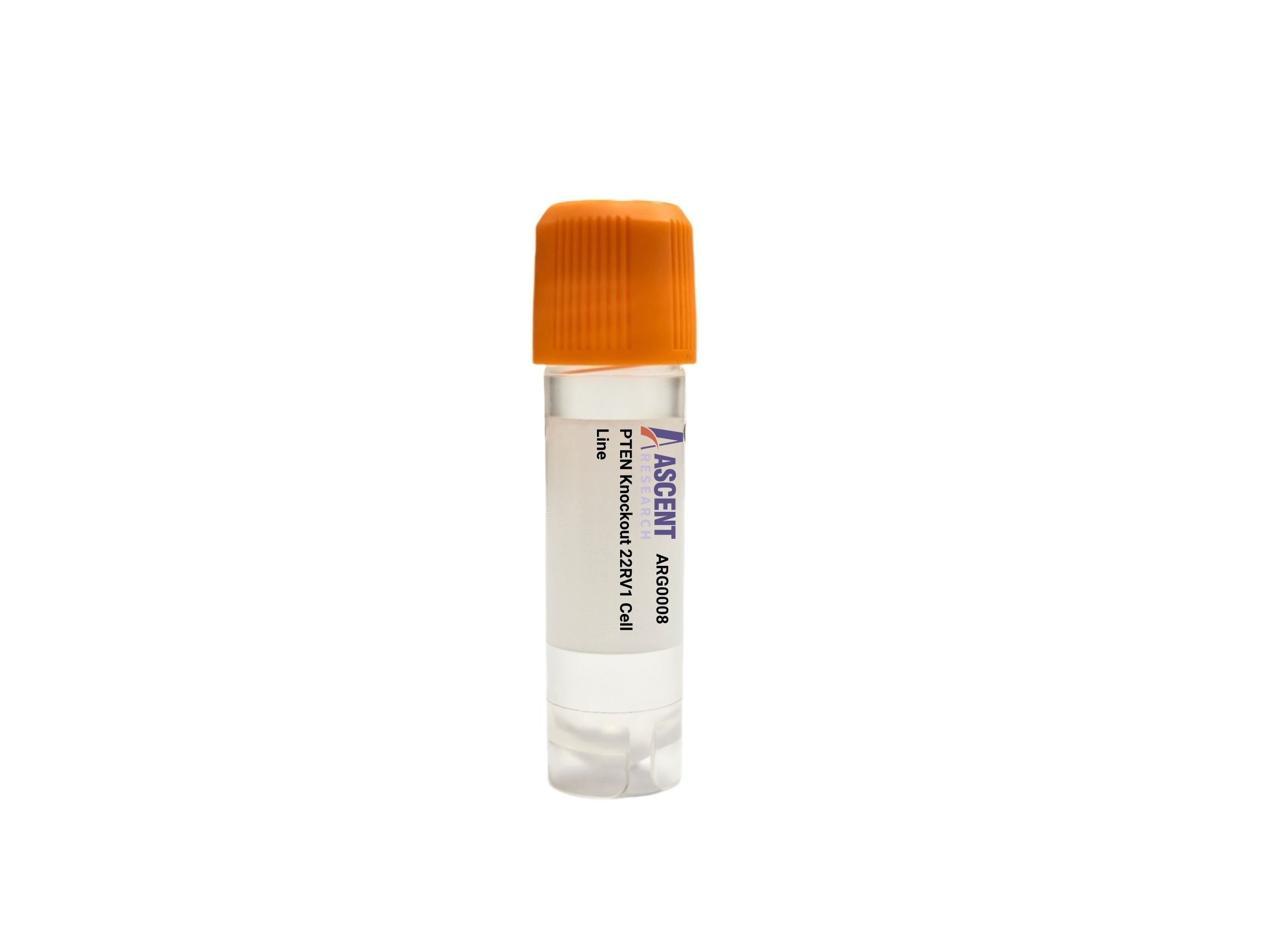
PTEN Knockout 22RV1 is a CRISPR/Cas9-engineered human prostate carcinoma epithelial cell line with disruption of the PTEN tumor suppressor in an androgen-responsive 22RV1 background. PTEN normally converts PIP3 to PIP2 to restrain PDPK1-AKT and MTOR signaling downstream of receptors such as EGFR and IGF1R. This model is useful for studying PI3K-AKT-mTOR pathway activation, androgen receptor and PI3K crosstalk, tumor suppressor loss, therapy resistance, and prostate cancer cell proliferation, survival, migration, and drug response using assays including western blotting, phospho-AKT/phospho-S6 analysis, RNA-seq, apoptosis, and invasion assays.
 MSN Knockout K562 Polyclonal Cells
Cat. No. ARG19356
LENG9 Knockout jurkat Polyclonal Cells
Cat. No. ARG12789
HSPBP1 Knockout AGS Polyclonal Cells
Cat. No. ARG26989
IGF2R Knockout HT29 Polyclonal Cells
Cat. No. ARG33425
CDK8 Knockout HEK293T Polyclonal Cells
Cat. No. ARG4184
DHRS4 Knockout AGS Polyclonal Cells
Cat. No. ARG2458
MSN Knockout K562 Polyclonal Cells
Cat. No. ARG19356
LENG9 Knockout jurkat Polyclonal Cells
Cat. No. ARG12789
HSPBP1 Knockout AGS Polyclonal Cells
Cat. No. ARG26989
IGF2R Knockout HT29 Polyclonal Cells
Cat. No. ARG33425
CDK8 Knockout HEK293T Polyclonal Cells
Cat. No. ARG4184
DHRS4 Knockout AGS Polyclonal Cells
Cat. No. ARG2458
The PTEN Knockout 22RV1 Cell Line is a CRISPR/Cas9-engineered human prostate carcinoma epithelial cell model in which the PTEN gene has been disrupted to eliminate functional PTEN expression. This gene-edited derivative of 22RV1 provides a stable in vitro system for investigating the consequences of tumor suppressor loss in an androgen-responsive prostate cancer background. The model is intended for mechanistic studies of phosphoinositide signaling, survival and growth control, and pathway dependencies relevant to cancer biology and therapeutic response.
22RV1 is a well-established human prostate carcinoma cell line broadly used in studies of prostate cancer signaling, androgen receptor activity, tumor growth, and treatment response. As a tumor epithelial model, it is particularly useful for examining signaling networks that influence proliferation, survival, transcriptional output, and adaptation to therapeutic pressure in prostate cancer cells. Its relevance to androgen-responsive disease biology also makes it suitable for investigating crosstalk between oncogenic kinase pathways and androgen-regulated programs, including contexts relevant to advanced and castration-resistant prostate cancer research.
PTEN encodes a lipid and protein phosphatase that acts upstream of AKT by dephosphorylating PIP3 to PIP2, thereby opposing PI3K pathway activation downstream of receptors including EGFR, IGF1R, insulin receptor, PDGFR, FGFR, and ERBB2/HER2. Through suppression of PIP3 accumulation, PTEN limits membrane recruitment of PDPK1/PDK1 and AKT1/AKT2 and restrains signaling to MTOR complexes, including MTORC1 output through RPS6KB1/S6K and EIF4EBP1/4E-BP1. PTEN function is integrated with signaling components such as PIK3CA, PIK3CB, PIK3R1, TSC1-TSC2, RHEB, MAGI2, NHERF1/SLC9A3R1, TP53, and FAK/PTK2, and influences downstream effectors including FOXO1, FOXO3, GSK3B, BAD, CCND1, CDKN1B/p27, and BCL2 family survival signaling. Loss of PTEN is therefore directly relevant to tumor suppressor deficiency, therapy resistance, and malignancies including prostate, breast, endometrial, and brain cancers.
In the 22RV1 background, PTEN knockout creates a useful system for interrogating how reduced phosphatase-mediated control of PI3K-AKT-mTOR signaling reshapes androgen-responsive tumor cell behavior. This context is valuable for examining pathway compensation, survival signaling under growth factor stimulation, changes in FOXO-regulated programs, and signaling interactions linking receptor tyrosine kinases, PI3K isoforms, AKT, and mTOR pathway nodes. The model also supports analysis of how PTEN loss may alter migration- and adhesion-associated signaling connected to focal adhesion regulators such as FAK/PTK2.
This cell line can be applied in western blot and phospho-signaling studies to monitor AKT, S6K, and 4E-BP1 pathway activation; in RT-qPCR or RNA-seq workflows to profile transcriptional consequences of PTEN loss; and in immunofluorescence or flow cytometry assays to evaluate signaling heterogeneity, cell-state changes, or apoptosis. It is also suitable for proliferation, colony formation, migration, invasion, and metabolic assays, as well as drug sensitivity experiments designed to assess responses to PI3K, AKT, mTOR, receptor tyrosine kinase, or combination therapies in a prostate cancer setting. Additional mechanistic studies may include co-immunoprecipitation or reporter assays to examine pathway crosstalk and regulatory dependencies. Researchers may contact Ascent Research for additional technical information, product details, or related gene-edited cell models.