Genome-edited Cells
Lung
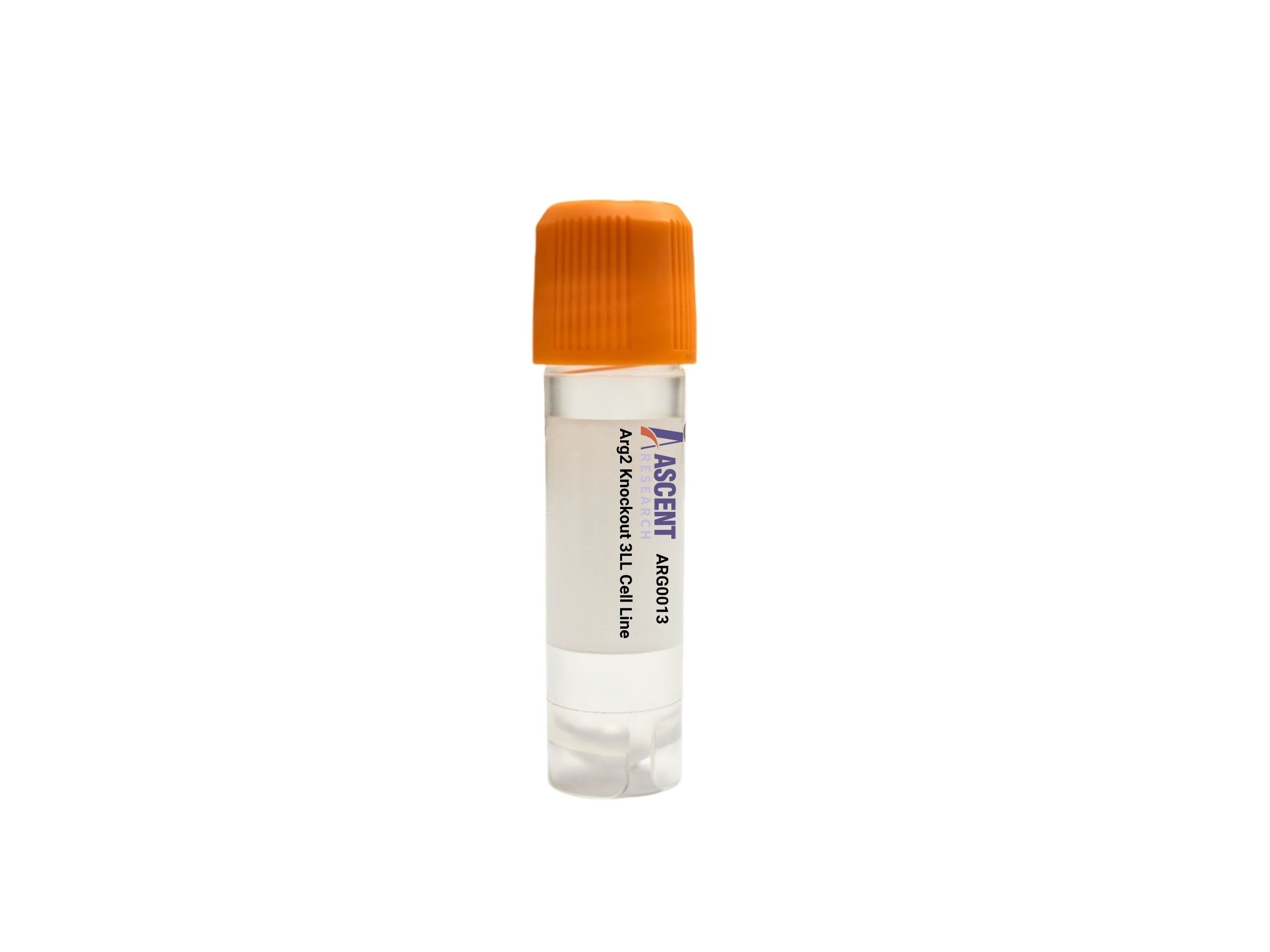
Arg2 Knockout 3LL is a CRISPR/Cas9-edited mouse Lewis lung carcinoma cell line with disruption of the mitochondrial arginase 2 gene. In the syngeneic 3LL tumor background, this model enables analysis of L-arginine metabolism, nitric oxide axis regulation, and downstream effects on ornithine-dependent polyamine and proline pathways. ARG2 functions within networks involving NOS2, ASS1, ASL, ODC1, SLC7A1, HIF1A, and mTOR, making this cell line useful for studies of tumor immunometabolism, hypoxic stress adaptation, metastasis-related phenotypes, mitochondrial function, and therapeutic response using metabolomics, Seahorse assays, RNA-seq, and functional phenotyping.
 OTUD7B Knockout NCI-H1975 Polyclonal Cells
Cat. No. ARG16320
OTUD7B Knockout NCI-H1975 Polyclonal Cells
Cat. No. ARG16320
 Human Bladder Epithelial Cell Culture Medium
Cat. No. ARM1007
HAVCR1 Knockout CaSki Polyclonal Cells
Cat. No. ARG35927
CCBE1 Knockout HAP1 Polyclonal Cells
Cat. No. ARG42868
CAMSAP3 Knockout MES-OV Polyclonal Cells
Cat. No. ARG42101
EPHA3 Knockout HCT116 Polyclonal Cells
Cat. No. ARG7293
Human Bladder Epithelial Cell Culture Medium
Cat. No. ARM1007
HAVCR1 Knockout CaSki Polyclonal Cells
Cat. No. ARG35927
CCBE1 Knockout HAP1 Polyclonal Cells
Cat. No. ARG42868
CAMSAP3 Knockout MES-OV Polyclonal Cells
Cat. No. ARG42101
EPHA3 Knockout HCT116 Polyclonal Cells
Cat. No. ARG7293
The Arg2 Knockout 3LL Cell Line is a CRISPR/Cas9-engineered murine tumor cell model in which the Arg2 gene has been disrupted to eliminate functional arginase 2 expression. This stable knockout line is generated in 3LL cells, a Lewis lung carcinoma cell line of mouse origin, and provides an in vitro system for investigating the consequences of ARG2 loss in a tumor epithelial-like background. The model is particularly relevant for studies of cancer cell metabolism, tumor progression, and tumor?Cimmune crosstalk in settings where L-arginine utilization influences cellular behavior.
3LL (LLC) is a widely used syngeneic murine lung carcinoma model derived from Lewis lung carcinoma and commonly studied in C57BL/6-compatible experimental systems. Because this host cell line supports investigations of lung tumor growth, metastatic dissemination, immunometabolism, and therapeutic response, it is frequently used to examine how tumor-intrinsic metabolic programs shape disease biology. As a transplantable and experimentally tractable carcinoma model, 3LL is useful for linking defined genetic perturbations to proliferation, survival, migration, invasion, and interactions with the inflammatory and immune microenvironment.
ARG2 encodes mitochondrial arginase 2, which hydrolyzes L-arginine to L-ornithine and urea and thereby acts upstream of multiple metabolic outputs. In tumor cells, ARG2 regulates intracellular arginine availability and influences the nitric oxide/L-arginine axis through metabolic competition with NOS2 and NOS3. Its activity also provides ornithine substrate for ODC1-dependent polyamine biosynthesis and can intersect with OAT-mediated proline metabolism. ARG2 function is regulated by hypoxia, HIF1A, inflammatory cytokines, oxidative stress, nutrient status, mitochondrial stress, and broader tumor microenvironmental cues. Within this network, ARG2 interfaces with ASS1, ASL, and the arginine transporter SLC7A1/CAT1, while pathway context includes ARG1, MYC, and mTOR, all of which contribute to metabolic reprogramming, stress adaptation, and cancer immunometabolism.
Loss of Arg2 in 3LL cells creates a targeted system for defining how mitochondrial arginine catabolism contributes to lung carcinoma phenotypes and tumor-associated metabolic adaptation. In this host-cell context, Arg2 disruption may be used to study changes in arginine dependency, nitric oxide bioavailability, mitochondrial respiration, and redox homeostasis under basal conditions or during hypoxic and inflammatory stress. The model is also suitable for interrogating how tumor-intrinsic arginine handling influences phenotypes linked to immunosuppression, metastasis, and treatment response.
This knockout cell line can support mechanistic studies using CRISPR genotyping, RT-qPCR, and western blotting to confirm target disruption and expression changes in related pathway components such as ASS1, ODC1, NOS2, or HIF1A-responsive programs. Functional characterization may include arginase activity assays, LC-MS metabolomics, direct quantification of L-arginine and ornithine, nitric oxide assays, and Seahorse-based analysis of mitochondrial respiration and glycolytic adaptation. Researchers can further pair the model with RNA-seq, flow cytometry, proliferation and apoptosis assays, migration/invasion assays, and drug sensitivity studies to examine metabolic stress responses, combination treatment effects, and tumor?Cimmune interaction mechanisms in a syngeneic lung cancer setting. Researchers may contact Ascent Research for additional technical information, product details, or related gene-edited cell models.