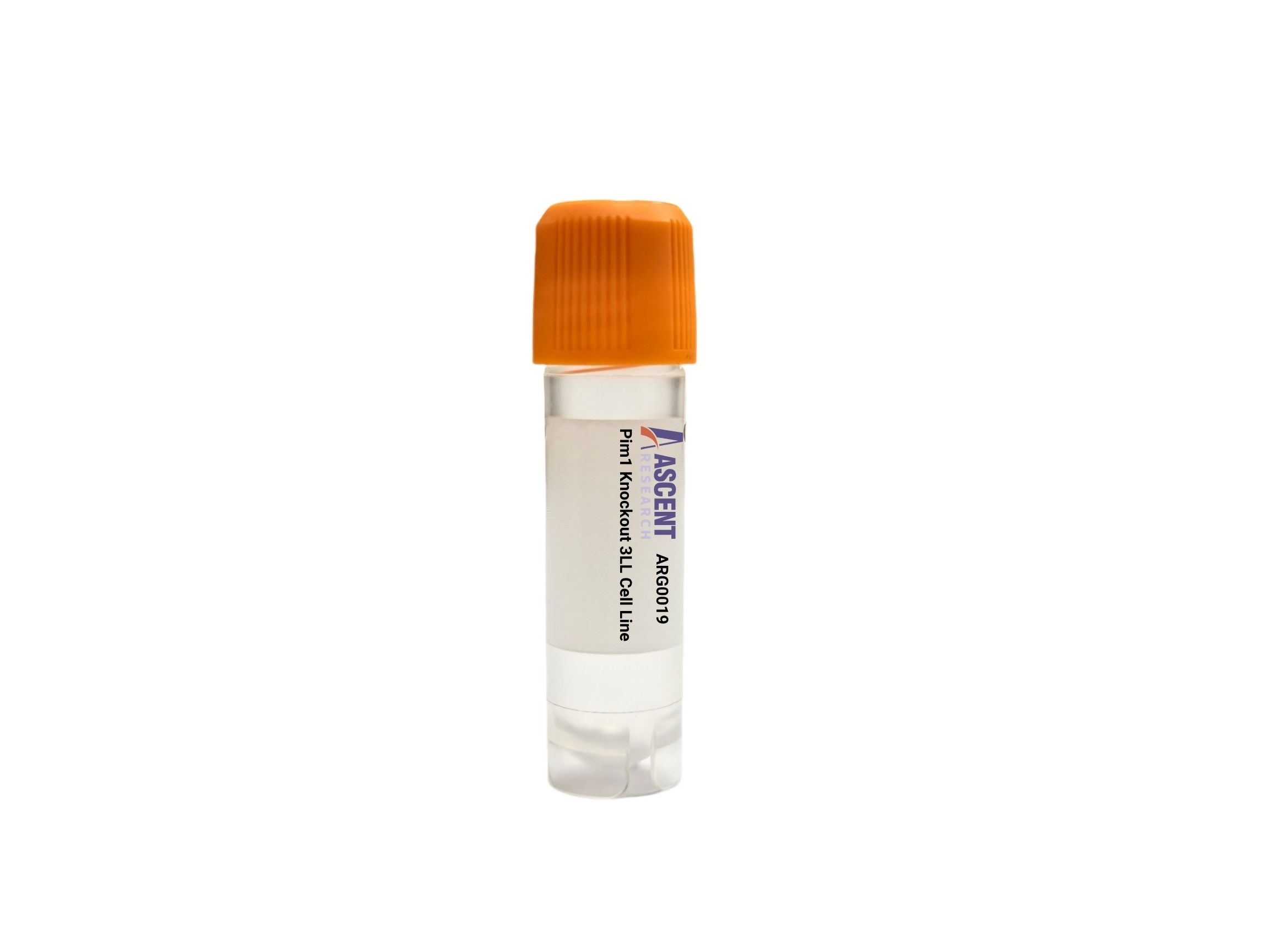
Genome-edited Cells
Lung
Pim1 Knockout 3LL is a CRISPR/Cas9-edited mouse Lewis lung carcinoma cell line with disruption of the Pim1 kinase gene in a 3LL tumor epithelial-like background. 3LL is widely used for studies of lung carcinoma growth, metastasis, and immuno-oncology. PIM1 functions downstream of cytokine and growth factor signaling, including JAK2-STAT3/STAT5 and MYC-linked programs, and regulates substrates such as BAD and EIF4EBP1 involved in survival, cell-cycle progression, and translation. This model supports mechanistic studies of tumor signaling, apoptosis, proliferation, migration, cytokine responses, and drug sensitivity using assays such as western blotting, RNA-seq, flow cytometry, and invasion assays.
 CARD16 Knockout K562 Polyclonal Cells
Cat. No. ARG20393
DAXX Knockout HGC-27 Polyclonal Cells
Cat. No. ARG18208
MAPK4 Knockout Lovo Polyclonal Cells
Cat. No. ARG11708
AP4B1 Knockout SK-HEP-1 Polyclonal Cells
Cat. No. ARG32203
DLAT Knockout jurkat Polyclonal Cells
Cat. No. ARG38867
CARD16 Knockout K562 Polyclonal Cells
Cat. No. ARG20393
DAXX Knockout HGC-27 Polyclonal Cells
Cat. No. ARG18208
MAPK4 Knockout Lovo Polyclonal Cells
Cat. No. ARG11708
AP4B1 Knockout SK-HEP-1 Polyclonal Cells
Cat. No. ARG32203
DLAT Knockout jurkat Polyclonal Cells
Cat. No. ARG38867
 Rat Retinal Microvascular Endothelial Cell Medium
Cat. No. ARM0393
Rat Retinal Microvascular Endothelial Cell Medium
Cat. No. ARM0393
The Pim1 Knockout 3LL Cell Line is a CRISPR/Cas9-engineered mouse tumor cell model in which the Pim1 gene has been disrupted to eliminate functional PIM1 expression. This stable edited line is generated in 3LL cells, a Lewis lung carcinoma host background, and provides an in vitro system for examining the consequences of PIM1 loss in a tumor epithelial-like cancer context. Because PIM1 encodes a constitutively active serine/threonine kinase with established roles in survival, proliferation, and translational control, this knockout model is suited for mechanistic studies of oncogenic signaling and pathway dependence in murine lung carcinoma cells.
3LL is a murine syngeneic lung carcinoma cell line derived from C57BL/6 mouse and is widely used in studies of tumor growth, metastatic dissemination, and immuno-oncology. As a Lewis lung carcinoma model, 3LL is experimentally valuable for investigating cancer cell-intrinsic programs that influence proliferation, migration, invasion, and tumor progression. Its broad use in lung cancer biology and metastasis research makes it a relevant host for dissecting kinase-regulated phenotypes that contribute to aggressive tumor behavior and for evaluating signaling responses in a mouse cancer background that is compatible with syngeneic research workflows.
PIM1 functions downstream of cytokine- and growth factor-responsive pathways and is induced primarily through JAK/STAT signaling. Upstream regulators include JAK2, STAT3, STAT5, IL6, prolactin receptor signaling, interferons, hypoxia-inducible signals, and MYC-associated transcriptional programs. At the effector level, PIM1 phosphorylates or functionally regulates substrates linked to apoptosis resistance, cell-cycle progression, and cap-dependent translation, including BAD, p21/CDKN1A, p27/CDKN1B, EIF4EBP1, and EIF4B. PIM1 also interacts with MYC, AKT, mTOR pathway components, PP2A, CDC25A, RUNX family proteins, and survival-associated BCL2 family outputs, and has been associated with regulation of CXCR4 and tumor progression-related behaviors. Through these relationships, PIM1 contributes to JAK/STAT, PI3K/AKT/mTOR, MYC-driven, and cell-cycle regulatory networks relevant to lung cancer, therapy resistance, and metastasis.
Disrupting Pim1 in 3LL cells provides a focused model to examine how loss of this kinase alters survival signaling and oncogenic growth responses in a lung carcinoma background. In this setting, researchers can investigate how PIM1 deficiency influences cytokine-driven signaling downstream of IL6-JAK2-STAT3/STAT5, modifies translational control linked to EIF4EBP1 and EIF4B, or affects apoptosis and cell-cycle checkpoints through BAD, CDKN1A, and CDKN1B. The model is also useful for studying pathway cooperativity with MYC, AKT1, and mTOR, as well as mechanisms related to metastatic potential and stress adaptation.
This knockout cell line can be applied in western blot and phospho-signaling studies to assess pathway remodeling, in RT-qPCR and RNA-seq experiments to profile transcriptional consequences of Pim1 loss, and in apoptosis, proliferation, and colony formation assays to quantify effects on growth and survival. It is also appropriate for flow cytometric cell-cycle profiling, migration and invasion assays, co-immunoprecipitation studies of signaling interactions, immunofluorescence-based localization analyses, and drug sensitivity or combination therapy experiments designed to probe dependence on JAK/STAT, PI3K/AKT/mTOR, or MYC-associated signaling. Researchers may contact Ascent Research for additional technical information, product details, or related gene-edited cell models.