Genome-edited Cells
Lung
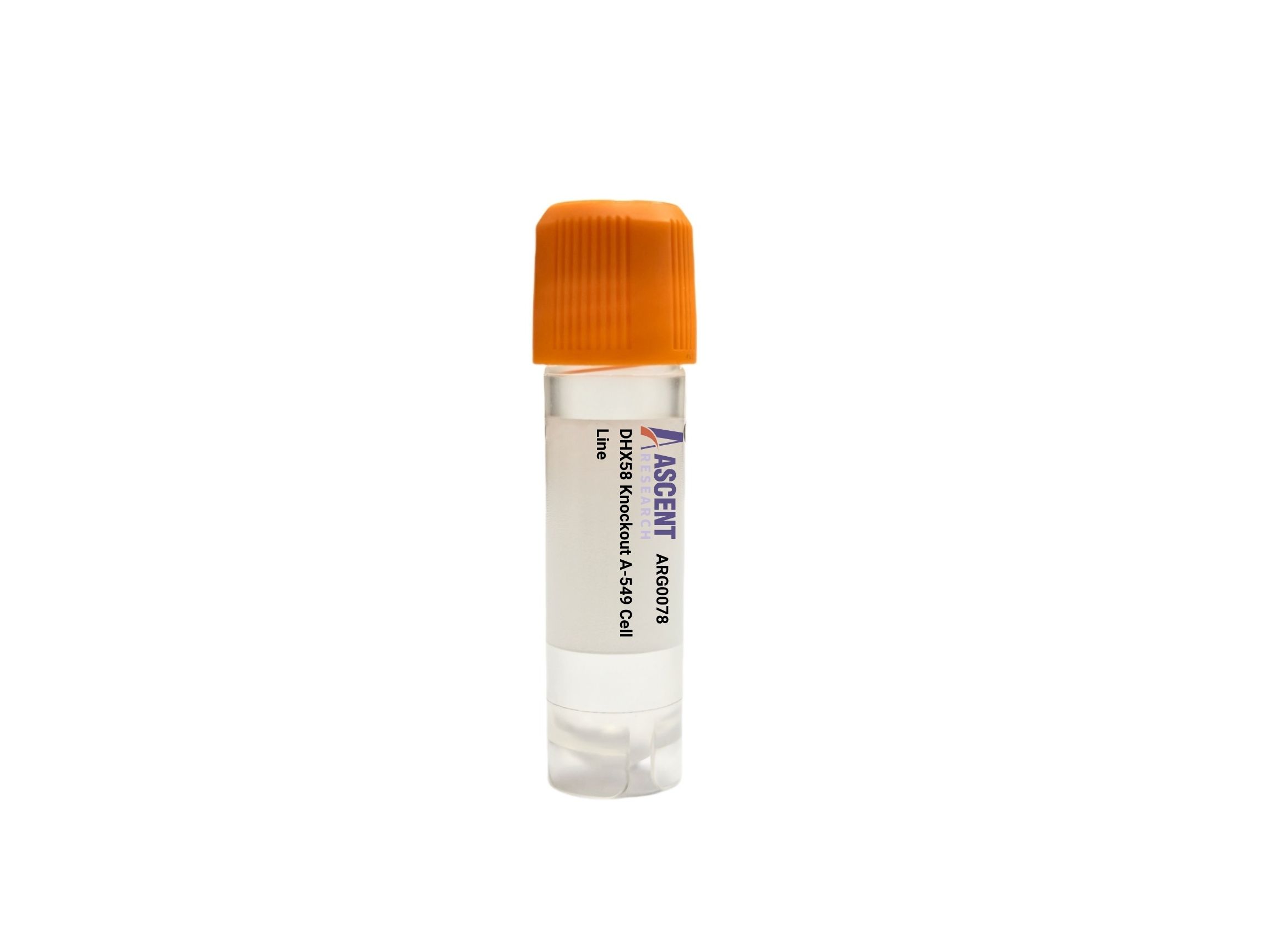
DHX58 Knockout A-549 Cell Line is a human CRISPR/Cas9-edited alveolar epithelial carcinoma model with disruption of DHX58/LGP2, a cytosolic viral RNA sensor that regulates DDX58/RIG-I- and IFIH1/MDA5-dependent signaling. In the A-549 respiratory epithelial background, this knockout supports analysis of MAVS-TBK1-IRF3/IRF7 and NF-kB pathway regulation, interferon induction, and downstream targets including IFNB1, IFNL1, CXCL10, and ISG15. It is well suited for studies of respiratory viral infection, interferon dysregulation, and antiviral immunity using RT-qPCR, RNA-seq, reporter assays, poly(I:C) stimulation, viral infection assays, and phospho-signaling or protein-interaction analyses.
 Chchd6 Knockout Hela Polyclonal Cells
Cat. No. ARG8162
LMAN2 Knockout jurkat Polyclonal Cells
Cat. No. ARG13004
CTNNB1 Knockout 143B Polyclonal Cells
Cat. No. ARG11799
ALOX12 Knockout A549 Polyclonal Cells
Cat. No. ARG35601
ALPP Knockout DLD-1 Polyclonal Cells
Cat. No. ARG35508
Chchd6 Knockout Hela Polyclonal Cells
Cat. No. ARG8162
LMAN2 Knockout jurkat Polyclonal Cells
Cat. No. ARG13004
CTNNB1 Knockout 143B Polyclonal Cells
Cat. No. ARG11799
ALOX12 Knockout A549 Polyclonal Cells
Cat. No. ARG35601
ALPP Knockout DLD-1 Polyclonal Cells
Cat. No. ARG35508
 Rat Adrenal Cortical Cell Medium
Cat. No. ARM0278
Rat Adrenal Cortical Cell Medium
Cat. No. ARM0278
The DHX58 Knockout A-549 Cell Line is a human CRISPR/Cas9-engineered cell model in which the DHX58 gene has been disrupted to eliminate functional DHX58/LGP2 expression. This stable knockout line is generated in A-549 cells, a human alveolar epithelial carcinoma cell line, and provides an in vitro system for investigating the contribution of DHX58 to cytosolic viral RNA sensing, interferon induction, and downstream innate immune signaling. The model is designed for mechanistic studies requiring a defined loss-of-function background in a respiratory epithelial context.
A-549 cells are derived from human lung adenocarcinoma and are widely used as an epithelial barrier-forming model for respiratory biology. Because these cells retain innate immune and antiviral signaling competence, they are frequently used to study viral infection, interferon responses, inflammatory signaling, and cancer-associated signaling networks in the lung epithelium. Their relevance to airway and alveolar biology makes them particularly useful for host-pathogen interaction studies involving influenza virus, SARS-CoV-2, and other respiratory viruses, as well as for investigations of epithelial-intrinsic responses to nucleic acid stimuli and immunomodulatory agents.
DHX58 encodes LGP2, a DExH-box RNA helicase-like member of the RIG-I-like receptor family that binds viral RNA and regulates signaling mediated by DDX58/RIG-I and IFIH1/MDA5. In response to upstream stimuli such as viral dsRNA, 5′-triphosphate RNA, or poly(I:C), DHX58 functions within the cytosolic RNA sensing network that converges on MAVS and downstream kinases including TBK1 and IKBKE. These signaling events promote activation of IRF3, IRF7, and NF-kB, thereby influencing transcription of IFNB1, IFNL1, CXCL10, CCL5, ISG15, IFIT1, MX1, and OAS1 and contributing to antiviral state induction. DHX58 is also linked to interferon-amplified signaling through IFNAR-JAK-STAT pathways and intersects with factors such as TRIM25 and ISG15 that shape RIG-I-like receptor function.
Loss of DHX58 in A-549 cells provides a relevant system for defining how this regulator modulates antiviral signaling in lung epithelial cells, where RNA virus detection and interferon output are central determinants of host response. In this background, DHX58 disruption can be used to examine pathway dependency within the RIG-I/MDA5-MAVS axis, quantify changes in IRF3/IRF7 or NF-kB activation, and characterize alterations in epithelial antiviral transcriptional programs that are relevant to respiratory infection, interferon dysregulation, innate immune disorders, and lung cancer biology.
This knockout cell line is suitable for RT-qPCR, western blotting, RNA-seq, interferon reporter assays, ELISA, flow cytometry, and phospho-signaling analyses following poly(I:C) stimulation or viral infection. It can be applied to compare induction of IFNB1, IFNL1, CXCL10, ISG15, IFIT1, MX1, and OAS1 between control and DHX58-deficient cells, to analyze MAVS-TBK1-IRF3 pathway engagement, or to assess viral replication and antiviral drug sensitivity in a defined epithelial host-factor model. Additional applications include co-immunoprecipitation and immunofluorescence studies of interactions among DHX58 pathway components, as well as functional dissection of RIG-I/MDA5 signaling during respiratory virus challenge. Researchers may contact Ascent Research for additional technical information, product details, or related gene-edited cell models.