Genome-edited Cells
Lung
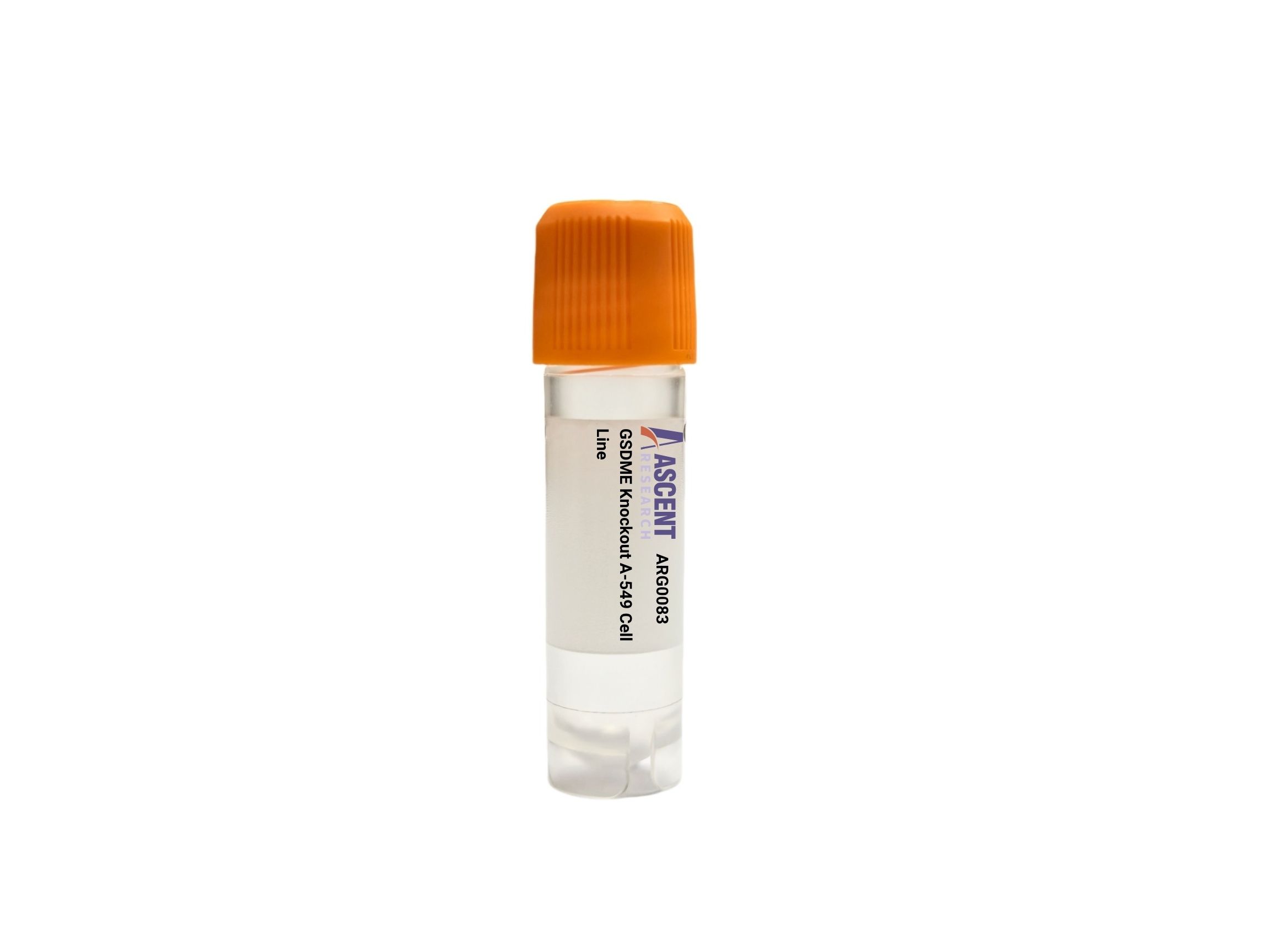
The GSDME Knockout A-549 Cell Line is a human CRISPR/Cas9-edited lung adenocarcinoma model generated in the alveolar basal epithelial A-549 background. GSDME normally functions downstream of caspase-3 to form membrane pores after apoptotic cleavage, linking BAX/BAK- and APAF1/CASP9-dependent apoptosis to secondary necrosis or pyroptosis-like death, LDH release, ATP release, and HMGB1 release. This knockout model supports studies of the apoptosis-to-pyroptosis switch, chemotherapy response, immunogenic cell death, and cancer cell death resistance using assays such as western blotting, caspase-3/7 activity, Annexin V/PI staining, LDH release, live-cell imaging, and RNA-seq.
 Human CD4+/CD25+ Treg Cells
Cat. No. ARP1022
Human CD4+/CD25+ Treg Cells
Cat. No. ARP1022
 N4BP2L2 Knockout jurkat Polyclonal Cells
Cat. No. ARG12800
CEACAM7 Knockout 143B Polyclonal Cells
Cat. No. ARG11940
HOOK2 Knockout NCI-H1299 Polyclonal Cells
Cat. No. ARG30756
N4BP2L2 Knockout jurkat Polyclonal Cells
Cat. No. ARG12800
CEACAM7 Knockout 143B Polyclonal Cells
Cat. No. ARG11940
HOOK2 Knockout NCI-H1299 Polyclonal Cells
Cat. No. ARG30756
 Rat Spinal Cord Microvascular Endothelial Cell Medium
Cat. No. ARM0358
Rat Spinal Cord Microvascular Endothelial Cell Medium
Cat. No. ARM0358
 COLO 201
Cat. No. ARC0139
COLO 201
Cat. No. ARC0139
The GSDME Knockout A-549 Cell Line is a human CRISPR/Cas9-engineered knockout model in which the GSDME locus has been disrupted in the A-549 background to abolish functional gasdermin E expression. This stable edited cell line provides an in vitro system for investigating the consequences of GSDME loss in epithelial tumor cells. A-549 cells are derived from human alveolar basal epithelial adenocarcinoma and are commonly used to study cell death regulation, epithelial stress signaling, and anticancer responses in a non-small cell lung cancer context.
A-549 is a well-established lung adenocarcinoma model with epithelial characteristics and broad utility in cancer biology, toxicology, and drug-response studies. Because these cells are frequently used to examine intrinsic and extrinsic apoptotic signaling, oxidative stress responses, and chemotherapy-induced cytotoxicity, they provide a relevant host background for evaluating how a defined gene knockout alters death pathway execution. In lung cancer research, A-549 cells are particularly valuable for mechanistic studies of treatment sensitivity, survival signaling, and stress-induced loss of membrane integrity.
GSDME encodes gasdermin E, a pore-forming effector that functions downstream of caspase-3. Upon apoptotic signaling, caspase-3 cleaves GSDME to release an N-terminal fragment that oligomerizes in cellular membranes through interactions with phospholipids, leading to pore formation and membrane permeabilization. In this pathway, GSDME is activated downstream of BAX/BAK-mediated mitochondrial apoptosis, cytochrome c release, APAF1 apoptosome assembly, and caspase-9 activation, and it can also mediate signaling downstream of death receptor pathways involving FAS, FADD, CASP8, and TRAIL. GSDME-dependent membrane damage promotes cell swelling, lytic secondary necrosis or pyroptosis-like death, and release of LDH, ATP, and HMGB1, thereby linking apoptosis to inflammatory danger signaling and immunogenic cell death. Representative pathway components relevant to this biology include GSDME, CASP3, CASP9, APAF1, CYCS, BAX, BAK1, TP53, FAS, FADD, CASP8, and PARP1.
In the A-549 background, GSDME knockout enables direct analysis of the apoptosis-to-pyroptosis switch in a lung epithelial tumor model. Loss of GSDME is useful for distinguishing caspase-3-driven apoptotic execution from downstream membrane lysis, clarifying whether chemotherapeutic stress, reactive oxygen species, p53-dependent stress responses, or death receptor activation produce lytic versus non-lytic death phenotypes. This context is relevant to non-small cell lung cancer, lung adenocarcinoma biology, therapy resistance, and inflammation-associated tumor responses.
This model is suitable for mechanistic studies using western blotting or RT-qPCR to assess GSDME pathway expression, Sanger sequencing or amplicon NGS to confirm editing outcomes, and caspase-3/7 activity assays to quantify upstream apoptotic activation. Functional consequences of GSDME disruption can be examined by Annexin V/propidium iodide staining, LDH release, ATP release, HMGB1 release measurement, live-cell imaging, and immunofluorescence to separate apoptotic commitment from membrane permeabilization. The cell line is also applicable to drug sensitivity studies, clonogenic survival assays, cell viability assays, flow cytometry, and RNA-seq analyses aimed at defining chemotherapy response mechanisms, immunogenic cell death programs, and resistance-associated transcriptional changes in lung cancer cells. Researchers may contact Ascent Research for additional technical information, product details, or related gene-edited cell models.