Genome-edited Cells
Lung
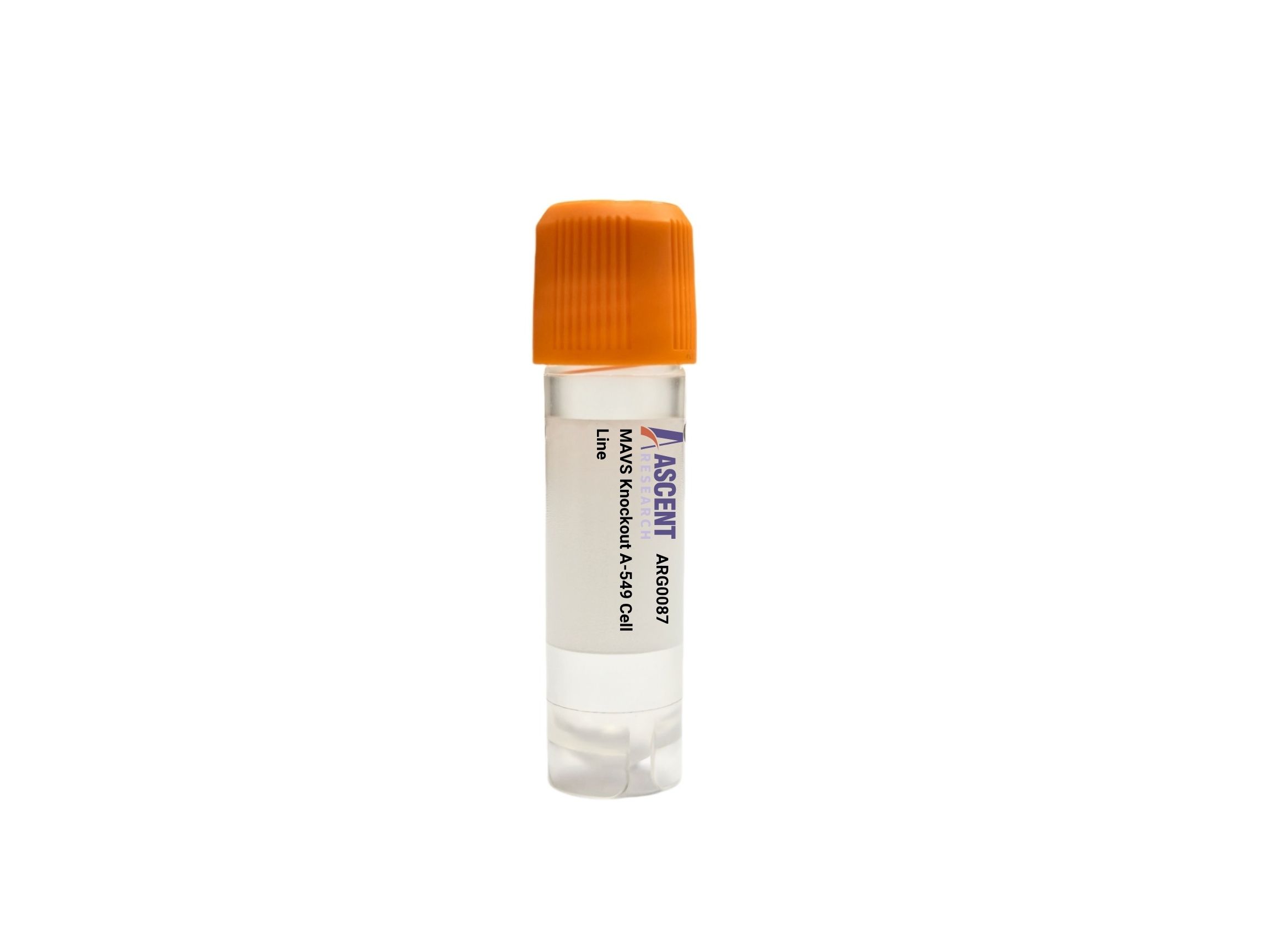
MAVS Knockout A-549 Cell Line is a human CRISPR/Cas9-edited lung adenocarcinoma epithelial model with disruption of MAVS, a key mitochondrial adaptor downstream of RIG-I/DDX58 and MDA5/IFIH1. In A-549 alveolar epithelial-like cells, MAVS normally mediates activation of TBK1, IKBKE, IRF3/IRF7, and NF-kappaB to induce IFNB1, IFNL1, CXCL10, and antiviral ISGs. This knockout model is useful for respiratory virus host-response studies, RIG-I-like receptor pathway dissection, interferon induction analysis, viral immune evasion research, and rescue or comparative signaling experiments using RT-qPCR, western blotting, ELISA, reporter assays, RNA-seq, and infection-based assays.
 CALR Knockout HAP1 Polyclonal Cells
Cat. No. ARG30155
CALML5 Knockout HAP1 Polyclonal Cells
Cat. No. ARG22233
LRCH2 Knockout Hela Polyclonal Cells
Cat. No. ARG8674
GNPTG Knockout NCI-H1975 Polyclonal Cells
Cat. No. ARG31533
ITGB3BP Knockout huh-7 Polyclonal Cells
Cat. No. ARG28428
MSRA Knockout 786-O Polyclonal Cells
Cat. No. ARG4809
CALR Knockout HAP1 Polyclonal Cells
Cat. No. ARG30155
CALML5 Knockout HAP1 Polyclonal Cells
Cat. No. ARG22233
LRCH2 Knockout Hela Polyclonal Cells
Cat. No. ARG8674
GNPTG Knockout NCI-H1975 Polyclonal Cells
Cat. No. ARG31533
ITGB3BP Knockout huh-7 Polyclonal Cells
Cat. No. ARG28428
MSRA Knockout 786-O Polyclonal Cells
Cat. No. ARG4809
MAVS Knockout A-549 Cell Line is a human CRISPR/Cas9-engineered knockout model in which the MAVS gene has been disrupted to eliminate functional mitochondrial antiviral signaling in a stable A-549 background. This product provides an in vitro system for investigating loss of MAVS-dependent innate immune signaling in a human lung epithelial context. A-549 cells are derived from lung adenocarcinoma epithelium and exhibit alveolar epithelial-like properties that make them broadly useful for studies of respiratory mucosal biology, antiviral defense, inflammatory signaling, and epithelial barrier-associated responses.
A-549 is widely used as a host model for respiratory virus infection and epithelial immune signaling because it captures key features of pulmonary epithelial biology relevant to interferon induction and inflammatory gene regulation. As a human alveolar basal epithelial carcinoma cell line, A-549 supports mechanistic studies of virus-host interaction, cytokine responses, and transcriptional remodeling in airway-relevant cells. It is frequently applied in influenza, RSV, and SARS-CoV-2 research, as well as in studies of inflammatory lung disease, cancer-associated immune signaling, and host determinants of antiviral susceptibility.
MAVS is a mitochondrial outer membrane adaptor that functions downstream of the cytosolic RNA sensors RIG-I/DDX58 and MDA5/IFIH1 following detection of viral dsRNA or 5′-triphosphate RNA. Activated RIG-I-like receptors signal through MAVS to recruit signaling complexes containing TRAF3, TRAF6, TBK1, IKBKE, and TANK, thereby promoting IRF3 phosphorylation, IRF7 activation, and NFKB1/RELA-dependent transcription. MAVS also interacts with factors including TOMM70, MFN1, MFN2, TRADD, FADD, CASP8, PCBP2, and NLRX1 that modulate mitochondrial antiviral signaling output. Through these pathways, MAVS acts upstream of IFNB1, IFNL1, CXCL10, CCL5, ISG15, IFIT1, and MX1, linking RNA virus sensing to type I and type III interferon responses and inflammatory gene induction.
In A-549 cells, knockout of MAVS is particularly informative because this epithelial background is extensively used to model innate immune responses at the respiratory barrier. Loss of MAVS enables direct assessment of pathway dependency downstream of DDX58 and IFIH1 and helps distinguish MAVS-mediated cytosolic RNA sensing from parallel antiviral or inflammatory signaling programs. This makes the model relevant for studying epithelial interferon defects, viral immune evasion strategies, altered NF-kappaB and IRF3/IRF7 signaling, and gene-regulatory consequences of impaired mitochondrial antiviral signaling in lung-derived cells.
This knockout cell line is suitable for comparative viral infection assays, pathway rescue experiments with MAVS re-expression, and mechanistic analyses of antiviral signaling using western blotting, RT-qPCR, RNA-seq, ELISA, luciferase reporters, immunofluorescence, co-immunoprecipitation, and flow cytometry. Researchers can use the model to quantify phospho-TBK1 and phospho-IRF3 responses, measure expression of IFNB1, IFNL1, CXCL10, ISG15, or IFIT1 after RNA virus infection or synthetic RNA stimulation, and evaluate how candidate therapeutics, innate immune agonists, or viral antagonists alter MAVS-dependent signaling outputs in respiratory epithelial cells. For additional technical information, product details, or related gene-edited cell models, researchers may contact Ascent Research.