Genome-edited Cells
Lung
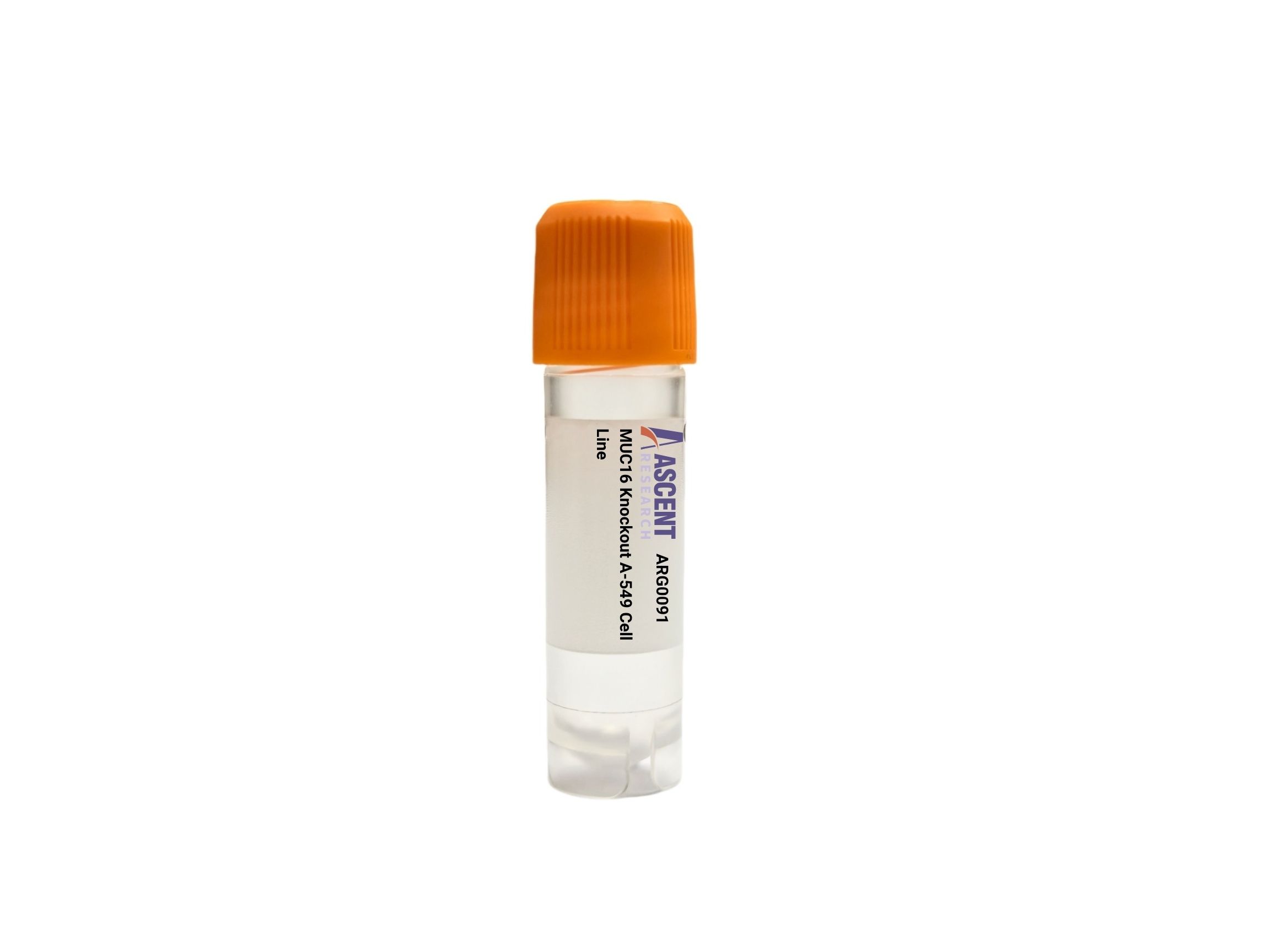
MUC16 Knockout A-549 is a CRISPR/Cas9-edited human lung alveolar epithelial adenocarcinoma cell line with disruption of the membrane-associated mucin gene MUC16. In the A-549 host context, this model supports analysis of epithelial glycocalyx biology, adhesion regulation, and tumor-associated signaling linked to EGFR, SRC/FAK, AKT, ERK1/2, and JAK2-STAT3 pathways. It is useful for studying mucin-dependent effects on migration, invasion, survival, chemoresistance, and epithelial-mesenchymal transition using assays such as western blotting, RT-qPCR, RNA-seq, immunofluorescence, flow cytometry, phospho-signaling analysis, and drug sensitivity testing.
 CRLF3 Knockout jurkat Polyclonal Cells
Cat. No. ARG12940
MAP3K12 Knockout HEK293 Polyclonal Cells
Cat. No. ARG12703
ANKS1A Knockout NCI-H1299 Polyclonal Cells
Cat. No. ARG30337
ACSL4 Knockout HCT116 Polyclonal Cells
Cat. No. ARG36011
LCOR Knockout HEK293T Polyclonal Cells
Cat. No. ARG3396
CRLF3 Knockout jurkat Polyclonal Cells
Cat. No. ARG12940
MAP3K12 Knockout HEK293 Polyclonal Cells
Cat. No. ARG12703
ANKS1A Knockout NCI-H1299 Polyclonal Cells
Cat. No. ARG30337
ACSL4 Knockout HCT116 Polyclonal Cells
Cat. No. ARG36011
LCOR Knockout HEK293T Polyclonal Cells
Cat. No. ARG3396
 NFS-60
Cat. No. ARC0666
NFS-60
Cat. No. ARC0666
The MUC16 Knockout A-549 Cell Line is a CRISPR/Cas9-engineered human cell model in which the MUC16 gene has been disrupted to eliminate functional gene expression. This stable knockout line is generated in A-549 cells, a human lung alveolar epithelial adenocarcinoma background that provides a relevant in vitro system for studying membrane-associated mucin biology in an epithelial tumor context. As MUC16 encodes the large cell-surface mucin CA125, this model is suited for interrogation of glycocalyx-associated signaling, epithelial surface organization, and cancer-related phenotypes linked to mucin loss.
A-549 cells are widely used as a pulmonary epithelial research platform because they retain epithelial characteristics and are applicable to studies of airway/alveolar barrier biology, secretory surface glycoproteins, host-pathogen interactions, and drug response. Their utility in lung adenocarcinoma research also makes them a practical background for examining oncogenic signaling, adhesion dynamics, and epithelial plasticity. In this setting, the host line offers a biologically relevant framework for investigating how loss of a membrane-tethered mucin influences epithelial architecture, surface protection, and tumor-associated signaling behavior.
MUC16 contributes to the apical glycocalyx and modulates lubrication, adhesion, and cell-surface signaling through its extensive extracellular mucin domain and membrane-proximal cytoplasmic region. Its expression is regulated by epithelial differentiation state, inflammatory cytokines, EGFR signaling, KRAS-MAPK activity, hypoxia-related pathways, and broader transcriptional or epigenetic control of mucin genes. At the signaling level, MUC16 has been linked to interactions with mesothelin, JAK2, SRC family kinases, focal adhesion kinase/PTK2, ERM proteins, and beta-catenin-associated adhesion complexes. These interactions can mediate signaling downstream of receptor tyrosine kinase networks including EGFR and ERBB2 and influence AKT1, MAPK1/MAPK3, and JAK2-STAT3 signaling outputs, with downstream consequences for ERK1/2 phosphorylation, focal adhesion remodeling, survival signaling, and epithelial-mesenchymal transition markers such as CDH1 and VIM.
In the A-549 background, MUC16 loss provides a useful model for defining how the epithelial glycocalyx contributes to lung tumor cell adhesion, motility, and pathway dependence. Because A-549 cells are commonly used to examine pulmonary epithelial signaling and therapeutic response, MUC16 knockout can help distinguish mucin-dependent from mucin-independent effects on SRC/FAK activity, PI3K-AKT and MAPK-ERK pathway engagement, JAK-STAT-associated signaling, and invasion-related phenotypes.
This cell line is suitable for mechanistic studies using western blotting and phospho-signaling analysis to assess AKT, ERK1/2, SRC, PTK2, JAK2, or STAT3 pathway changes; RT-qPCR or RNA-seq to profile mucin-associated transcriptional programs and epithelial-mesenchymal transition markers; and immunofluorescence, flow cytometry, or cell-surface protein analysis to evaluate glycocalyx-associated membrane phenotypes. It can also support co-immunoprecipitation studies of MUC16-linked signaling complexes, adhesion assays for beta-catenin-associated or focal adhesion phenotypes, migration and invasion assays, apoptosis and proliferation assays, and drug sensitivity experiments examining chemoresistance or receptor signaling dependencies in lung adenocarcinoma cells. Researchers may contact Ascent Research for additional technical information, product details, or related gene-edited cell models.