Genome-edited Cells
Heart
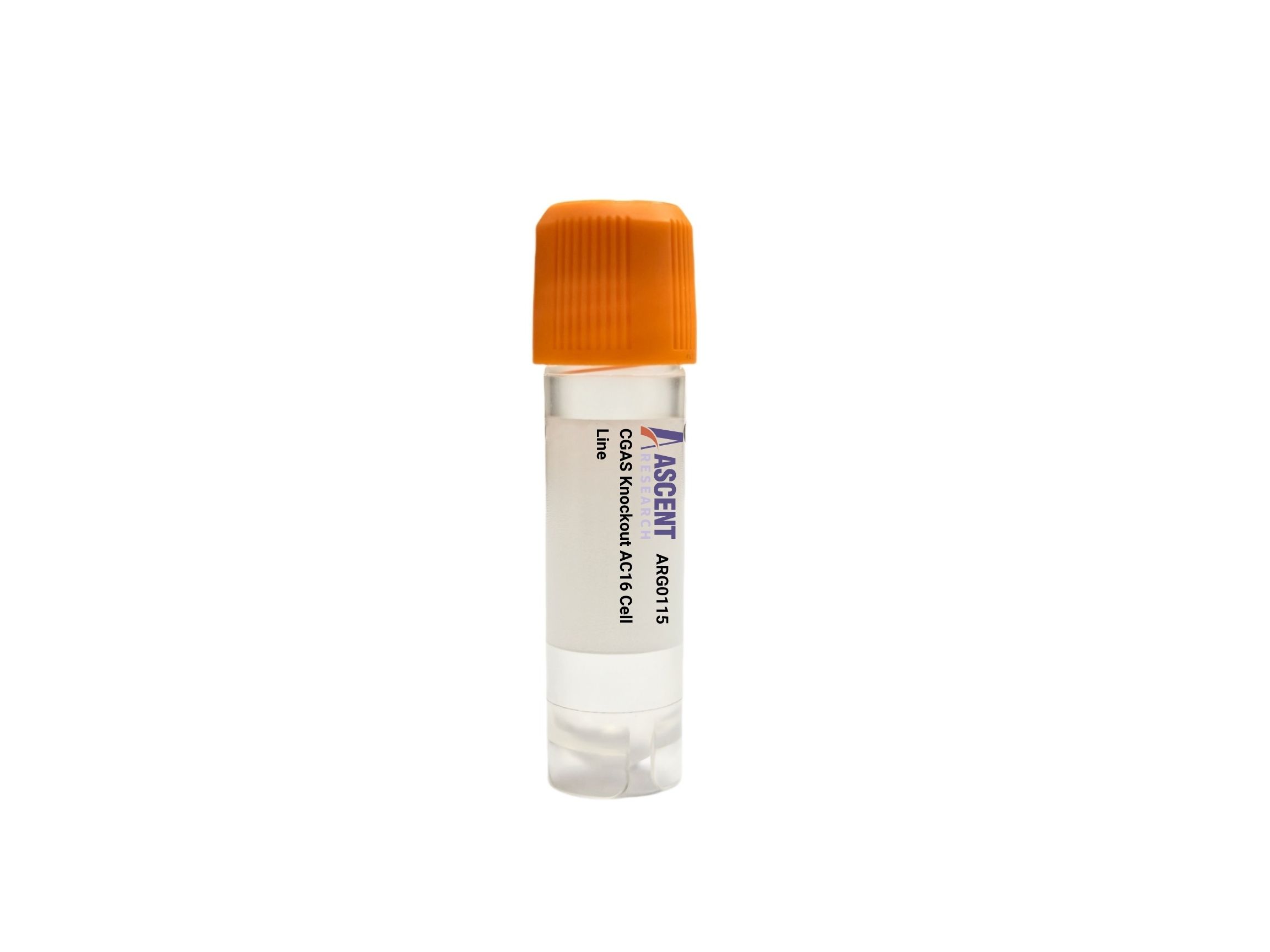
CGAS Knockout AC16 is a CRISPR/Cas9-edited human cardiomyocyte-like cell line generated in the AC16 ventricular cardiomyocyte-derived background. cGAS normally senses cytosolic dsDNA and synthesizes 2'3'-cGAMP to activate STING/TMEM173, TBK1-IRF3, and NF-kappaB signaling, promoting IFNB1, CXCL10, and ISG15 expression. Disruption of CGAS provides a useful model for studying DNA-triggered innate immune signaling, mitochondrial DNA stress, sterile inflammation, myocardial injury mechanisms, viral sensing, and cardiotoxicity in human cardiac cells. Applications include western blotting, RT-qPCR, RNA-seq, ELISA, cGAMP assays, phospho-signaling analysis, and drug response studies.
 FUS Knockout 143B Polyclonal Cells
Cat. No. ARG11918
ADCY3 Knockout huh-7 Polyclonal Cells
Cat. No. ARG27808
CD36 Knockout AGS Polyclonal Cells
Cat. No. ARG43534
MATK Knockout HCT116 Polyclonal Cells
Cat. No. ARG7310
CSNK1D Knockout HCT116 Polyclonal Cells
Cat. No. ARG7084
FUS Knockout 143B Polyclonal Cells
Cat. No. ARG11918
ADCY3 Knockout huh-7 Polyclonal Cells
Cat. No. ARG27808
CD36 Knockout AGS Polyclonal Cells
Cat. No. ARG43534
MATK Knockout HCT116 Polyclonal Cells
Cat. No. ARG7310
CSNK1D Knockout HCT116 Polyclonal Cells
Cat. No. ARG7084
 MA782/5s-8101
Cat. No. ARC0480
MA782/5s-8101
Cat. No. ARC0480
The CGAS Knockout AC16 Cell Line is a CRISPR/Cas9-engineered human cell model in which the CGAS gene has been disrupted to eliminate functional cGAS expression. Generated in the AC16 background, this stable knockout line provides an in vitro system for investigating cytosolic DNA sensing in a cardiomyocyte-like context. AC16 cells are transformed ventricular cardiomyocyte-derived cells and are used to study signaling and stress-response programs relevant to human cardiac muscle biology.
AC16 is a human ventricular cardiomyocyte-derived cell line produced by fusion of primary adult ventricular cardiomyocytes with SV40-transformed fibroblasts. This background supports experimental investigation of cardiomyocyte-associated gene regulation, mitochondrial function, oxidative stress, inflammatory signaling, and cardiotoxicity. Because AC16 cells retain features useful for modeling cardiac stress biology while remaining experimentally tractable, they are widely applied in studies of myocardial injury mechanisms, metabolic stress, and pharmacologic response in human cardiac cells.
cGAS is a cytosolic double-stranded DNA sensor that acts upstream of STING/TMEM173-dependent innate immune signaling. Upon binding dsDNA derived from viral DNA, bacterial DNA, mitochondrial DNA release, micronuclei, or genomic DNA damage, cGAS catalyzes synthesis of 2’3′-cGAMP. This second messenger activates STING, which in turn promotes TBK1 phosphorylation and IRF3 phosphorylation, while also engaging NF-kappaB signaling through factors including NFKB1 and RELA. These events drive induction of IFNB1 and inflammatory or interferon-stimulated genes such as CXCL10, CCL5, ISG15, IFIT1, and MX1. cGAS signaling is further influenced by factors including TREX1, PQBP1, BAF/BANF1, nucleosomes, and Beclin 1, linking DNA sensing to sterile inflammation, senescence-associated inflammatory signaling, antiviral response, and interferon-driven disease biology.
In AC16 cells, loss of CGAS is particularly relevant for examining how cardiomyocyte-like cells respond to mitochondrial DNA stress, chromatin destabilization, ischemia-reperfusion-associated injury signals, and other forms of cellular damage that generate immunostimulatory DNA. This model enables analysis of cGAS-dependent contributions to myocardial inflammation, cardiometabolic stress, heart failure-associated inflammatory remodeling, and DNA-triggered innate immune activation in a cardiac cellular environment.
The knockout line is suitable for mechanistic studies comparing DNA-stimulated signaling in parental and CGAS-deficient cells using western blotting for phospho-TBK1 and phospho-IRF3, RT-qPCR or RNA-seq for IFNB1, CXCL10, ISG15, and IFIT1 expression, ELISA for secreted cytokines, and cGAMP quantification assays. It is also useful for immunofluorescence and flow cytometry analysis of pathway activation, co-immunoprecipitation studies of signaling complexes involving STING or TBK1, mitochondrial stress assays, apoptosis assays, viability assays, and drug sensitivity studies evaluating STING-pathway modulators or agents that induce DNA damage and inflammatory signaling. Researchers may contact Ascent Research for additional technical information, product details, or related gene-edited cell models.