Genome-edited Cells
Pancreas
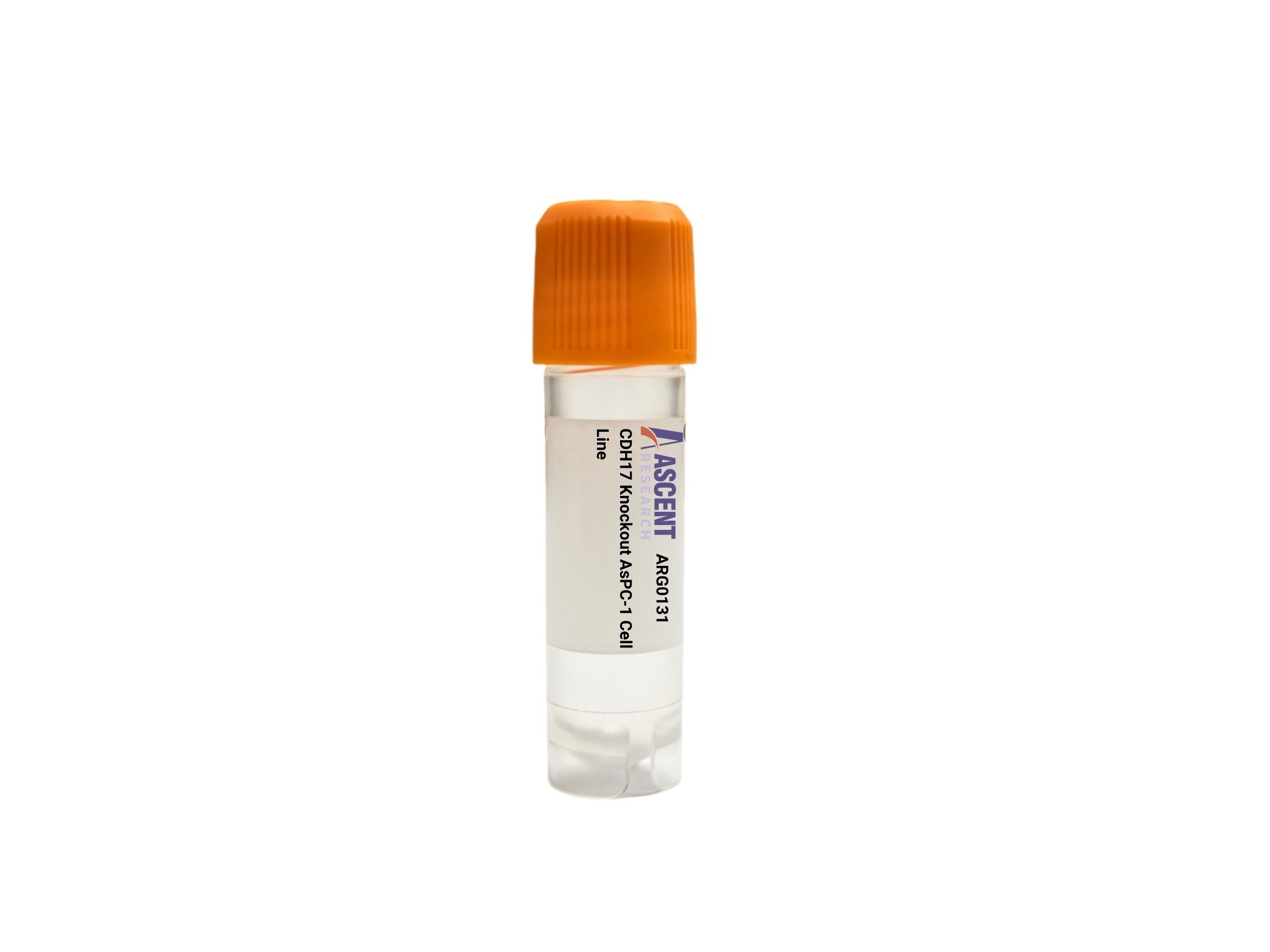
CDH17 Knockout AsPC-1 is a human CRISPR/Cas9-edited pancreatic adenocarcinoma epithelial cell line with disruption of the CDH17 gene, generating a stable model for studying cadherin-17 function in metastatic pancreatic cancer biology. In AsPC-1 cells, CDH17 loss provides a relevant system to examine calcium-dependent epithelial adhesion, adherens junction organization, and Wnt/beta-catenin-associated signaling involving CTNNB1 and JUP. Applications include cell adhesion, migration and invasion studies, immunofluorescence analysis of junctional architecture, RNA-seq or RT-qPCR profiling, co-immunoprecipitation of catenin-associated complexes, and drug sensitivity testing in pancreatic ductal adenocarcinoma research.
 MALSU1 Knockout A549 Polyclonal Cells
Cat. No. ARG10350
ANKRD28 Knockout A2780 Polyclonal Cells
Cat. No. ARG28697
ALPP Knockout 769-P Polyclonal Cells
Cat. No. ARG35086
CABLES1 Knockout Hela Polyclonal Cells
Cat. No. ARG41725
CERCAM Knockout HEK293T Polyclonal Cells
Cat. No. ARG3688
MALSU1 Knockout A549 Polyclonal Cells
Cat. No. ARG10350
ANKRD28 Knockout A2780 Polyclonal Cells
Cat. No. ARG28697
ALPP Knockout 769-P Polyclonal Cells
Cat. No. ARG35086
CABLES1 Knockout Hela Polyclonal Cells
Cat. No. ARG41725
CERCAM Knockout HEK293T Polyclonal Cells
Cat. No. ARG3688
 Pig Endometrial Epithelial Cells
Cat. No. ARP0930
Pig Endometrial Epithelial Cells
Cat. No. ARP0930
The CDH17 Knockout AsPC-1 Cell Line is a human CRISPR/Cas9-engineered pancreatic adenocarcinoma epithelial model in which the CDH17 gene has been disrupted to eliminate functional cadherin-17 expression. This stable in vitro knockout system is designed for investigation of epithelial adhesion biology and cancer-associated phenotypes in a pancreatic ductal adenocarcinoma-relevant context. By combining targeted gene loss with a metastatic pancreatic cancer background, the model enables controlled analysis of CDH17-dependent molecular and phenotypic effects.
AsPC-1 is a human pancreatic adenocarcinoma cell line established from metastatic ascites and is broadly used to study pancreatic cancer progression, epithelial behavior, invasive potential, and therapeutic response. The line provides a biologically relevant malignant epithelial platform for evaluating mechanisms linked to pancreatic ductal adenocarcinoma, particularly those involving cell-cell interaction, epithelial organization, and adaptation to tumor-associated microenvironmental cues. Because AsPC-1 cells are widely used in studies of adhesion, migration, and drug response, they are well suited for assessing how targeted perturbation of epithelial junctional regulators alters cancer cell behavior.
CDH17 encodes cadherin-17, a calcium-dependent adhesion molecule of the gastrointestinal cadherin family that contributes to cell-cell and cell-microenvironment interactions at the epithelial surface. CDH17 is regulated by epithelial lineage transcriptional programs, including factors such as CDX2 and HNF4A, and its expression is influenced by differentiation state and microenvironmental inputs. At the membrane, cadherin-17 interacts with catenin-linked junctional components including beta-catenin/CTNNB1, plakoglobin/JUP, alpha-catenin/CTNNA1, and p120-catenin/CTNND1, thereby contributing to adherens junction organization and actin cytoskeleton-associated complexes. Loss of CDH17 is expected to alter beta-catenin localization, epithelial adhesion strength, junctional architecture, and downstream proliferation-, migration-, and invasion-associated phenotypes. These relationships connect CDH17 to epithelial differentiation, Wnt/beta-catenin-associated signaling, and tumor invasion and metastasis across pancreatic and other gastrointestinal malignancies.
In the AsPC-1 background, CDH17 knockout provides a useful system for defining how epithelial cadherin loss reshapes adhesive behavior and invasive properties in malignant pancreatic cells. This context is particularly relevant for studying epithelial plasticity, metastasis-associated mechanisms, and functional interactions between CDH17 and related junctional proteins such as CDH1, EPCAM, CTNNB1, and JUP. The model can also support evaluation of pathway dependency and gene-expression changes associated with altered junctional signaling in pancreatic cancer cells.
This cell line is suitable for western blotting, RT-qPCR, and RNA-seq analysis of CDH17-dependent transcriptional and protein-level effects; immunofluorescence and flow cytometry to assess surface expression and beta-catenin or junctional organization; and co-immunoprecipitation to examine interactions with CTNNB1, JUP, CTNNA1, or CTNND1. Functional studies may include cell adhesion assays, migration and invasion assays, spheroid formation, proliferation and apoptosis measurements, and drug sensitivity testing to determine how CDH17 loss influences epithelial integrity, motility, and therapeutic response in pancreatic cancer cells. Researchers may contact Ascent Research for additional technical information, product details, or related gene-edited cell models.