Genome-edited Cells
Pancreas
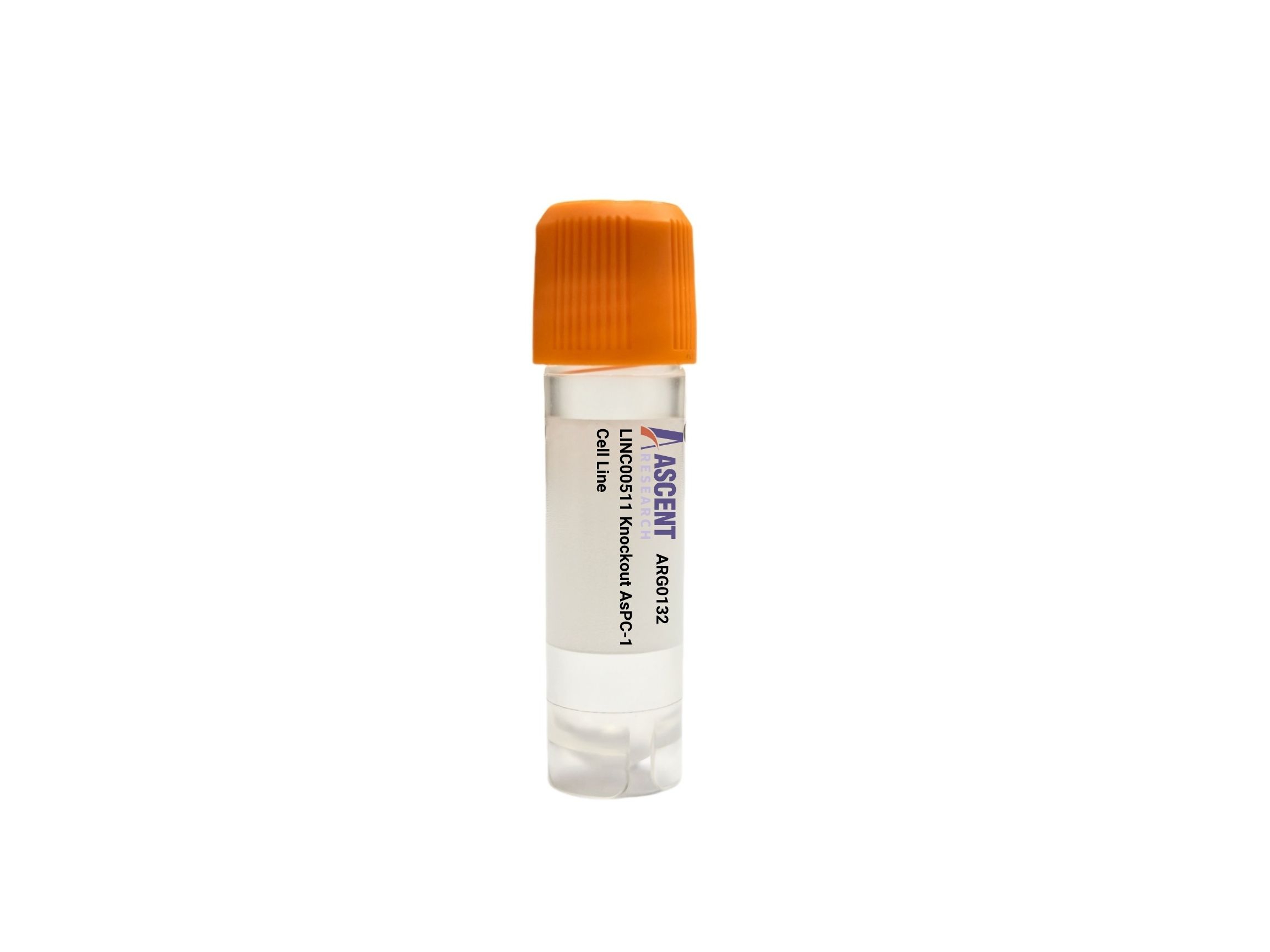
LINC00511 Knockout AsPC-1 is a CRISPR/Cas9-engineered human pancreatic ductal adenocarcinoma cell line with disruption of the oncogenic lncRNA LINC00511 in an aggressive metastatic AsPC-1 background. This model supports analysis of lncRNA-dependent regulation of proliferation, apoptosis, EMT, invasion, and chemoresponse in pancreatic cancer. LINC00511 is linked to chromatin-associated regulators including EZH2/PRC2 and to ceRNA mechanisms involving miR-195 and miR-29 family members, with downstream effects on targets such as CDK4, CCND1, BCL2, VIM, and CDH1. Suitable applications include RT-qPCR, RNA-seq, migration and invasion assays, cell-cycle analysis, ChIP-qPCR, RIP, and drug sensitivity studies.
 B3GAT2 Knockout HAP1 Polyclonal Cells
Cat. No. ARG22024
BAP1 Knockout Hela Polyclonal Cells
Cat. No. ARG36078
IGF2BP2 Knockout HEK293T Polyclonal Cells
Cat. No. ARG38135
ABCG2 Knockout huh-7 Polyclonal Cells
Cat. No. ARG27743
NIF3L1 Knockout MES-OV Polyclonal Cells
Cat. No. ARG5856
B3GAT2 Knockout HAP1 Polyclonal Cells
Cat. No. ARG22024
BAP1 Knockout Hela Polyclonal Cells
Cat. No. ARG36078
IGF2BP2 Knockout HEK293T Polyclonal Cells
Cat. No. ARG38135
ABCG2 Knockout huh-7 Polyclonal Cells
Cat. No. ARG27743
NIF3L1 Knockout MES-OV Polyclonal Cells
Cat. No. ARG5856
 Rabbit Liver Sinusoidal Endothelial Cells
Cat. No. ARP0722
Rabbit Liver Sinusoidal Endothelial Cells
Cat. No. ARP0722
The LINC00511 Knockout AsPC-1 Cell Line is a CRISPR/Cas9-engineered human pancreatic cancer model in which the LINC00511 locus has been disrupted to abolish functional lncRNA expression. This stable in vitro knockout line is generated in AsPC-1 cells, a malignant epithelial-like pancreatic ductal adenocarcinoma background, and is intended for mechanistic studies of lncRNA-dependent regulation in aggressive pancreatic cancer. The model enables controlled interrogation of how loss of LINC00511 alters transcriptional and post-transcriptional programs linked to tumor growth, survival, invasion, and therapeutic response.
AsPC-1 is derived from ascites of metastatic human pancreatic ductal adenocarcinoma and is widely used as a high-aggressiveness PDAC model. Because it recapitulates features relevant to advanced pancreatic malignancy, including invasive behavior, metastatic potential, and treatment resistance, AsPC-1 is broadly applied in studies of pancreatic tumor progression and response to anticancer agents. In this host-cell context, gene perturbation studies are particularly informative for defining drivers of epithelial-mesenchymal transition, anchorage-independent growth, migratory activity, and stress-adaptive survival pathways relevant to metastatic disease.
LINC00511 is a pro-oncogenic long non-coding RNA implicated in chromatin-associated transcriptional control and ceRNA-mediated post-transcriptional regulation. Its expression can be regulated by E2F1, c-MYC, oncogenic stress, TGF-beta-related tumor signaling, and copy-number or epigenetic dysregulation. Mechanistically, LINC00511 has been associated with interaction with EZH2, the PRC2 complex, LSD1, and AGO2-associated RNA silencing machinery, consistent with roles in repression of differentiation-associated genes and modulation of microRNA availability. Through interactions involving the miR-29 family, miR-185, miR-195, and miR-324-5p, LINC00511 can act upstream of transcripts linked to cell-cycle progression, survival, and EMT, including CDK4, CDK6, CCND1, BCL2, VIM, CDH1, MMP2, MMP9, and MYC. These effects intersect with PI3K-AKT-MTOR and Wnt-beta-catenin pathway components such as PIK3CA, AKT1, MTOR, GSK3B, and CTNNB1, as well as TGFBR1-SMAD2-SMAD3 signaling and EMT regulators including ZEB1.
In AsPC-1 cells, knockout of LINC00511 provides a biologically relevant framework for testing how lncRNA loss reshapes pancreatic cancer phenotypes. This model is useful for dissecting whether aggressive PDAC behavior depends on LINC00511-mediated maintenance of proliferative transcriptional states, anti-apoptotic signaling, mesenchymal marker expression, or invasion-associated matrix remodeling. It also supports pathway-dependency studies linking lncRNA loss to altered expression of CDH1 and VIM or to changes in beta-catenin- and TGF-beta-associated programs.
The cell line is suitable for RT-qPCR confirmation of transcript loss, RNA-seq profiling of downstream gene-expression changes, and ceRNA network analysis involving candidate microRNAs and AGO2-associated complexes. Functional applications include cell proliferation and colony formation assays, apoptosis assays, flow-cytometric cell-cycle analysis, wound-healing, migration, and Matrigel invasion assays, as well as western blotting and immunofluorescence for markers such as CDH1, VIM, and pathway effectors in PI3K-AKT or Wnt-beta-catenin signaling. The model can also be applied in RNA immunoprecipitation, ChIP-qPCR for chromatin-regulatory mechanisms involving EZH2 or LSD1, reporter assays, and drug sensitivity studies addressing chemoresistance and pathway-targeted therapeutic response in pancreatic ductal adenocarcinoma. Researchers may contact Ascent Research for additional technical information, product details, or related gene-edited cell models.