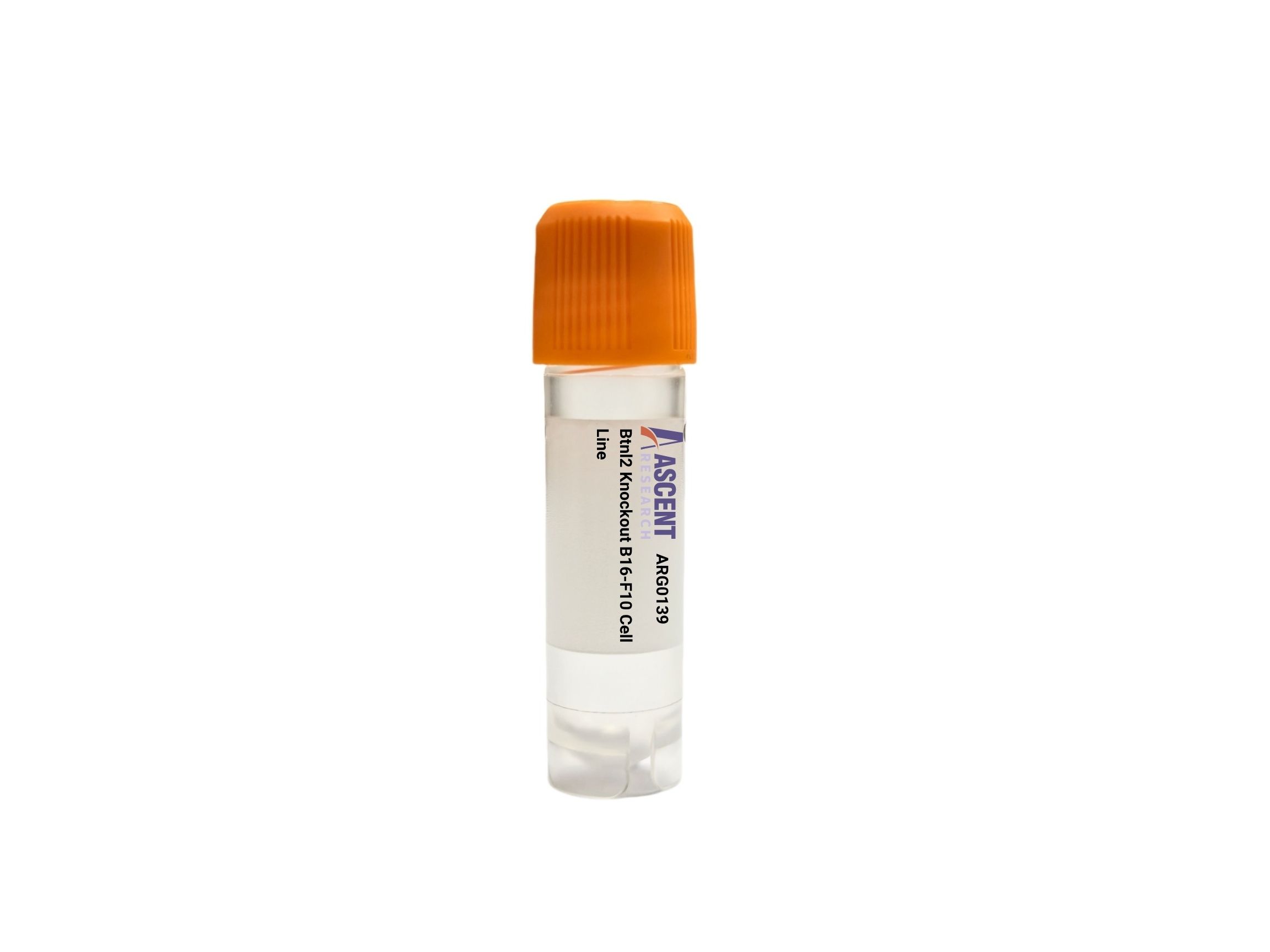
Genome-edited Cells
Skin
Btnl2 Knockout B16-F10 is a CRISPR/Cas9-engineered mouse melanoma cell line generated in the highly metastatic B16-F10 background. BTNL2 is a butyrophilin-like transmembrane immunomodulator that regulates T-cell activation in relation to TCR/CD3 signaling and checkpoint-associated networks including CD28, CTLA4, and PDCD1. Loss of Btnl2 in this syngeneic melanoma model supports studies of tumor-immune interaction, T-cell proliferation, IL2 and IFNG responses, and immune checkpoint biology. The cell line is suitable for RT-qPCR, western blotting, flow cytometry, RNA-seq, T-cell co-culture, cytokine profiling, invasion assays, and in vivo syngeneic tumor studies.
 ANXA1 Knockout K562 Polyclonal Cells
Cat. No. ARG20122
CORO1C Knockout HT29 Polyclonal Cells
Cat. No. ARG14741
IL17RB Knockout HGC-27 Polyclonal Cells
Cat. No. ARG36139
CCDC127 Knockout NCI-H1299 Polyclonal Cells
Cat. No. ARG42922
CAMSAP1 Knockout Hela Polyclonal Cells
Cat. No. ARG42070
GATAD2B Knockout HEK293T Polyclonal Cells
Cat. No. ARG4015
ANXA1 Knockout K562 Polyclonal Cells
Cat. No. ARG20122
CORO1C Knockout HT29 Polyclonal Cells
Cat. No. ARG14741
IL17RB Knockout HGC-27 Polyclonal Cells
Cat. No. ARG36139
CCDC127 Knockout NCI-H1299 Polyclonal Cells
Cat. No. ARG42922
CAMSAP1 Knockout Hela Polyclonal Cells
Cat. No. ARG42070
GATAD2B Knockout HEK293T Polyclonal Cells
Cat. No. ARG4015
The Btnl2 Knockout B16-F10 Cell Line is a CRISPR/Cas9-engineered mouse melanoma model in which the Btnl2 gene has been disrupted to eliminate functional gene expression. This edited line is generated in the B16-F10 background, a widely used murine melanoma cell line, and provides a stable in vitro system for investigating how loss of a butyrophilin-like immunomodulatory surface protein influences tumor-associated immune signaling. As a Btnl2-deficient melanoma model, it is suited for mechanistic studies requiring controlled comparison of tumor cell-intrinsic immune regulatory features in a defined genetic context.
B16-F10 is a highly metastatic subline derived from B16 melanoma and selected for strong metastatic capacity. It is extensively used in syngeneic C57BL/6 tumor studies because it reproducibly models melanoma growth, invasion, immune interaction, and experimental metastasis. The line is therefore valuable for analyzing tumor progression in settings where both malignant phenotype and host immune response are relevant. In addition to standard in vitro culture applications, B16-F10 is frequently used in transplantation and in vivo tumor challenge paradigms, making it a practical host background for evaluating gene-dependent effects on melanoma behavior and tumor-immune crosstalk.
BTNL2 encodes a transmembrane butyrophilin-like protein implicated in adaptive immune regulation, particularly in modulation of T-cell activation. It is generally regarded as a negative regulator of T-cell proliferation and cytokine production. BTNL2 functions within signaling contexts linked to the T-cell receptor pathway, interacting functionally with the TCR-CD3 signaling machinery and with costimulatory or coinhibitory surface networks that include CD28, CTLA4, and PDCD1. Its expression is regulated by cell differentiation state, inflammatory cytokines such as IFN-gamma, and tissue-specific transcriptional programs. In relevant immune interaction assays, BTNL2 acts upstream of outputs including CD69 expression, IL2 production, IFNG production, and broader antitumor immune responses, with NFATC1 representing a key downstream transcriptional effector in T-cell activation programs. These relationships are pertinent to melanoma, cancer immunology, autoimmune disease, inflammatory bowel disease, sarcoidosis, and transplant immunology.
Within the B16-F10 host context, loss of Btnl2 provides a useful system for probing how melanoma cells shape immune recognition and local checkpoint biology. Because B16-F10 cells are commonly deployed in syngeneic tumor studies, Btnl2 disruption can help dissect tumor cell contributions to T-cell activation status, cytokine responsiveness, and immune evasion-associated signaling. The model is also relevant for examining whether altered tumor-associated expression programs influence co-culture phenotypes, metastatic behavior, or immune-mediated growth control.
This cell line supports a broad range of experimental workflows. Researchers can assess Btnl2 loss at the RNA and protein levels by RT-qPCR, western blotting, flow cytometry, or immunofluorescence, and can profile secondary transcriptional consequences by RNA-seq. In functional studies, the model is well suited for T-cell co-culture assays that quantify IL2 or IFNG secretion, CD69 induction, and lymphocyte proliferation in response to melanoma cells lacking BTNL2. It may also be integrated into apoptosis, migration, and invasion assays to determine whether altered immune regulatory signaling associates with changes in tumor cell phenotype. In vivo, the line can be used in syngeneic mouse studies to evaluate tumor growth, metastatic colonization, and antitumor immune response under genetically defined conditions. Researchers may contact Ascent Research for additional technical information, product details, or related gene-edited cell models.