Genome-edited Cells
Skin
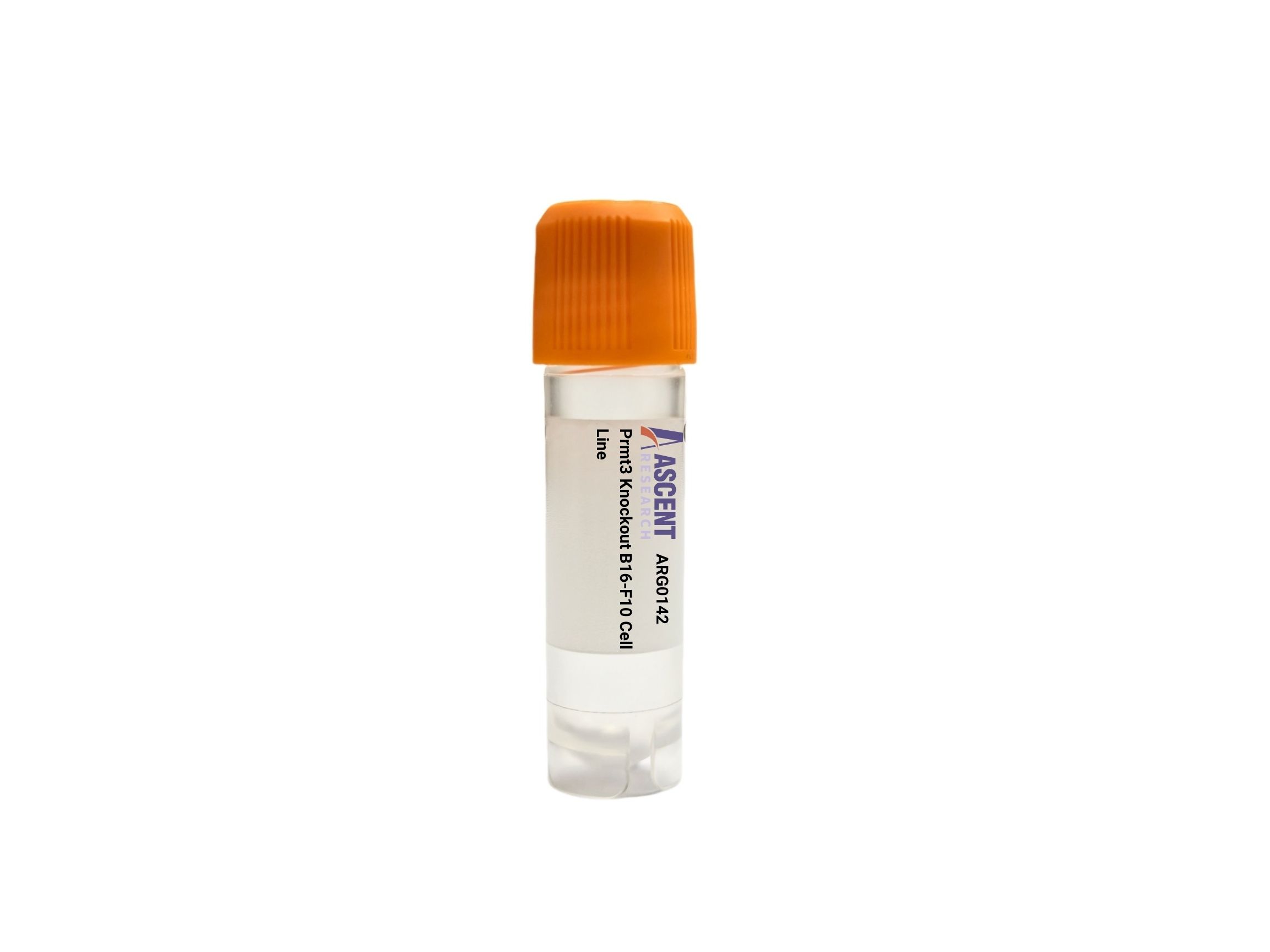
Prmt3 Knockout B16-F10 is a CRISPR/Cas9-edited mouse melanoma cell line with disruption of the Prmt3 gene in the highly metastatic B16-F10 background. PRMT3 is a cytoplasmic type I arginine methyltransferase that methylates RPS2 and functions with factors such as RIOK1 in ribosome biogenesis, translation control, and mTOR-linked anabolic processes. This model is suited for studying melanoma growth, invasion, metastasis, metabolic reprogramming, and arginine methylation-dependent translational regulation using assays including western blotting, RNA-seq, ribosome or polysome profiling, protein synthesis analysis, and in vivo tumor or metastasis studies.
 BTBD9 Knockout HAP1 Polyclonal Cells
Cat. No. ARG22142
CENPQ Knockout jurkat Polyclonal Cells
Cat. No. ARG13787
ATG101 Knockout A549 Polyclonal Cells
Cat. No. ARG31874
DNAJC21 Knockout K562 Polyclonal Cells
Cat. No. ARG39257
FAM177A1 Knockout MES-OV Polyclonal Cells
Cat. No. ARG6198
BTBD9 Knockout HAP1 Polyclonal Cells
Cat. No. ARG22142
CENPQ Knockout jurkat Polyclonal Cells
Cat. No. ARG13787
ATG101 Knockout A549 Polyclonal Cells
Cat. No. ARG31874
DNAJC21 Knockout K562 Polyclonal Cells
Cat. No. ARG39257
FAM177A1 Knockout MES-OV Polyclonal Cells
Cat. No. ARG6198
 A-673
Cat. No. ARC0036
A-673
Cat. No. ARC0036
The Prmt3 Knockout B16-F10 Cell Line is a CRISPR/Cas9-engineered mouse melanoma model in which the Prmt3 gene has been disrupted to abolish functional PRMT3 expression. This stable edited cell line is generated in the B16-F10 background, a tumorigenic melanocytic cell model widely used for mechanistic studies of melanoma progression. PRMT3 loss in this context provides an experimentally tractable system for investigating how cytoplasmic protein arginine methylation contributes to ribosome-associated regulation, translational capacity, and malignant cell phenotypes.
B16-F10 is a murine melanoma subline derived from C57BL/6 mouse melanoma and is characterized by high metastatic potential. Because it is routinely used in syngeneic tumor and experimental metastasis studies, B16-F10 offers strong relevance for examining melanoma growth, invasion, dissemination, and tumor-immune interactions in an immunocompetent mouse setting. In vitro, the line serves as a robust platform for studying proliferation, migratory and invasive behavior, stress adaptation, and cellular responses linked to aggressive melanoma biology. Its extensive use in metastasis-related research makes it a suitable host for functional interrogation of genes that influence anabolic output and tumor cell fitness.
PRMT3 is a type I protein arginine methyltransferase that catalyzes asymmetric dimethylation of arginine residues on substrate proteins using S-adenosyl-L-methionine as methyl donor. It is predominantly cytoplasmic and is strongly associated with ribosome biogenesis, including methylation of ribosomal protein RPS2. PRMT3 interacts with RPS2, RIOK1, and additional ribosome biogenesis factors within RNA-associated protein complexes, and functions in pathways linked to 40S ribosomal subunit maturation, translation initiation machinery, and mTOR-associated anabolic processes. Its activity is regulated by PRMT3 gene expression programs, nutrient status, growth-promoting signaling, and recruitment into ribosome biogenesis complexes. Downstream of PRMT3, changes may be assessed at the level of ribosome maturation outputs, global protein synthesis, translation of growth-associated mRNAs, and proliferation-associated phenotypes, with pathway context that also includes PRMT1 and PRMT5 as related arginine methyltransferases.
In B16-F10 melanoma cells, Prmt3 knockout is a useful model for dissecting how arginine methylation-dependent control of translational machinery influences tumor cell behavior. This genetic perturbation can support studies on the relationship between ribosome biogenesis and metastatic competence, as well as on metabolic reprogramming and mTOR-linked anabolic dependency in melanoma. The model is also relevant for examining whether altered ribosome-associated methylation affects cellular fitness under nutrient-responsive conditions or modifies sensitivity to perturbation of translation, growth control, and stress-response pathways.
This knockout cell line can be applied in western blotting and mass spectrometry workflows to evaluate PRMT3-dependent arginine methylation events, including effects on RPS2-associated methylation signatures. RT-qPCR and RNA-seq can be used to profile transcriptional adaptations secondary to loss of PRMT3, while ribosome profiling, polysome profiling, and global protein synthesis assays enable direct interrogation of translational output. Co-immunoprecipitation studies can examine PRMT3-linked interactions with RPS2, RIOK1, and ribosome biogenesis complexes. Functional consequences may be characterized using proliferation, colony formation, migration, invasion, and apoptosis assays, and the B16-F10 background further supports tumor implantation and experimental metastasis studies for assessing melanoma-relevant phenotypes in vivo. Researchers may contact Ascent Research for additional technical information, product details, or related gene-edited cell models.