Genome-edited Cells
Skin
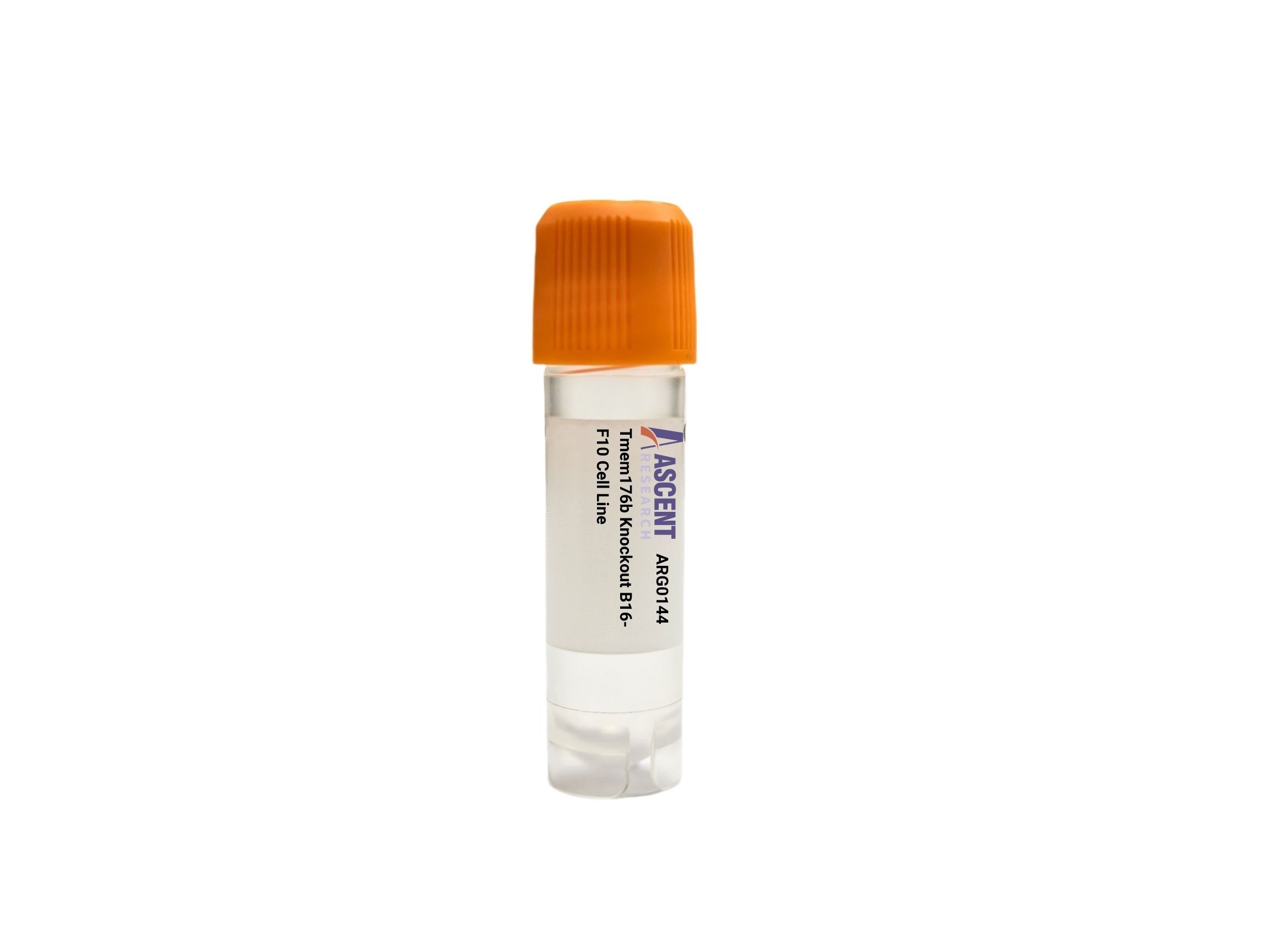
The Tmem176b Knockout B16-F10 Cell Line is a CRISPR/Cas9-edited mouse melanoma model with disruption of Tmem176b in the highly metastatic B16-F10 background. TMEM176B is an intracellular membrane protein associated with endolysosomal acidification, NLRP3 inflammasome regulation, and antigen processing/presentation. Inflammatory stimuli, including IFN-gamma and TNF-alpha, regulate related signaling, while downstream effects may involve PYCARD, CASP1, IL1B, IL18, and MHC-associated functions. This model is useful for melanoma biology, tumor-immune interaction studies, cytokine and inflammasome analysis, antigen presentation assays, and syngeneic tumor or immunotherapy-response experiments using flow cytometry, ELISA, RNA-seq, and microscopy.
 CAMK2B Knockout AGS Polyclonal Cells
Cat. No. ARG35296
MIA3 Knockout A2780 Polyclonal Cells
Cat. No. ARG18752
EPS15L1 Knockout NCI-H1975 Polyclonal Cells
Cat. No. ARG16936
COTL1 Knockout SK-HEP-1 Polyclonal Cells
Cat. No. ARG16058
KIDINS220 Knockout HT29 Polyclonal Cells
Cat. No. ARG33529
ENTPD1 Knockout HEK293T Polyclonal Cells
Cat. No. ARG4101
CAMK2B Knockout AGS Polyclonal Cells
Cat. No. ARG35296
MIA3 Knockout A2780 Polyclonal Cells
Cat. No. ARG18752
EPS15L1 Knockout NCI-H1975 Polyclonal Cells
Cat. No. ARG16936
COTL1 Knockout SK-HEP-1 Polyclonal Cells
Cat. No. ARG16058
KIDINS220 Knockout HT29 Polyclonal Cells
Cat. No. ARG33529
ENTPD1 Knockout HEK293T Polyclonal Cells
Cat. No. ARG4101
The Tmem176b Knockout B16-F10 Cell Line is a CRISPR/Cas9-engineered murine melanoma model in which the Tmem176b gene has been disrupted to eliminate functional gene expression. This stable knockout cell line is generated in B16-F10 cells, a mouse melanoma line widely used for mechanistic and translational studies of tumor progression and tumor-host interactions. The model provides a defined system for evaluating the consequences of Tmem176b loss in melanoma cells under basal conditions or following inflammatory and immune-relevant stimulation.
B16-F10 is a highly metastatic melanoma subline derived from a C57BL/6 mouse tumor and is extensively used in syngeneic tumor implantation, metastatic colonization, and immuno-oncology studies. Because it retains robust tumor-forming capacity in immunocompetent mouse settings, B16-F10 is a standard host background for analyzing melanoma growth, invasion, migration, and the reciprocal signaling between tumor cells and immune compartments. Its broad use in tumor immune microenvironment studies makes it particularly suitable for investigating genes that influence antigen presentation, inflammatory output, and immune evasion mechanisms.
TMEM176B is an intracellular transmembrane protein linked to endolysosomal ionic homeostasis, vesicular acidification-related processes, and innate immune regulation. It has been implicated in control of NLRP3 inflammasome-associated responses and in antigen processing and presentation pathways. TMEM176B is regulated by inflammatory stimuli, including TLR agonists, IFN-gamma, TNF-alpha, and other microenvironmental cytokines. Functionally, it interacts within a network that includes TMEM176A, NLRP3 inflammasome machinery, PYCARD/ASC, CASP1, and endolysosomal membrane trafficking components. Loss of TMEM176B may alter downstream inflammasome-dependent caspase-1 activity, IL1B maturation and secretion, IL18 release, and MHC class I or MHC class II-associated antigen presentation capacity, consistent with its proposed role in phagosome-lysosome biology and tumor immune microenvironment regulation.
In the B16-F10 context, Tmem176b disruption enables investigation of how tumor-intrinsic endolysosomal regulation influences melanoma immunogenicity and inflammatory signaling. This is relevant to studies of tumor immune evasion, cytokine-driven remodeling of the microenvironment, and responses to inflammatory cues that may shape cross-talk with innate and adaptive immune cells. The model is also applicable to research on inflammatory disorders, autoimmunity, and infectious disease immunity where tumor-cell antigen handling or inflammasome-linked outputs are of interest.
This knockout cell line can be used for pathway-focused studies employing western blotting, RT-qPCR, and RNA-seq to profile transcriptional and protein-level consequences of Tmem176b loss, as well as ELISA-based quantification of IL-1beta and IL-18, caspase-1 activity assays, and co-immunoprecipitation analyses of inflammasome-associated complexes. Flow cytometry can be used to assess MHC expression and immune ligand profiles, while immunofluorescence and confocal microscopy support analysis of endolysosomal compartment organization and trafficking phenotypes. The model is also suitable for proliferation, apoptosis, migration, and invasion assays, and for syngeneic mouse tumor growth studies examining how Tmem176b deficiency modifies melanoma progression or immunotherapy-relevant phenotypes. Researchers may contact Ascent Research for additional technical information, product details, or related gene-edited cell models.