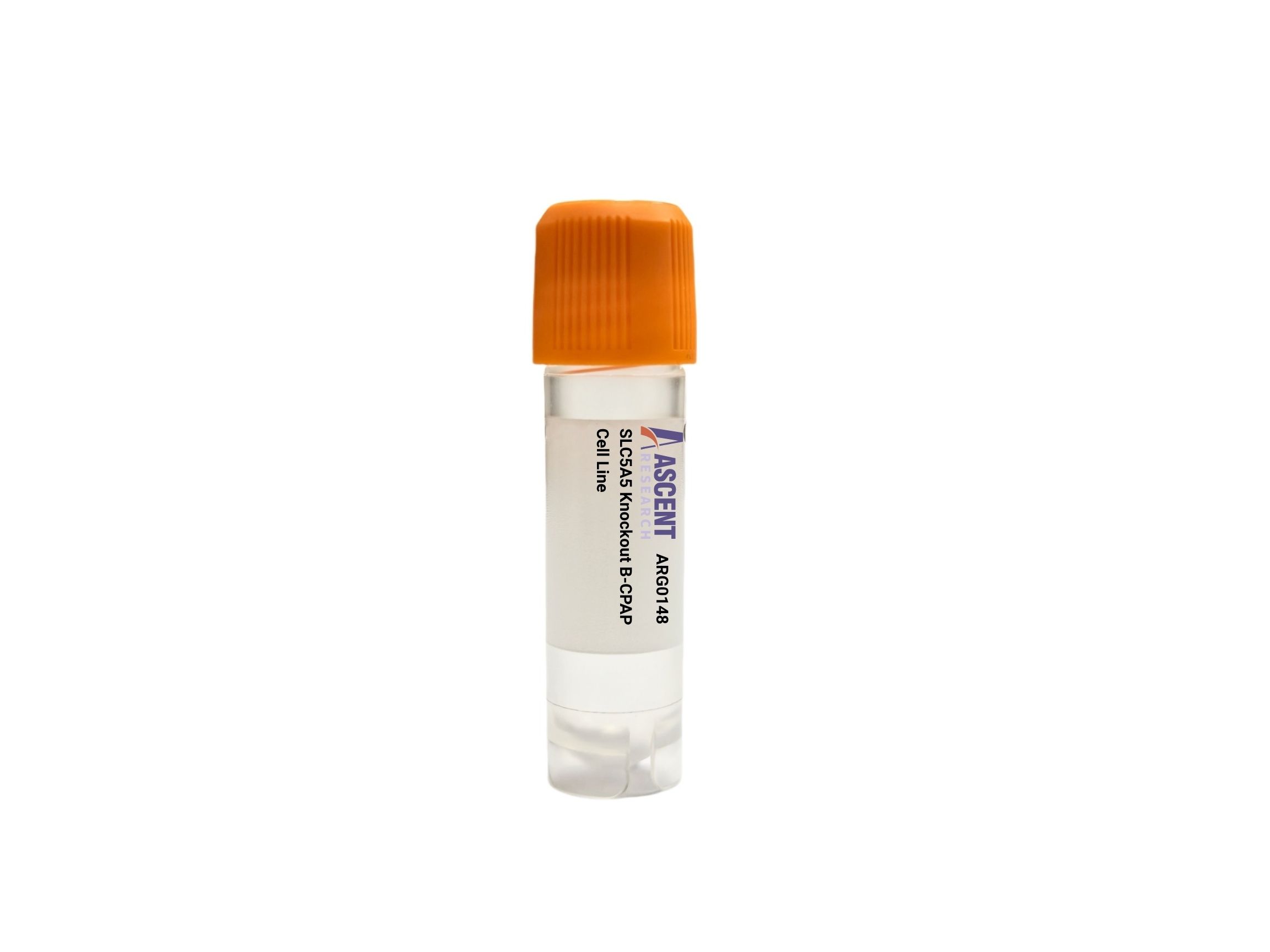
Genome-edited Cells
Thyroid gland
SLC5A5 Knockout B-CPAP is a CRISPR/Cas9-edited human papillary thyroid carcinoma cell line with disruption of the sodium/iodide symporter gene SLC5A5/NIS. In the thyroid follicular epithelial-derived B-CPAP background, this model supports studies of iodide transport, thyroid differentiation, and radioiodine uptake biology. SLC5A5 functions downstream of TSHR-GNAS-cAMP signaling and is transcriptionally regulated by factors such as PAX8 and NKX2-1, while interacting functionally with ATP1A1/ATP1B1, TPO, and TG. Applications include iodide uptake assays, differentiation marker profiling, RNA-seq, phospho-signaling analysis, drug response studies, and rescue experiments relevant to differentiated and radioiodine-refractory thyroid cancer research.
 C6orf120 Knockout Raji Polyclonal Cells
Cat. No. ARG21445
GCH1 Knockout SK-Hep-1 Polyclonal Cells
Cat. No. ARG15766
CHMP4C Knockout HT29 Polyclonal Cells
Cat. No. ARG14178
NR1I2 Knockout Hela Polyclonal Cells
Cat. No. ARG8377
CUL4B Knockout MES-OV Polyclonal Cells
Cat. No. ARG6140
MGAT5 Knockout 786-O Polyclonal Cells
Cat. No. ARG5061
C6orf120 Knockout Raji Polyclonal Cells
Cat. No. ARG21445
GCH1 Knockout SK-Hep-1 Polyclonal Cells
Cat. No. ARG15766
CHMP4C Knockout HT29 Polyclonal Cells
Cat. No. ARG14178
NR1I2 Knockout Hela Polyclonal Cells
Cat. No. ARG8377
CUL4B Knockout MES-OV Polyclonal Cells
Cat. No. ARG6140
MGAT5 Knockout 786-O Polyclonal Cells
Cat. No. ARG5061
The SLC5A5 Knockout B-CPAP Cell Line is a CRISPR/Cas9-engineered human papillary thyroid carcinoma model in which the SLC5A5 locus has been disrupted to eliminate functional expression of the sodium/iodide symporter (NIS). This stable in vitro knockout line is generated in B-CPAP cells, a thyroid follicular epithelial-derived tumor background widely used for mechanistic studies of thyroid cancer and differentiated thyroid functions. The model is designed to support controlled investigation of iodide transport biology, thyroid lineage programs, and tumor-associated changes in NIS-dependent phenotypes.
B-CPAP cells originate from human papillary thyroid carcinoma and provide a relevant experimental system for studying thyroid tumor signaling, differentiation status, and pharmacologic responses. Because this host line retains features useful for analysis of thyroid epithelial identity and cancer-associated pathway regulation, it is broadly applied in studies of differentiated thyroid cancer, dedifferentiation, and targeted therapy response. In this context, B-CPAP cells are particularly valuable for interrogating mechanisms that alter thyroid-specific functions, including iodide handling and pathways linked to radioiodine responsiveness or refractoriness.
SLC5A5 encodes NIS, a plasma membrane transporter that mediates electrogenic iodide import across the basolateral membrane by coupling iodide uptake to the inward sodium gradient maintained by the Na+/K+-ATPase subunits ATP1A1 and ATP1B1. In thyroid cells, SLC5A5 functions downstream of TSHR and TSH-stimulated GNAS-ADCY-PRKACA signaling and is transcriptionally regulated by thyroid lineage factors including PAX8, NKX2-1, and FOXE1. Its expression and activity are also influenced by differentiation-associated and suppressive pathways, including TGF-beta signaling and BRAF-MAPK pathway activity. NIS acts in coordination with thyroid iodide-handling components such as SLC26A4, TPO, TG, and thyroglobulin iodination machinery, thereby promoting intracellular iodide accumulation, thyroid hormone biosynthesis capacity, and radioiodine uptake.
Disruption of SLC5A5 in the B-CPAP background provides a focused system for examining how loss of iodide transport intersects with papillary thyroid carcinoma biology. The model can be used to distinguish transport-dependent from transport-independent effects of TSH/cAMP signaling, to study molecular features of dedifferentiation associated with reduced NIS function, and to evaluate how tumor signaling states influence thyroid-specific gene expression. It is also relevant to investigation of radioiodine-refractory thyroid cancer and disease mechanisms related to impaired iodide transport, including thyroid dyshormonogenesis-associated pathways.
This knockout cell line is suitable for RT-qPCR, western blotting, immunofluorescence, and cell-surface protein analysis to assess SLC5A5 loss and thyroid differentiation marker profiles. It can be applied in radioactive or nonradioactive iodide uptake assays to define NIS-dependent transport phenotypes, in RNA-seq and phospho-signaling studies to map transcriptional and signaling consequences of pathway perturbation, and in drug sensitivity experiments examining MAPK pathway inhibition or redifferentiation strategies. Rescue or complementation assays with exogenous SLC5A5 are also appropriate for validating NIS-specific effects on iodide accumulation and radioiodine uptake. Researchers may contact Ascent Research for additional technical information, product details, or related gene-edited cell models.