Genome-edited Cells
Lung (bronchus)
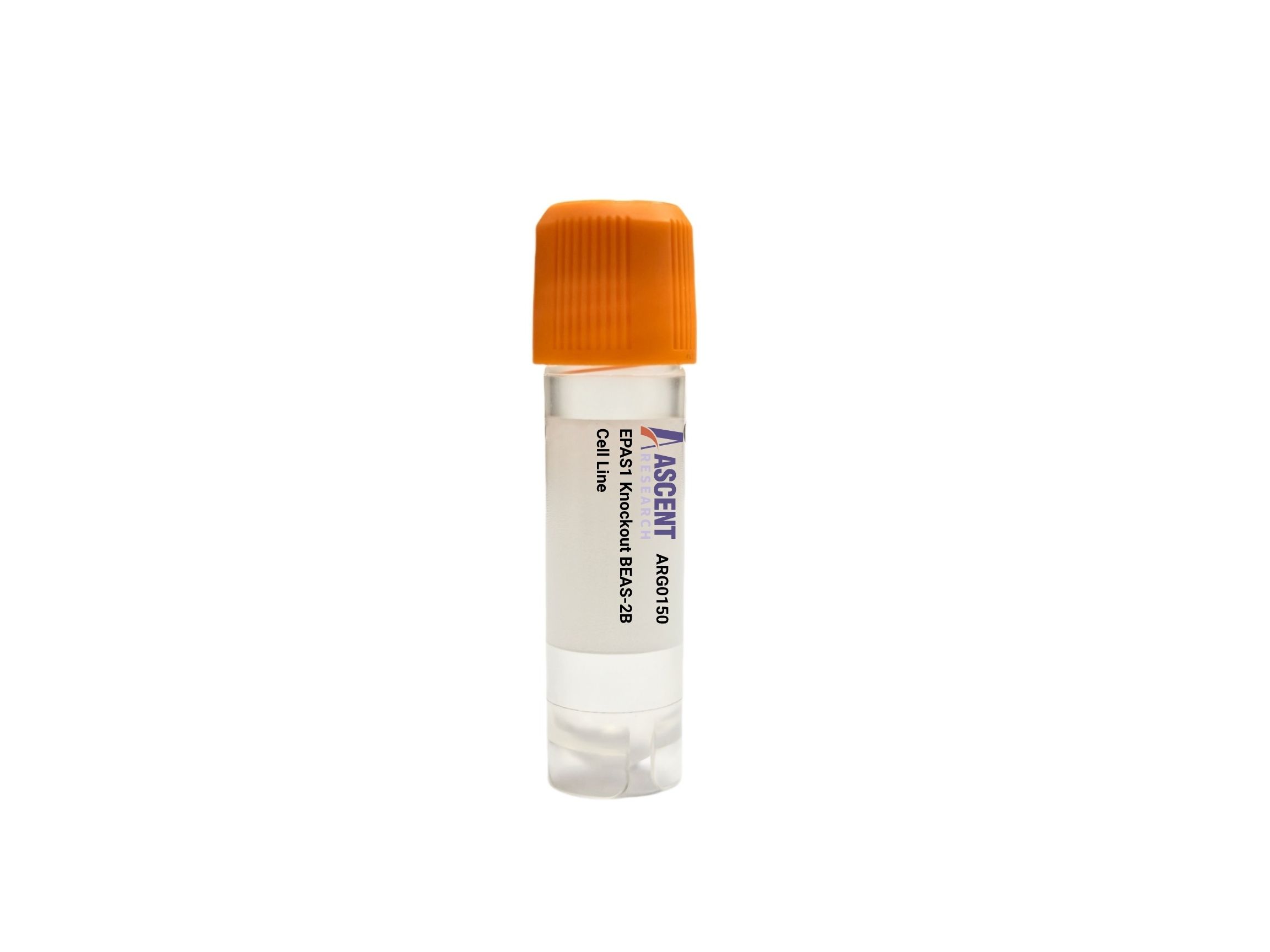
EPAS1 Knockout BEAS-2B is a CRISPR/Cas9-engineered human bronchial epithelial cell line designed for analysis of HIF-2alpha function in airway biology. In BEAS-2B, a widely used model of epithelial barrier and pulmonary innate responses, EPAS1 loss enables mechanistic studies of hypoxia signaling regulated by EGLN/PHD enzymes, VHL, and ARNT. This model is useful for investigating transcriptional control of targets such as VEGFA and SLC2A1, as well as airway inflammation, oxidative stress, hypoxia-related remodeling, and drug response using RT-qPCR, RNA-seq, western blotting, reporter assays, metabolic profiling, and ROS or apoptosis measurements.
 OSBPL2 Knockout NCI-H1975 Polyclonal Cells
Cat. No. ARG16908
BAZ2A Knockout NCI-H1299 Polyclonal Cells
Cat. No. ARG30510
GPRC5A Knockout HGC-27 Polyclonal Cells
Cat. No. ARG29856
BCL2L11 Knockout A549 Polyclonal Cells
Cat. No. ARG31928
CASK Knockout HEK293T Polyclonal Cells
Cat. No. ARG42367
C2CD3 Knockout Raji Polyclonal Cells
Cat. No. ARG41384
OSBPL2 Knockout NCI-H1975 Polyclonal Cells
Cat. No. ARG16908
BAZ2A Knockout NCI-H1299 Polyclonal Cells
Cat. No. ARG30510
GPRC5A Knockout HGC-27 Polyclonal Cells
Cat. No. ARG29856
BCL2L11 Knockout A549 Polyclonal Cells
Cat. No. ARG31928
CASK Knockout HEK293T Polyclonal Cells
Cat. No. ARG42367
C2CD3 Knockout Raji Polyclonal Cells
Cat. No. ARG41384
The EPAS1 Knockout BEAS-2B Cell Line is a CRISPR/Cas9-engineered human bronchial epithelial cell model in which the EPAS1 gene has been disrupted to eliminate functional EPAS1/HIF-2alpha expression. This stable in vitro knockout system enables direct investigation of EPAS1-dependent transcriptional and stress-adaptive programs in an airway epithelial background. Because BEAS-2B cells represent a non-tumorigenic bronchial epithelial context commonly used for respiratory biology, this model is well suited for mechanistic studies of oxygen sensing, hypoxia-responsive gene regulation, and epithelial responses to environmental challenge.
BEAS-2B is an immortalized human bronchial epithelial cell line widely used to study airway epithelial biology, toxicology, inflammation, and environmental stress responses. As an airway epithelial model, it is relevant to epithelial barrier function and the coordination of pulmonary innate responses to inhaled stimuli, oxidants, particulates, inflammatory mediators, and changes in oxygen tension. Its broad adoption in respiratory research makes it a practical system for examining molecular pathways linked to chronic obstructive pulmonary disease, asthma, acute lung injury, hypoxia-related airway remodeling, and other pulmonary pathophysiology in a controlled epithelial setting.
EPAS1 encodes HIF-2alpha, an oxygen-responsive bHLH-PAS transcription factor that functions within the HIF signaling network. Under normoxic conditions, EPAS1 is regulated by EGLN1/PHD2, EGLN2/PHD1, and EGLN3/PHD3, which promote prolyl hydroxylation and subsequent recognition by VHL, leading to proteasomal degradation. Reduced oxygen availability limits this hydroxylation-dependent control, allowing HIF-2alpha stabilization, heterodimerization with ARNT, and recruitment of transcriptional coactivators including EP300 and CREBBP. This complex activates hypoxia-responsive genes such as VEGFA, EPO, SLC2A1, CXCL12, ANGPTL4, SERPINE1, ADM, CCND1, TGFA, and DDIT4. EPAS1 signaling is additionally influenced by HIF1AN/FIH1, reactive oxygen species, iron availability, 2-oxoglutarate, TNF, and IL1B, linking oxygen sensing to inflammatory and metabolic adaptation pathways relevant to pulmonary disease, erythrocytosis, and cancer biology.
Loss of EPAS1 in BEAS-2B provides a useful system for dissecting the contribution of HIF-2alpha to airway epithelial hypoxia responses independently of the broader epithelial program. In this host-cell context, the model supports analysis of how EPAS1 regulates angiogenic factor production, glucose transport-associated adaptation, oxidative stress responses, and inflammatory crosstalk under low-oxygen or chemically perturbed conditions. It is also relevant for comparing EPAS1-dependent versus HIF1A-associated outputs in epithelial cells and for investigating pathway dependency downstream of the PHD-EGLN/VHL oxygen-sensing axis.
This knockout cell line can be applied in western blotting and immunofluorescence studies to assess HIF pathway components, in RT-qPCR and RNA-seq experiments to define EPAS1-regulated transcriptional programs, and in hypoxia-responsive reporter assays or ChIP-qPCR workflows to evaluate ARNT-dependent target gene regulation. Additional applications include co-immunoprecipitation to examine interactions with ARNT, VHL, EGLN1, EGLN3, EP300, or CREBBP; flow cytometry and apoptosis assays to characterize stress-induced cellular phenotypes; metabolic assays and ROS measurements to study hypoxic and oxidative adaptation; and drug sensitivity studies in low-oxygen settings relevant to pulmonary inflammation, lung cancer biology, and environmental exposure research. Researchers may contact Ascent Research for additional technical information, product details, or related gene-edited cell models.