Genome-edited Cells
Placenta
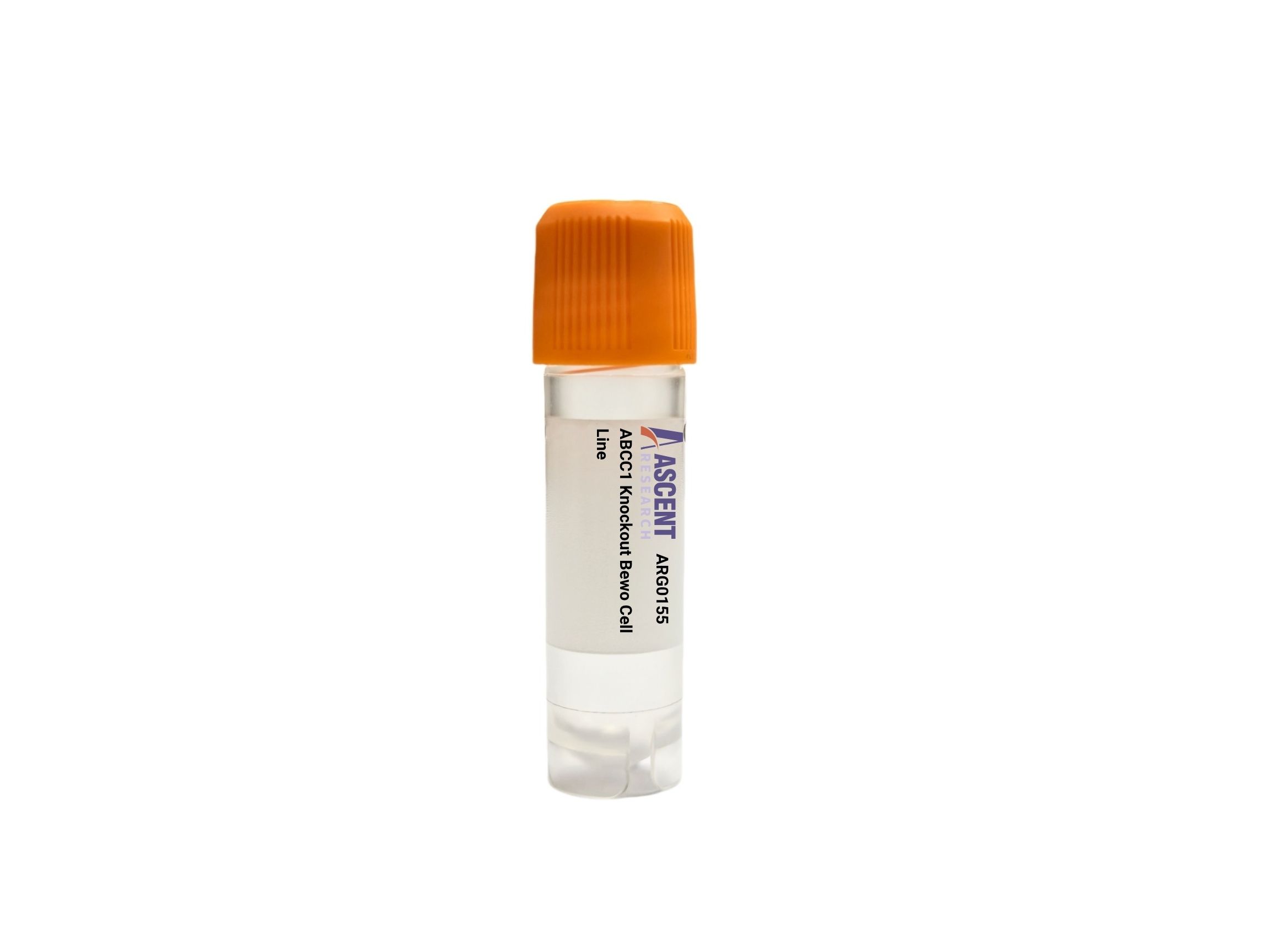
The ABCC1 Knockout Bewo Cell Line is a human CRISPR/Cas9-edited trophoblast-like model for studying placental transporter biology. Generated in the BeWo placental choriocarcinoma background, this knockout disrupts ABCC1/MRP1, an ATP-dependent efflux transporter regulated by NRF2, AHR, PXR, and oxidative stress pathways. ABCC1 normally exports glutathione, glucuronide, and sulfate conjugates, leukotriene C4, and many xenobiotics, and functionally interacts with glutathione- and GST-dependent detoxification systems. This model is suited for placental drug transport, maternal-fetal disposition, multidrug resistance, toxicology, substrate efflux, intracellular accumulation, LC-MS/MS transport, and drug sensitivity studies.
 CISD1 Knockout HT29 Polyclonal Cells
Cat. No. ARG14622
HMGXB4 Knockout HGC-27 Polyclonal Cells
Cat. No. ARG29949
ABHD6 Knockout Lovo Polyclonal Cells
Cat. No. ARG36336
ASPH Knockout HEK293T Polyclonal Cells
Cat. No. ARG37904
CA2 Knockout Hela Polyclonal Cells
Cat. No. ARG41642
NDUFV2 Knockout 786-O Polyclonal Cells
Cat. No. ARG4792
CISD1 Knockout HT29 Polyclonal Cells
Cat. No. ARG14622
HMGXB4 Knockout HGC-27 Polyclonal Cells
Cat. No. ARG29949
ABHD6 Knockout Lovo Polyclonal Cells
Cat. No. ARG36336
ASPH Knockout HEK293T Polyclonal Cells
Cat. No. ARG37904
CA2 Knockout Hela Polyclonal Cells
Cat. No. ARG41642
NDUFV2 Knockout 786-O Polyclonal Cells
Cat. No. ARG4792
The ABCC1 Knockout Bewo Cell Line is a human CRISPR/Cas9-engineered knockout model in which ABCC1 has been disrupted in the BeWo background, resulting in loss of functional ABCC1/MRP1 expression. BeWo is a placental choriocarcinoma-derived trophoblast-like cell line, and this edited derivative provides a stable in vitro system for studying ATP-binding cassette transporter function in a placental epithelial context. The model is designed for investigations of transporter-dependent xenobiotic handling, conjugate export, and intracellular drug disposition at the maternal-fetal interface.
BeWo cells are widely used as an experimental model of human trophoblast biology because they recapitulate several features relevant to placental transport, trophoblast differentiation, syncytialization, and barrier-associated functions. As a trophoblast-like system, BeWo supports studies of transcellular movement of endogenous metabolites, therapeutic agents, and environmental toxicants across placental cellular layers. This background makes the line particularly useful for examining determinants of placental drug transfer, xenobiotic detoxification, and trophoblast responses to chemical stressors in a controlled human cell-based format.
ABCC1 encodes multidrug resistance-associated protein 1 (MRP1), a plasma membrane ATP-dependent efflux transporter that mediates export of glutathione, glucuronide, and sulfate conjugates, as well as leukotriene C4 and numerous xenobiotics. ABCC1 function depends on ATP and interacts functionally with glutathione and phase II detoxification pathways, including GSTs and glutathione synthesis components such as GCLC and GCLM. Its expression is regulated by stress- and xenobiotic-responsive transcriptional programs involving NFE2L2/NRF2 and KEAP1, as well as AHR, NR1I2/PXR, NR1I3/CAR, TP53, inflammatory cytokines, oxidative stress, and xenobiotic exposure. Within broader transport networks, ABCC1 operates alongside ABCB1, ABCG2, SLCO transporters, and CYP enzyme-linked detoxification systems, thereby influencing intracellular accumulation of anthracyclines, vincristine, etoposide, and conjugated metabolites while contributing to cellular redox balance and multidrug resistance phenotypes.
In the BeWo context, ABCC1 loss provides a focused model for interrogating how trophoblast efflux capacity shapes placental handling of drugs, inflammatory mediators, and oxidative stress-associated metabolites. Because BeWo cells are frequently used to model maternal-fetal transport processes, ABCC1 disruption is relevant for assessing transporter-specific contributions to altered substrate retention, compensatory regulation of other transporters, and changes in cellular responses to xenobiotic challenge. The model is also pertinent to research on altered placental drug disposition, toxicology, and mechanisms linked to inflammatory or redox-sensitive trophoblast phenotypes.
This knockout cell line can be applied in western blotting, RT-qPCR, and RNA-seq workflows to profile transporter expression and adaptive transcriptional responses involving NRF2, AHR, PXR, CAR, or glutathione pathway components. Functional characterization can be performed using flow cytometry-based substrate efflux assays, intracellular accumulation assays, LC-MS/MS transport studies, and ATP-dependent vesicle transport assays to quantify changes in retention or export of ABCC1 substrates and conjugated metabolites. Drug sensitivity studies with chemotherapeutics or xenobiotics, immunofluorescence-based localization analyses, and barrier integrity assays can further define how ABCC1 deletion modifies trophoblast transport behavior and toxicant response. Researchers may contact Ascent Research for additional technical information, product details, or related gene-edited cell models.