Genome-edited Cells
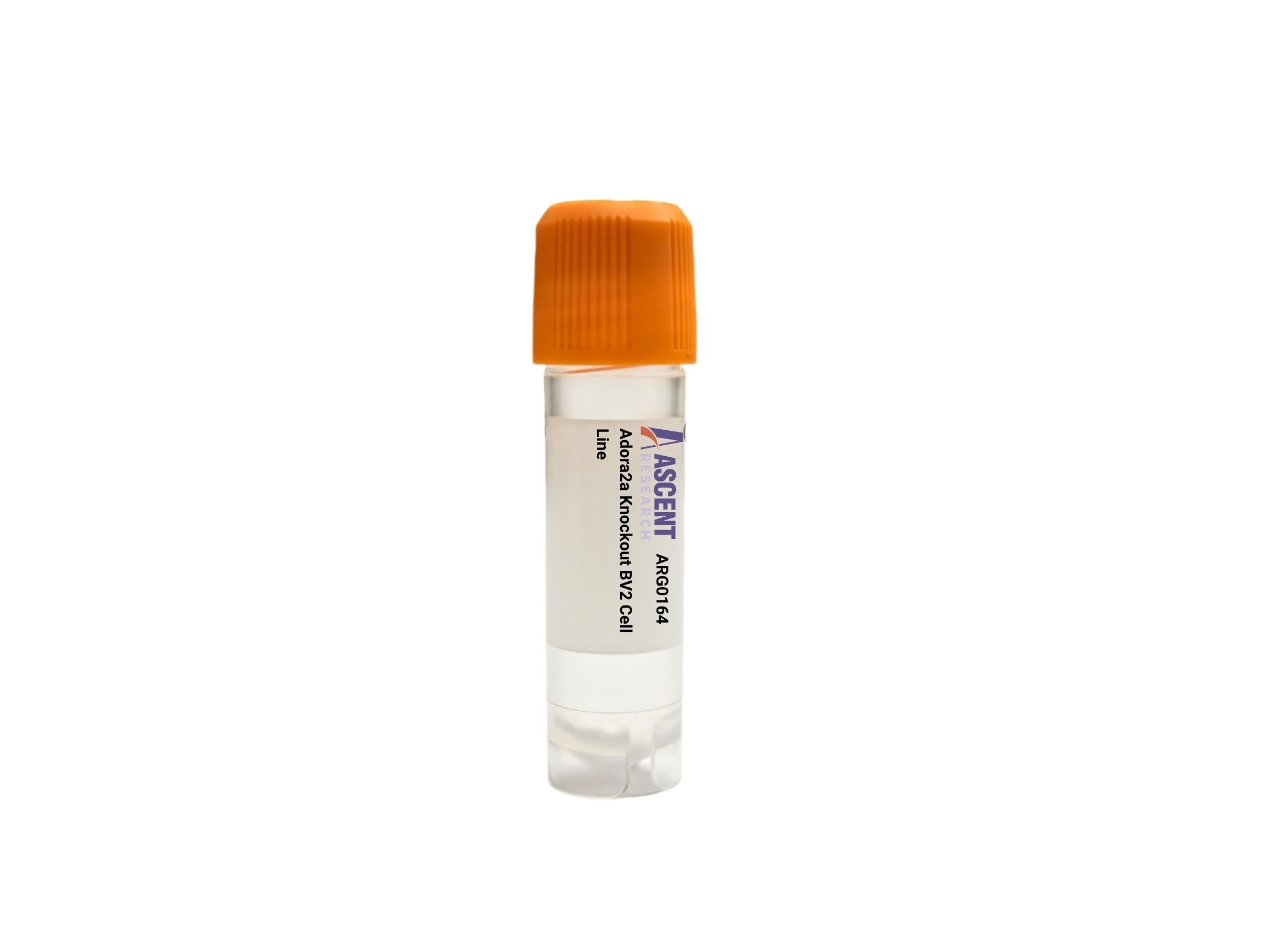
Adora2a Knockout BV2 is a CRISPR/Cas9-edited mouse microglia-like cell line with disruption of the adenosine A2A receptor gene. In BV2 cells, ADORA2A normally mediates adenosine-triggered GNAS/adenylyl cyclase signaling, increasing cAMP and regulating PKA-CREB, ERK1/2, AKT1, cytokine output, nitric oxide production, and phagocytic activity. This model supports mechanistic studies of neuroinflammation, purinergic signaling, and microglial activation in contexts such as Parkinson disease, Alzheimer disease, ischemic injury, and CNS immune dysregulation. Representative applications include cAMP assays, ELISA for TNF/IL6/IL1B, phospho-signaling analysis, RNA-seq, and phagocytosis assays.
 LRRC20 Knockout NCI-H1975 Polyclonal Cells
Cat. No. ARG16511
LRP1 Knockout NCI-H1703 Polyclonal Cells
Cat. No. ARG12613
APOB Knockout A549 Polyclonal Cells
Cat. No. ARG38690
ECHDC3 Knockout HAP1 Polyclonal Cells
Cat. No. ARG40357
MYOF Knockout HEK293T Polyclonal Cells
Cat. No. ARG4102
LRRC20 Knockout NCI-H1975 Polyclonal Cells
Cat. No. ARG16511
LRP1 Knockout NCI-H1703 Polyclonal Cells
Cat. No. ARG12613
APOB Knockout A549 Polyclonal Cells
Cat. No. ARG38690
ECHDC3 Knockout HAP1 Polyclonal Cells
Cat. No. ARG40357
MYOF Knockout HEK293T Polyclonal Cells
Cat. No. ARG4102
 Rabbit Olfactory Ensheathing Cells
Cat. No. ARP0869
Rabbit Olfactory Ensheathing Cells
Cat. No. ARP0869
The Adora2a Knockout BV2 Cell Line is a CRISPR/Cas9-engineered mouse microglia-like cell model in which the Adora2a gene has been disrupted to eliminate functional adenosine A2A receptor expression. This stable in vitro system is designed for investigation of ADORA2A-dependent signaling in an innate immune cell context relevant to the central nervous system. Because BV2 cells retain many features of activated microglia, the model is useful for studying how loss of a Gs-coupled purinergic receptor alters inflammatory signaling, second-messenger regulation, and functional responses associated with microglial activation states.
BV2 is an immortalized murine microglial cell line widely used as an experimental surrogate for CNS-resident innate immune cells. It provides a tractable platform for analysis of neuroinflammatory processes, including cytokine production, phagocytosis, nitric oxide generation, and responses to inflammatory stimuli such as LPS. BV2 cells are frequently applied in studies of purinergic signaling and extracellular danger-sensing mechanisms because microglia integrate signals derived from ATP release, adenosine accumulation, tissue injury, and hypoxic stress. In this context, the cell line supports controlled interrogation of pathways relevant to neurodegeneration, ischemic injury, pain signaling, and CNS immune dysregulation.
ADORA2A encodes the adenosine A2A receptor, a GNAS-coupled GPCR activated by adenosine generated in part through extracellular ATP breakdown by CD39 and CD73. Upon activation, ADORA2A stimulates adenylyl cyclase (ADCY isoforms), elevates intracellular cAMP, and functions upstream of PRKACA/PKA and CREB1-dependent transcriptional programs. Receptor signaling is also regulated by GRKs and beta-arrestins and intersects with MAPK1/MAPK3 and AKT1 pathways, linking purine sensing to broader inflammatory and survival networks. In microglia-like cells, these signals can modulate RELA/NF-kB-associated cytokine outputs including TNF, IL6, and IL1B, as well as nitric oxide production and phagocytic activity. Signal amplitude and duration are further shaped by PDE activity, adenosine transport processes such as ENT1, and cytokine- or injury-induced changes in receptor expression.
Disruption of Adora2a in BV2 cells provides a focused system for defining how adenosine receptor signaling contributes to microglial activation, immune effector function, and pathway crosstalk. The model is particularly relevant for examining how extracellular purine metabolism and inflammatory stimulation converge on cAMP-dependent responses in neuroinflammation-related settings, including Parkinson disease, Alzheimer disease, Huntington disease, multiple sclerosis, and ischemic brain injury research. Loss of ADORA2A can also be used to test pathway dependency in pharmacologic studies involving adenosine receptor ligands or modulators of cAMP signaling.
Applications include RT-qPCR, western blotting, and RNA-seq to profile transcriptional changes after LPS, hypoxia, or adenosine pathway stimulation; ELISA-based measurement of TNF, IL6, and IL1B; cAMP accumulation assays and CRE-luciferase reporters to quantify disruption of Gs-adenylyl cyclase signaling; and phospho-CREB, phospho-ERK1/2, or AKT analyses to map downstream network remodeling. The cell line is also suitable for immunofluorescence and flow cytometry studies of activation markers, phagocytosis assays to assess uptake phenotypes, nitric oxide assays, and drug sensitivity experiments evaluating GPCR pharmacology or purinergic pathway interventions. Researchers may contact Ascent Research for additional technical information, product details, or related gene-edited cell models.