Genome-edited Cells
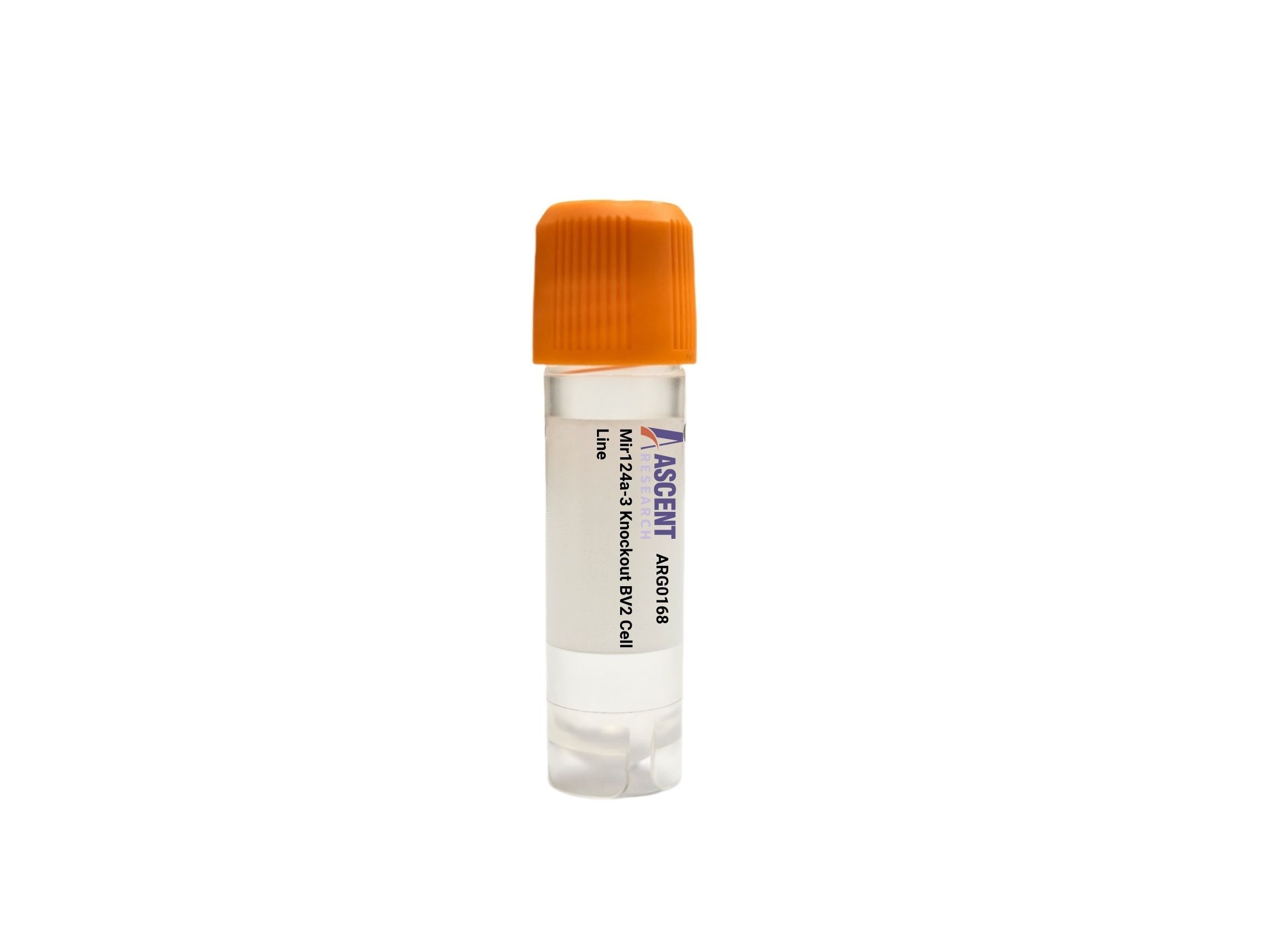
Mir124a-3 Knockout BV2 is a CRISPR/Cas9-edited mouse microglial cell line for investigating miR-124 loss of function in a widely used neuroinflammation model. BV2 cells retain key microglial properties, including inflammatory responsiveness, phagocytosis, and cytokine production. Mir124a-3 normally contributes to miR-124-mediated post-transcriptional repression through AGO2-containing RISC and is linked to regulation of TLR4-NFKB and STAT3-associated inflammatory programs, including IL6, TNF, and NOS2 expression. This model supports microglial activation and polarization studies, innate immune signaling analysis, RNA-seq and RT-qPCR profiling, cytokine assays, reporter assays, and phagocytosis-based functional studies.
 EPB41L2 Knockout NCI-H1299 Polyclonal Cells
Cat. No. ARG18134
BAG1 Knockout Hela Polyclonal Cells
Cat. No. ARG21243
AAMDC Knockout MES-OV Polyclonal Cells
Cat. No. ARG23982
AKAP11 Knockout HAP1 Polyclonal Cells
Cat. No. ARG27237
EHBP1 Knockout Raji Polyclonal Cells
Cat. No. ARG40763
CNDP2 Knockout AGS Polyclonal Cells
Cat. No. ARG2710
EPB41L2 Knockout NCI-H1299 Polyclonal Cells
Cat. No. ARG18134
BAG1 Knockout Hela Polyclonal Cells
Cat. No. ARG21243
AAMDC Knockout MES-OV Polyclonal Cells
Cat. No. ARG23982
AKAP11 Knockout HAP1 Polyclonal Cells
Cat. No. ARG27237
EHBP1 Knockout Raji Polyclonal Cells
Cat. No. ARG40763
CNDP2 Knockout AGS Polyclonal Cells
Cat. No. ARG2710
The Mir124a-3 Knockout BV2 Cell Line is an engineered mouse microglial model in which the Mir124a-3 gene has been disrupted using CRISPR/Cas9 gene-editing technology, resulting in loss of functional gene expression and providing a stable in vitro system for loss-of-function studies. The parental BV2 line is an immortalized murine microglial cell line, and this edited derivative is designed for investigation of microRNA-dependent regulation in CNS-resident macrophage-like cells. In the context of microglial biology, Mir124a-3 is of particular interest because it contributes to production of miR-124, a CNS-enriched microRNA linked to maintenance of a less activated microglial state and to control of inflammatory gene-expression programs.
BV2 cells are widely used as a tractable model of mouse microglia because they retain several hallmark properties of activated and surveillance-state microglia, including responsiveness to inflammatory stimulation, phagocytic activity, and cytokine production. As a result, BV2-based systems are commonly applied to studies of neuroinflammation, innate immune signaling, and microglial activation or polarization. This host background is relevant to disease areas in which microglia contribute to pathology or tissue remodeling, including Alzheimer??s disease, Parkinson??s disease, multiple sclerosis, ischemic stroke, traumatic brain injury, neuropathic pain, and glioma-associated microglial remodeling.
At the molecular level, Mir124a-3 encodes a precursor of miR-124, which is processed by the Drosha-DGCR8 microprocessor and Dicer1, then loaded into AGO2-containing RISC together with TNRC6A/GW182 to repress target mRNAs post-transcriptionally. Its expression is regulated by factors including REST and CREB1 and can be modulated by inflammatory cues such as LPS, IFNG, and TNF. miR-124-mediated repression has been linked to targets and inflammatory regulators including SCP1, SP1, CEBPA, and STAT3, and to control of RELA-associated transcriptional programs. In microglia, this regulatory axis intersects with TLR4-MYD88-IRAK1-TRAF6 signaling, the IKK complex, NFKB1/RELA, JNK, p38 MAPK, and JAK-STAT components, with downstream effects on transcripts such as IL6, TNF, NOS2, and CXCL10.
Loss of Mir124a-3 in BV2 cells therefore provides a relevant model for examining how reduced miR-124-dependent repression reshapes microglial activation thresholds, inflammatory output, and innate immune pathway coupling. In this host-cell context, the knockout can support mechanistic studies of how post-transcriptional control interfaces with TLR4-NF-kB, STAT3, and MAPK signaling during responses to inflammatory stimulation, and how those changes influence phenotypes associated with disease-relevant microglial remodeling.
This cell line can be used in RT-qPCR workflows to quantify mature miR-124 depletion and altered target-gene expression, in small RNA profiling and RNA-seq studies to define transcriptome-wide regulatory consequences, and in western blot experiments monitoring target proteins or phospho-signaling markers downstream of NF-kB, STAT3, JNK, or p38 MAPK. Functional applications include ELISA-based measurement of IL6 and TNF secretion, nitric oxide assays for NOS2-associated responses, immunofluorescence or flow cytometry analysis of activation markers, luciferase 3’UTR reporter assays for direct miR-124-responsive targets, phagocytosis assays, and co-immunoprecipitation studies of AGO2/RISC-associated complexes. Researchers may contact Ascent Research for additional technical information, product details, or related gene-edited cell models.