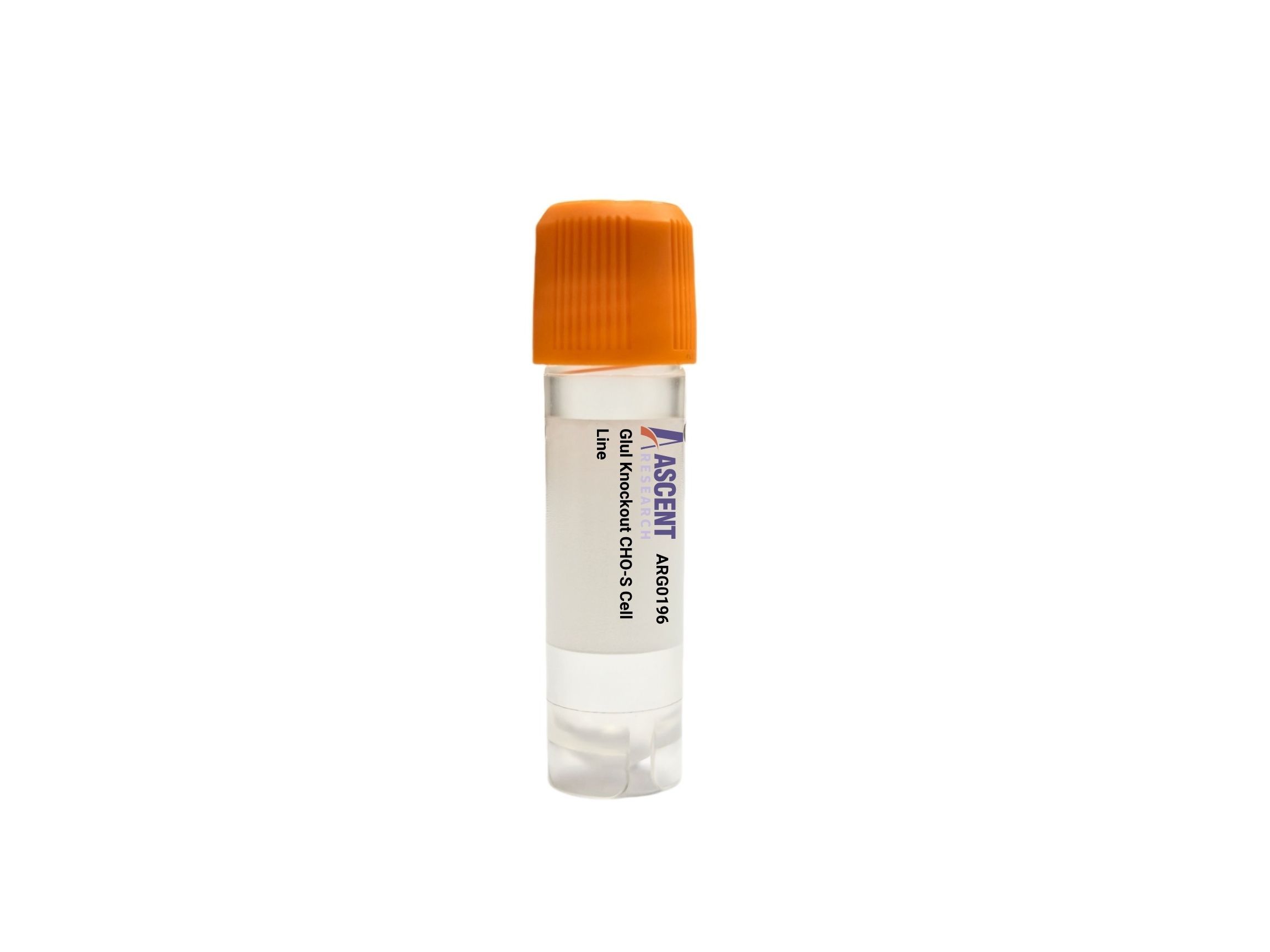
Genome-edited Cells
Ovary
Glul Knockout CHO-S Cell Line is a CRISPR/Cas9-engineered Chinese hamster ovary suspension cell model with disruption of Glul, which encodes glutamine synthetase. In CHO-S cells, GLUL normally assimilates ammonia and glutamate into glutamine, acting upstream of intracellular glutamine pools, ASNS-linked biosynthesis, and mTORC1-responsive nutrient metabolism. Loss of GLUL supports studies of glutamine dependency, ammonia handling, nitrogen metabolism, and media optimization in a biomanufacturing-relevant host. Applications include RT-qPCR, western blotting, targeted metabolomics, isotope tracing, extracellular flux analysis, proliferation assays, recombinant protein titer measurement, and glycan analysis under nutrient limitation.
 CAMK1D Knockout HAP1 Polyclonal Cells
Cat. No. ARG34893
CAMK1D Knockout HAP1 Polyclonal Cells
Cat. No. ARG34893
 Rhesus Monkey Mononuclear Cells (PBMC)
Cat. No. ARP1053
EVA1B Knockout Hela Polyclonal Cells
Cat. No. ARG8417
BAZ1A Knockout Raji Polyclonal Cells
Cat. No. ARG21357
BRAF Knockout MES-OV Polyclonal Cells
Cat. No. ARG24356
APIP Knockout jurkat Polyclonal Cells
Cat. No. ARG33864
Rhesus Monkey Mononuclear Cells (PBMC)
Cat. No. ARP1053
EVA1B Knockout Hela Polyclonal Cells
Cat. No. ARG8417
BAZ1A Knockout Raji Polyclonal Cells
Cat. No. ARG21357
BRAF Knockout MES-OV Polyclonal Cells
Cat. No. ARG24356
APIP Knockout jurkat Polyclonal Cells
Cat. No. ARG33864
The Glul Knockout CHO-S Cell Line is a CRISPR/Cas9-engineered Chinese hamster ovary model in which the endogenous Glul gene has been disrupted to eliminate functional glutamine synthetase expression. This stable in vitro cell line is derived from CHO-S, a suspension-adapted ovary-derived mammalian epithelial-like production host commonly used for recombinant protein expression and metabolic studies. By removing a key enzyme in glutamine biosynthesis, this model provides a defined system for investigating nitrogen assimilation, amino acid homeostasis, and metabolic adaptation under controlled culture conditions.
CHO-S is a clonal Chinese hamster ovary background adapted to serum-free suspension growth and widely implemented in biomanufacturing workflows. Its robust growth characteristics, compatibility with chemically defined media, and relevance to glycosylation and nutrient utilization studies have made it a standard host for metabolic engineering and process development. In addition to its value for recombinant protein production, CHO-S serves as a tractable model for examining epithelial-like mammalian cell metabolism, bioenergetic regulation, and nutrient-responsive phenotypes in suspension culture, particularly in contexts where glutamine handling and ammonia accumulation affect cell performance.
GLUL catalyzes the ATP-dependent conversion of glutamate and ammonia to glutamine, using ATP, ADP, magnesium ions, and substrate availability as central biochemical determinants of activity. This enzyme functions at the interface of glutamine biosynthesis, glutamate metabolism, ammonia detoxification, and broader carbon-nitrogen balance. GLUL is regulated by glutamine availability, ammonia concentration, nutrient stress, glucocorticoid signaling, FOXO transcription factors, and mTORC1-linked nutrient sensing. It acts upstream of the intracellular glutamine pool and thereby influences nucleotide biosynthesis, asparagine synthesis through ASNS, hexosamine biosynthetic flux, and coupling of glutaminolysis to TCA cycle anaplerosis. Representative pathway components connected to this network include GLS, GLUD1, ASNS, SLC1A5, SLC38A2, MTOR, RPTOR, MYC, and ATF4. Loss of GLUL is therefore expected to reduce de novo glutamine synthesis and shift dependence toward extracellular glutamine uptake and compensatory metabolic pathways relevant to cancer metabolism, hyperammonemia research, and ammonia-associated cellular stress.
In the CHO-S background, Glul knockout is particularly informative because this host is routinely used to study nutrient limitation, productivity, and media composition effects. Disruption of Glul enables analysis of how impaired glutamine synthesis alters viability, growth, redox balance, biosynthetic capacity, and adaptation to suspension culture under glutamine-replete or glutamine-limited conditions. The model is also relevant for assessing how ammonia handling influences cell physiology and production phenotypes in a manufacturing-relevant context.
This cell line can be applied in glutamine dependency studies, media optimization, and metabolic engineering experiments designed to quantify glutamine, glutamate, and ammonia fluxes. Typical analytical workflows include western blotting or RT-qPCR to confirm loss of GLUL expression, targeted metabolomics and LC-MS profiling to measure amino acid and central carbon pathway changes, isotope tracing to evaluate carbon-nitrogen flux redistribution, and extracellular flux analysis to characterize bioenergetic consequences. Researchers may also use proliferation and viability assays under nutrient stress, RNA-seq to define adaptive transcriptional programs involving ATF4, MYC, or transporter networks such as SLC1A5 and SLC38A2, and recombinant protein titer measurement with glycan analysis to examine bioprocess consequences of altered glutamine metabolism. For additional technical information, product details, or related gene-edited cell models, researchers may contact Ascent Research.