Genome-edited Cells
Large intestine (colon)
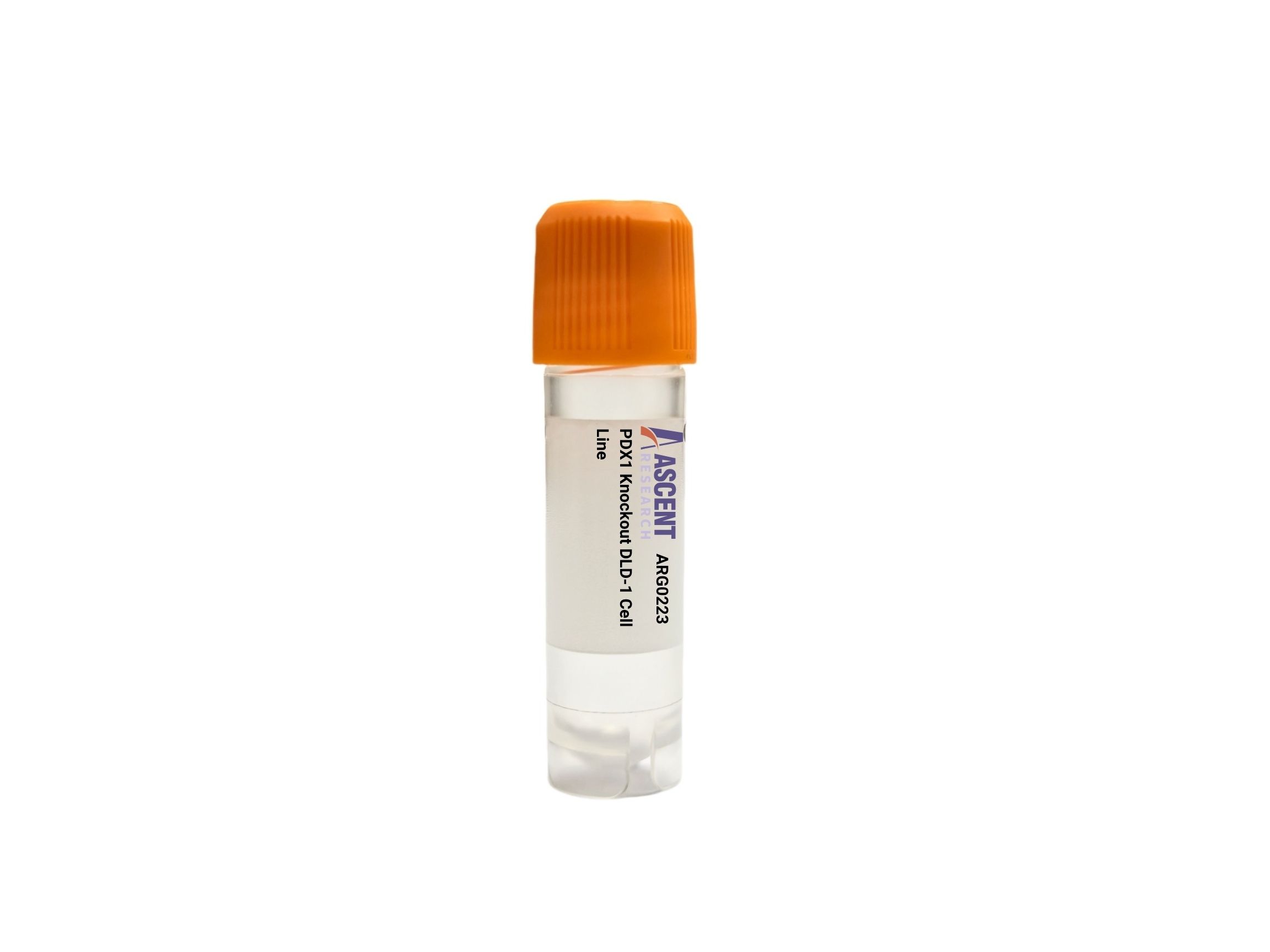
The PDX1 Knockout DLD-1 Cell Line is a CRISPR/Cas9-edited knockout cell line that disrupts the PDX1 gene in human colorectal adenocarcinoma DLD-1 cells. PDX1 encodes a homeodomain transcription factor essential for pancreatic development and ??-cell function, and its ectopic expression has been tied to Wnt-driven colorectal tumorigenesis. This cell line provides a defined loss-of-function model for studying PDX1-mediated gene regulation, including its interactions with PBX1 and MEIS1 and its transcriptional control of effectors such as INS and SST. Applications range from drug target validation to mechanistic dissection of PDX1??s role in cancer cell proliferation and metabolic signaling.
 LRRC1 Knockout NCI-H1299 Polyclonal Cells
Cat. No. ARG17991
AACS Knockout Raji Polyclonal Cells
Cat. No. ARG20973
GNPTG Knockout Raji Polyclonal Cells
Cat. No. ARG23591
KLHL13 Knockout HCT116 Polyclonal Cells
Cat. No. ARG34782
CCDC85C Knockout NCI-H1299 Polyclonal Cells
Cat. No. ARG43088
ERG Knockout CaSki Polyclonal Cells
Cat. No. ARG9800
LRRC1 Knockout NCI-H1299 Polyclonal Cells
Cat. No. ARG17991
AACS Knockout Raji Polyclonal Cells
Cat. No. ARG20973
GNPTG Knockout Raji Polyclonal Cells
Cat. No. ARG23591
KLHL13 Knockout HCT116 Polyclonal Cells
Cat. No. ARG34782
CCDC85C Knockout NCI-H1299 Polyclonal Cells
Cat. No. ARG43088
ERG Knockout CaSki Polyclonal Cells
Cat. No. ARG9800
The PDX1 Knockout DLD-1 Cell Line is a CRISPR/Cas9-edited knockout cell line that provides stable, heritable disruption of the PDX1 gene in a human colorectal adenocarcinoma background. This cell line was generated through CRISPR/Cas9-mediated gene targeting, eliminating PDX1 protein expression and enabling loss-of-function investigations. As a complete gene-disruption model, it offers a defined experimental system for examining PDX1-dependent cellular processes without the variability of transient knockdown methods. It is well-suited for downstream assays including transcript and protein analyses, as well as phenotypic readouts in cancer biology and metabolic research.
The DLD-1 host cell line is an epithelial cell model derived from a colorectal carcinoma patient and is widely used in cancer studies. DLD-1 cells carry an APC mutation that leads to constitutive activation of the Wnt/??-catenin pathway, driving uncontrolled proliferation and serving as a representative system for colon tumorigenesis research. Their stable karyotype, reproducible growth kinetics, and compatibility with genetic manipulation make them an ideal background for generating CRISPR knockout derivatives. Combined with the PDX1 disruption, this cell line provides a physiologically relevant platform to explore gene function within a constitutively activated Wnt signaling context.
PDX1 encodes a homeodomain transcription factor that acts as a master regulator of pancreatic development and ??-cell function. It is activated by upstream regulators HNF1A and FOXA2, and directly transactivates genes including INS, SST, and GCK. PDX1 also engages protein interactions with PBX1 and MEIS1, and may modulate Wnt signaling through association with ??-catenin and TCF7L2. Hence, PDX1 integrates endocrine differentiation programs with proliferative signaling cascades.
In DLD-1 cells, where aberrant Wnt signaling is driven by APC mutation, PDX1 may contribute to tumorigenic processes such as proliferation and migration. The knockout of PDX1 in this background allows researchers to disentangle its potential oncogenic roles from the dominant Wnt transcriptional program. Since PDX1 is not normally expressed in colonic epithelium, its ectopic presence in DLD-1 cells mimics certain cancer-associated reactivation events. Consequently, this knockout model is especially suited for investigating how PDX1 influences colorectal cancer cell behavior and whether it interacts with canonical Wnt components to modulate downstream targets.
Typical applications of this cell line include functional validation of PDX1 as a therapeutic target in diabetes and cancer, as well as mechanistic studies of pancreatic transcription factor networks. Assays such as RT-qPCR, Western blotting, immunofluorescence, and RNA-seq can be used to examine gene and protein expression changes upon PDX1 loss. Phenotypic analyses via proliferation, apoptosis, migration, and colony formation assays further clarify its role in tumor cell dynamics. Additionally, luciferase reporter assays can probe PDX1 transcriptional activity. For more details, please contact Ascent Research technical support.