Genome-edited Cells
Liver
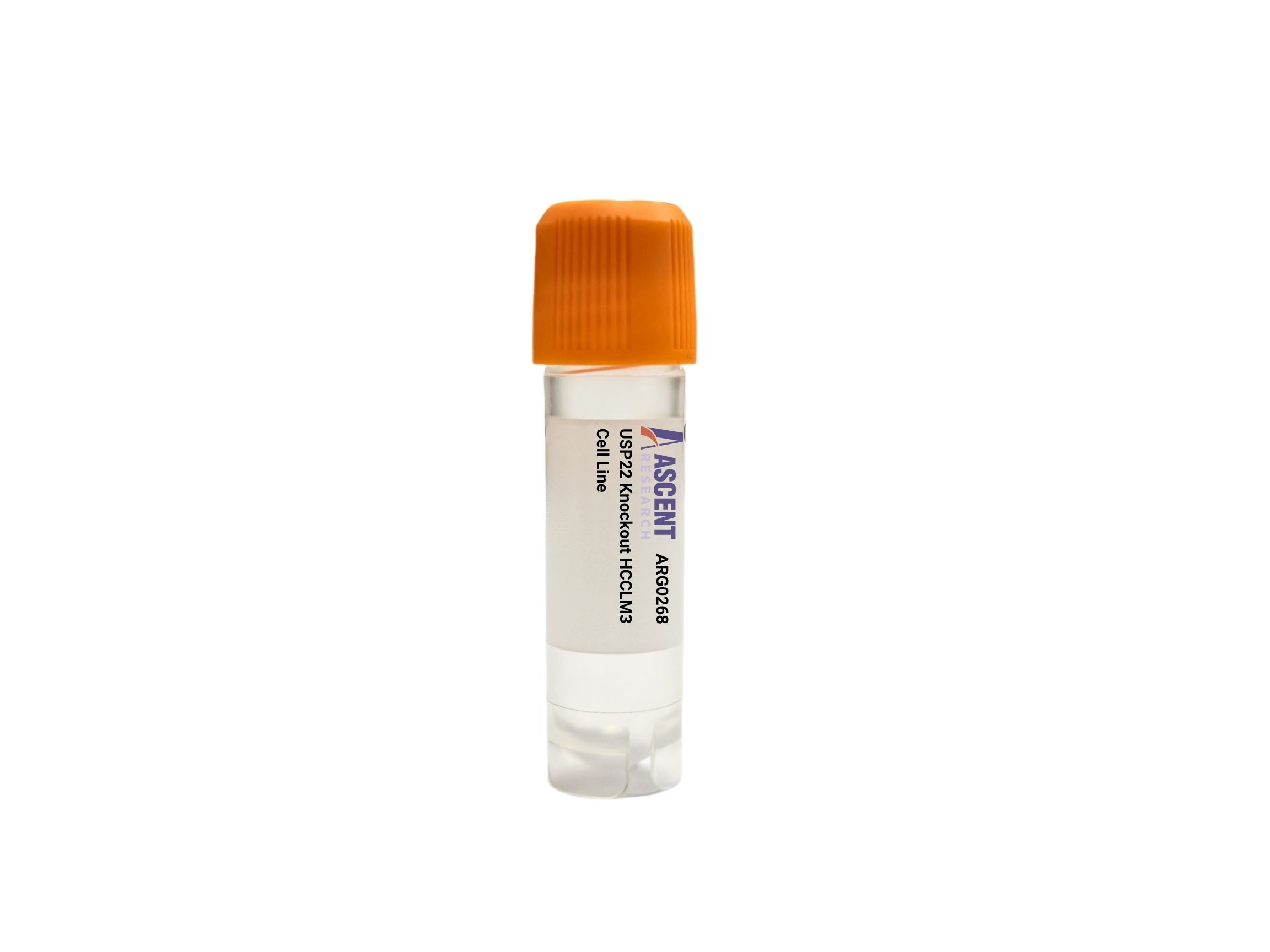
The USP22 Knockout HCCLM3 Cell Line is a CRISPR/Cas9-edited human hepatocellular carcinoma cell line with targeted disruption of the USP22 deubiquitinase gene. USP22, a component of the SAGA complex, regulates histone ubiquitination and transcriptional activation of genes linked to proliferation and stemness via pathways such as Wnt/??-catenin and PI3K/AKT. This knockout model in the highly metastatic HCCLM3 background enables dissection of USP22's role in tumor invasion and metastasis. Ideal for studying epigenetic regulation, oncogenic signaling, and drug responses, this cell line supports assays including migration, apoptosis, and reporter gene analyses. Investigators can use it to screen for USP22 inhibitors and explore crosstalk between USP22 and key factors like c-Myc, cyclin D1, and p21.
 HECA Knockout K562 Polyclonal Cells
Cat. No. ARG20540
FKBP15 Knockout SK-HEP-1 Polyclonal Cells
Cat. No. ARG15886
ALKBH5 Knockout HEK293T Polyclonal Cells
Cat. No. ARG38071
NEURL4 Knockout A549 Polyclonal Cells
Cat. No. ARG9960
CDKN1B Knockout CaSki Polyclonal Cells
Cat. No. ARG9877
MS4A7 Knockout MCF7 Polyclonal Cells
Cat. No. ARG11405
HECA Knockout K562 Polyclonal Cells
Cat. No. ARG20540
FKBP15 Knockout SK-HEP-1 Polyclonal Cells
Cat. No. ARG15886
ALKBH5 Knockout HEK293T Polyclonal Cells
Cat. No. ARG38071
NEURL4 Knockout A549 Polyclonal Cells
Cat. No. ARG9960
CDKN1B Knockout CaSki Polyclonal Cells
Cat. No. ARG9877
MS4A7 Knockout MCF7 Polyclonal Cells
Cat. No. ARG11405
The USP22 Knockout HCCLM3 Cell Line is a CRISPR/Cas9-edited knockout cell line featuring targeted disruption of the USP22 gene in the HCCLM3 human hepatocellular carcinoma background. This stable loss-of-function model enables robust investigation of USP22-dependent pathways without the limitations of transient gene silencing. It provides a defined platform for studying gene function in a metastatic tumor context.
HCCLM3, derived from the highly metastatic MHCC97-H line, is a well-characterized model for studying hepatocellular carcinoma invasion and metastasis. This cell line recapitulates aggressive tumor behavior, making it ideal for assessing the impact of USP22 knockout on metastatic potential, proliferation, and interaction with the microenvironment.
USP22 is a deubiquitinase core component of the SAGA transcriptional coactivator complex, functioning within the deubiquitination module alongside GCN5, ADA2, ADA3, SGF29, TAF5L, TAF6L, ATXN7, ATXN7L3, and SUPT20H. It catalyzes removal of ubiquitin from histones H2A at K119 and H2B at K120, facilitating transcriptional activation. USP22 is regulated by upstream factors including c-Myc, ??-catenin/TCF, NF-??B, AP-1, EGF, and TGF-??, and controls downstream effectors such as c-Myc, cyclin D1, p21, Bax, and Bcl-2. Consequently, USP22 integrates oncogenic pathways like Wnt/??-catenin, NF-??B, TGF-??, and PI3K/AKT, influencing proliferation, cell cycle progression, apoptosis, and stemness.
In hepatocellular carcinoma, USP22 upregulation enhances tumor growth and metastasis by promoting oncogenic transcription through histone deubiquitination. The HCCLM3 USP22 knockout cell line enables detailed analysis of how USP22 loss affects key signaling nodes such as ??-catenin, TCF/LEF, NF-??B p65, PI3K, AKT, mTOR, cyclin D1, and p21. This model is particularly suited for elucidating the epigenetic mechanisms driving the malignant phenotype in metastatic liver cancer.
This knockout line supports diverse applications, including investigating USP22’s role in proliferation, invasion, and metastasis via Transwell assays, flow cytometry, and immunofluorescence; epigenetic studies using Western blotting, RT-qPCR, RNA-seq, and ChIP-qPCR; drug sensitivity testing; deubiquitinase inhibitor screening; and Wnt/??-catenin reporter assays to probe pathway crosstalk. For further information, please contact Ascent Research.