Genome-edited Cells
Large intestine (colon)
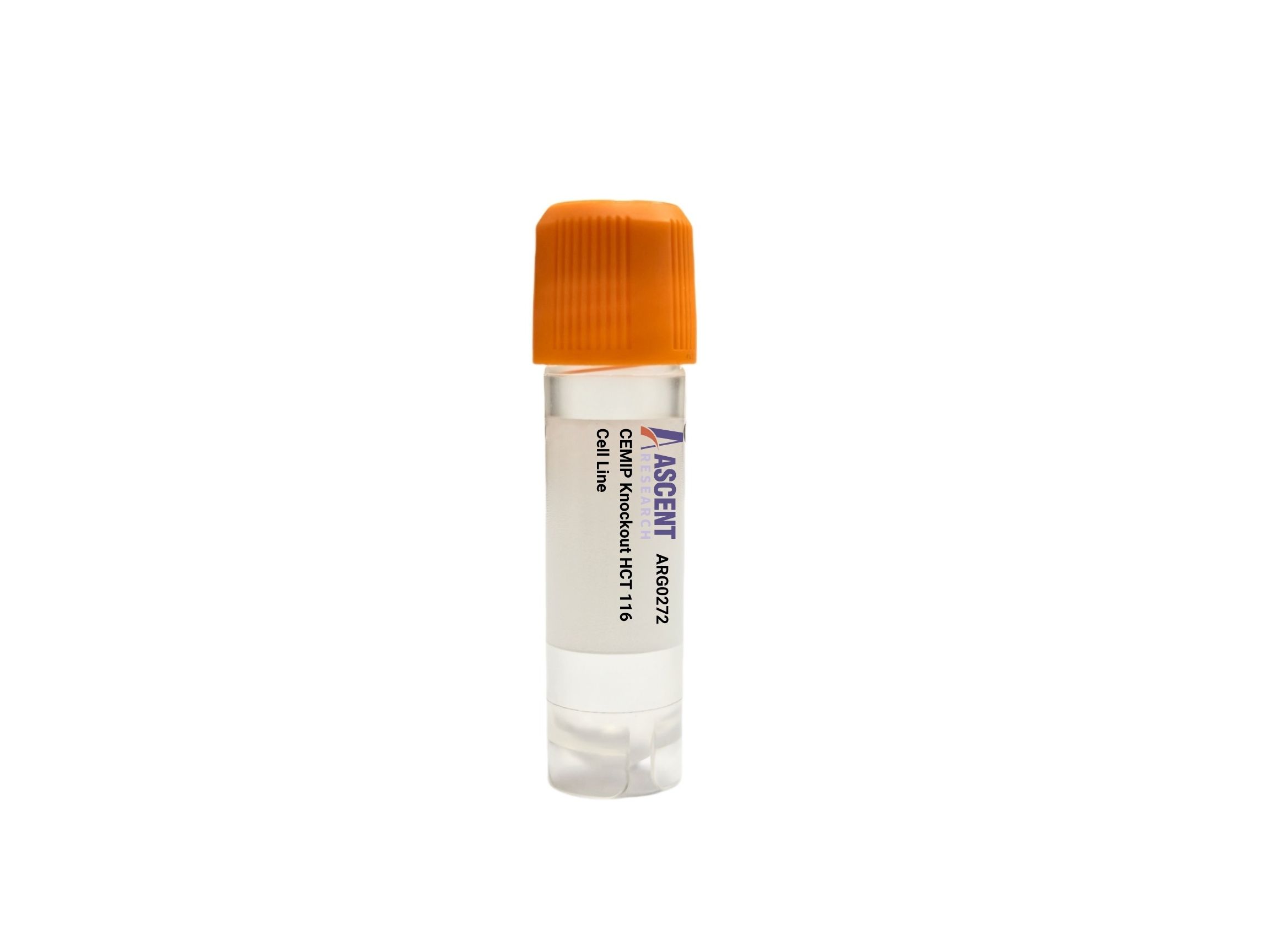
The CEMIP Knockout HCT 116 Cell Line is a CRISPR/Cas9-edited human colorectal carcinoma cell line with disruption of the CEMIP gene. Derived from HCT 116 cells harboring a KRAS G13D mutation and MLH1 deficiency, this model enables study of CEMIP-dependent hyaluronan metabolism, cell migration, and pro-inflammatory signaling. CEMIP acts as a hyaluronan depolymerase, producing low-molecular-weight hyaluronan fragments that activate CD44 and TLR4, thereby driving NF-??B and MMP-9 expression. Loss of CEMIP facilitates investigation of epithelial-to-mesenchymal transition, ??-catenin signaling, and tumor microenvironment interactions. The cell line is suited for cancer metastasis research, hyaluronan biology, drug target validation, and high-throughput invasion screening using assays such as Western blotting, migration, and invasion assays.
 JADE2 Knockout HEK293T Polyclonal Cells
Cat. No. ARG26180
KLC4 Knockout HGC-27 Polyclonal Cells
Cat. No. ARG30139
KCTD15 Knockout jurkat Polyclonal Cells
Cat. No. ARG34398
HNF4A Knockout 786-O Polyclonal Cells
Cat. No. ARG35202
EDEM2 Knockout NCI-H1975 Polyclonal Cells
Cat. No. ARG40457
JADE2 Knockout HEK293T Polyclonal Cells
Cat. No. ARG26180
KLC4 Knockout HGC-27 Polyclonal Cells
Cat. No. ARG30139
KCTD15 Knockout jurkat Polyclonal Cells
Cat. No. ARG34398
HNF4A Knockout 786-O Polyclonal Cells
Cat. No. ARG35202
EDEM2 Knockout NCI-H1975 Polyclonal Cells
Cat. No. ARG40457
 Rat Podocytes
Cat. No. ARP0252
Rat Podocytes
Cat. No. ARP0252
The CEMIP Knockout HCT 116 Cell Line is a CRISPR/Cas9-edited human cell line engineered to disrupt the CEMIP (cell migration-inducing and hyaluronan-binding protein) gene. This knockout model provides a defined genetic background for investigating the roles of CEMIP in colorectal carcinoma biology, particularly in hyaluronan metabolism, cell migration, and pro-inflammatory signaling. The cell line serves as a loss-of-function tool enabling precise dissection of CEMIP-dependent pathways without off-target interference common to pharmacological inhibitors.
The host cell line, HCT 116, is a widely characterized human colorectal carcinoma epithelial cell line derived from an adult male patient with colorectal adenocarcinoma. It harbors an activating KRAS G13D mutation and exhibits MLH1 deficiency, leading to microsatellite instability (MSI-H) ?C a hallmark of a subset of colorectal cancers. This genetic context makes HCT 116 particularly relevant for studying tumor progression, metastatic potential, and resistance mechanisms, as well as for evaluating the role of CEMIP in MSI-driven colorectal tumors.
CEMIP functions as a hyaluronan depolymerase that cleaves high-molecular-weight hyaluronan (HMW-HA) into bioactive low-molecular-weight fragments that engage receptors such as CD44 and TLR4, triggering MyD88-dependent NF-??B activation and MMP-9 expression. It also enhances ??-catenin activity downstream of Wnt signaling. Upstream inducers include TGF-??, EGF, Wnt ligands, IL-6, and TNF-??. CEMIP-dependent hyaluronan remodeling promotes epithelial-to-mesenchymal transition (EMT) and cell migration, involving interactions with clathrin and AP-2 adaptor complexes.
Disruption of CEMIP in the HCT 116 background offers a powerful system to study how loss of hyaluronan depolymerase activity affects colorectal cancer cell invasion, migration, and inflammation. Given HCT 116’s KRAS mutation and MSI status, this model is particularly suited for examining cross-talk between CEMIP-mediated hyaluronan remodeling and oncogenic signaling cascades. Researchers can directly compare parental and CEMIP knockout cells to assess dependencies on CEMIP for EMT, NF-??B activation, and CD44-mediated responses, thereby clarifying its role in colorectal cancer metastasis and tumor microenvironment interactions.
Applications include cancer metastasis research, hyaluronan biology, drug target validation, and high-throughput screening for invasion inhibitors. Validated assays encompass Western blotting and RT-qPCR for knockout confirmation, hyaluronan degradation assays, wound healing and Matrigel invasion assays, immunofluorescence, RNA-seq transcriptomics, MTT proliferation, and apoptosis flow cytometry. It also supports flow cytometric analysis of CD44 surface expression to assess receptor dynamics. For detailed technical specifications or ordering information, please contact Ascent Research.