Genome-edited Cells
Large intestine (colon)
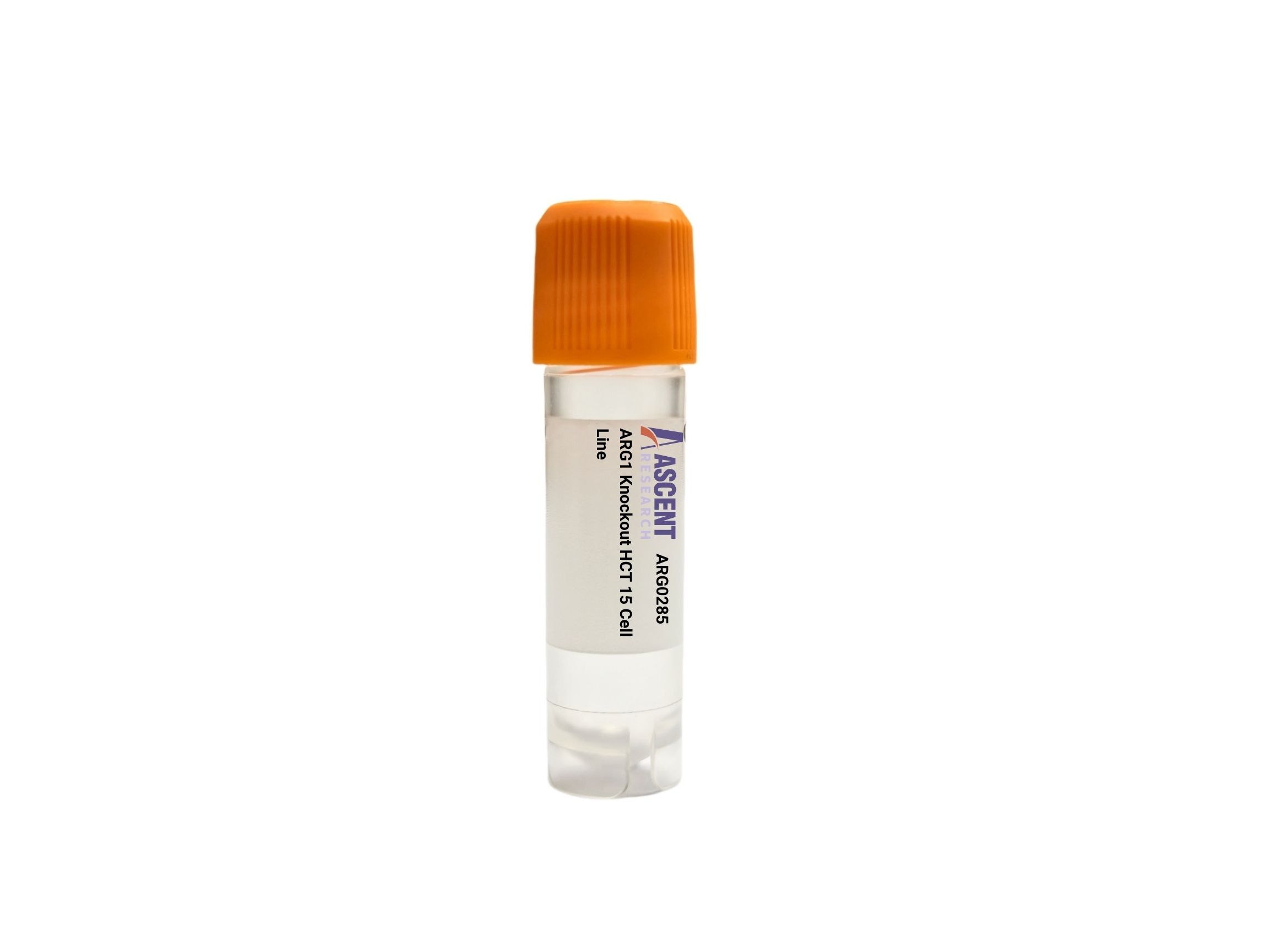
The ARG1 Knockout HCT 15 Cell Line is a CRISPR/Cas9-edited knockout cell line derived from HCT 15 colorectal adenocarcinoma cells, providing a loss-of-function model for arginase-1. ARG1 hydrolyzes arginine to ornithine and urea, depleting arginine needed for T-cell function and promoting immunosuppression. Its expression is regulated by IL4, IL13, STAT6, and HIF1A, and it interacts with NOS2 and ARG2. This knockout cell line is an essential tool for studying arginine metabolism, immune evasion, and metabolic reprogramming in colorectal cancer. It enables research on tumor immunology, immune checkpoint mechanisms, and myeloid-derived suppressor cell function using assays such as arginase activity measurement, T-cell proliferation assays, and metabolic profiling.
 NRIP1 Knockout K562 Polyclonal Cells
Cat. No. ARG19258
LRSAM1 Knockout A2780 Polyclonal Cells
Cat. No. ARG18798
OSTM1 Knockout SK-HEP-1 Polyclonal Cells
Cat. No. ARG16174
GCA Knockout jurkat Polyclonal Cells
Cat. No. ARG13487
Ephb4 Knockout RAW 264.7 Polyclonal Cells
Cat. No. ARG12468
BMPR1B Knockout Hela Polyclonal Cells
Cat. No. ARG37346
NRIP1 Knockout K562 Polyclonal Cells
Cat. No. ARG19258
LRSAM1 Knockout A2780 Polyclonal Cells
Cat. No. ARG18798
OSTM1 Knockout SK-HEP-1 Polyclonal Cells
Cat. No. ARG16174
GCA Knockout jurkat Polyclonal Cells
Cat. No. ARG13487
Ephb4 Knockout RAW 264.7 Polyclonal Cells
Cat. No. ARG12468
BMPR1B Knockout Hela Polyclonal Cells
Cat. No. ARG37346
The ARG1 Knockout HCT 15 Cell Line is a CRISPR/Cas9-edited knockout cell line derived from the HCT 15 human colorectal adenocarcinoma cell line. This product provides a stable loss-of-function model for the ARG1 gene, which encodes arginase-1, a key enzyme in arginine metabolism. The knockout cell line is generated using CRISPR/Cas9-mediated gene disruption, resulting in the ablation of ARG1 expression. This model enables researchers to investigate the role of arginase-1 in tumor immunosuppression and metabolic regulation within a colorectal cancer context.
HCT 15 is an epithelial, adherent cell line originally isolated from a human colon adenocarcinoma. It is widely employed in colorectal cancer research to study oncogenic signaling, drug response, and tumor biology. The cell line harbors mutations characteristic of colorectal cancer, providing a relevant platform for investigating molecular mechanisms and therapeutic interventions. Its adherent morphology facilitates standard cell culture techniques and various functional assays.
ARG1 catalyzes the hydrolysis of L-arginine to L-ornithine and urea, competing with nitric oxide synthase (NOS2) for arginine substrate. In the tumor microenvironment, ARG1 expression is upregulated by IL4, IL13, STAT6, TGFB1, cAMP, glucocorticoids, and HIF1A. Downstream effects include reduced nitric oxide production, increased polyamine synthesis through ornithine decarboxylase (ODC1), T-cell dysfunction mediated by arginine depletion, and inhibition of mTORC1 signaling. ARG1 interacts with factors such as NOS2, ARG2, ASS1, ASL, and RhoA. By depleting local arginine, ARG1 impairs T-cell proliferation and effector functions, contributing to an immunosuppressive niche that favors tumor immune evasion. In colorectal cancer, ARG1 expressed by tumor cells or myeloid-derived suppressor cells (MDSCs) promotes immune escape.
In the HCT 15 colorectal adenocarcinoma model, disruption of ARG1 provides a valuable tool to dissect the contribution of arginine metabolism to cancer cell proliferation, immune modulation, and therapeutic resistance. The knockout cell line allows for the examination of altered metabolic flux, ornithine/polyamine pathway upregulation, and changes in immunoregulatory cytokine profiles. Co-culture experiments with T cells or MDSCs can elucidate how tumor-cell-intrinsic ARG1 activity suppresses antitumor immunity. This model is particularly relevant for studying immunometabolic checkpoints and identifying strategies to overcome immunosuppression in colorectal cancer.
This ARG1 knockout cell line is applicable in a spectrum of research areas, including tumor immunology, cancer immunotherapy, immune checkpoint research, and arginine metabolism. Representative assays include arginase activity quantification, RT-qPCR and Western blot for expression analysis, ELISA-based measurement of arginine and ornithine levels, T-cell proliferation assays, flow cytometry for immune phenotyping, and metabolic profiling. These methodologies enable comprehensive functional characterization and interrogation of the ARG1 pathway. For further information, please contact Ascent Research.