Genome-edited Cells
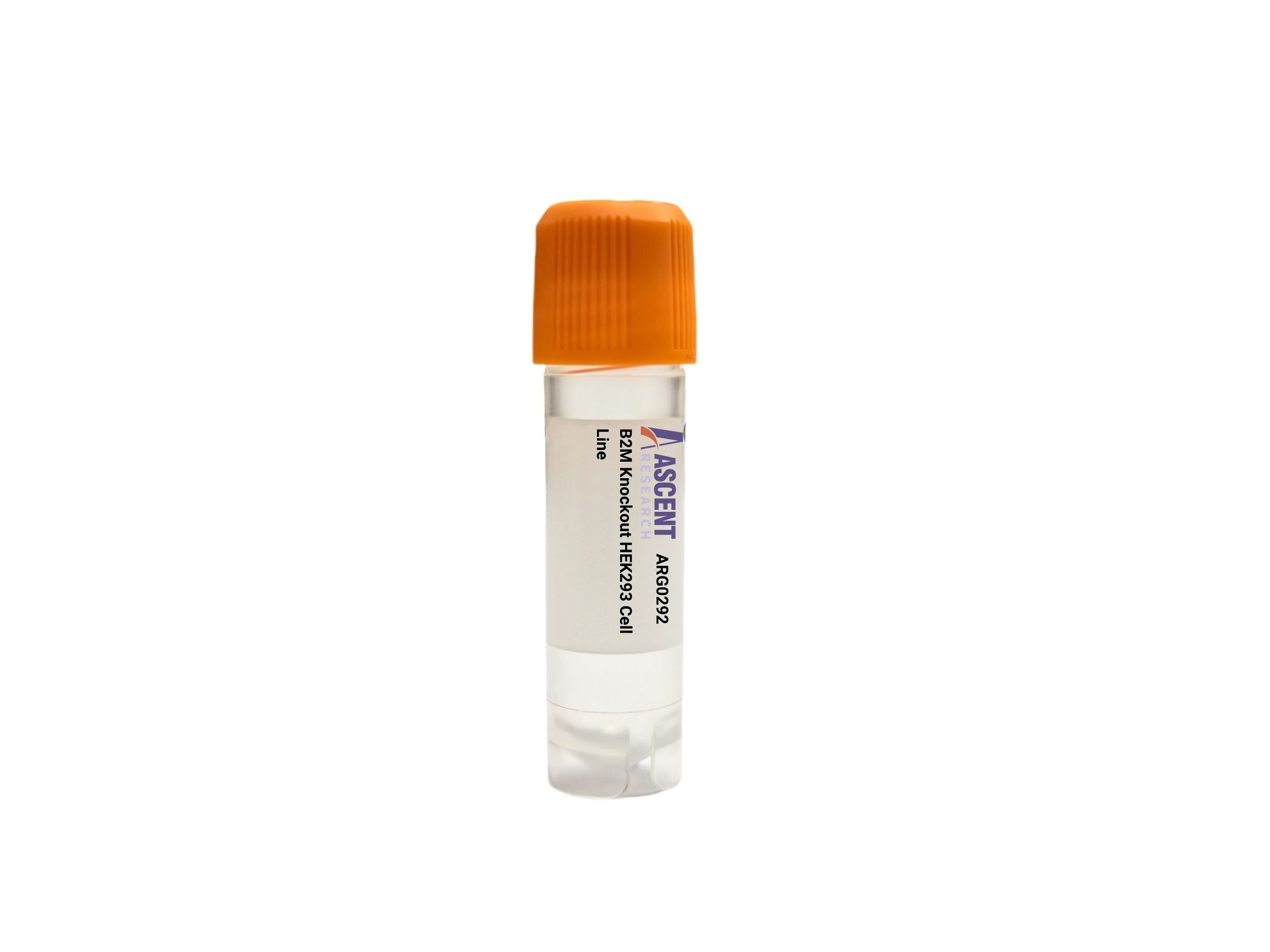
The B2M Knockout HEK293 Cell Line is a CRISPR/Cas9-edited knockout cell line designed to disrupt beta-2-microglobulin (B2M) in human HEK293 cells. This loss-of-function model eliminates MHC class I surface expression, abrogating CD8+ T cell recognition and providing a defined system to study immune evasion and allogeneic response mechanisms. HEK293 cells, transformed with adenovirus 5 DNA, are a standard host for recombinant protein production. B2M interacts with HLA-A/B/C heavy chains, TAP, and tapasin to mediate antigen presentation. Applications include universal donor cell engineering, non-immunogenic protein production, and T cell cytotoxicity assays.
 HNF4G Knockout HAP1 Polyclonal Cells
Cat. No. ARG22565
AGRN Knockout HGC-27 Polyclonal Cells
Cat. No. ARG29458
JAGN1 Knockout SK-HEP-1 Polyclonal Cells
Cat. No. ARG32722
ATG16L1 Knockout 143B Polyclonal Cells
Cat. No. ARG35011
JAK1 Knockout HAP1 Polyclonal Cells
Cat. No. ARG37046
GNS Knockout AGS Polyclonal Cells
Cat. No. ARG26849
HNF4G Knockout HAP1 Polyclonal Cells
Cat. No. ARG22565
AGRN Knockout HGC-27 Polyclonal Cells
Cat. No. ARG29458
JAGN1 Knockout SK-HEP-1 Polyclonal Cells
Cat. No. ARG32722
ATG16L1 Knockout 143B Polyclonal Cells
Cat. No. ARG35011
JAK1 Knockout HAP1 Polyclonal Cells
Cat. No. ARG37046
GNS Knockout AGS Polyclonal Cells
Cat. No. ARG26849
The B2M Knockout HEK293 Cell Line is a CRISPR/Cas9-edited knockout cell line engineered to disrupt the B2M gene in Homo sapiens HEK293 cells. This loss-of-function model provides a precisely defined genetic background for dissecting beta-2-microglobulin-dependent processes, particularly the assembly and surface presentation of major histocompatibility complex (MHC) class I molecules. By abrogating B2M expression, this cell line serves as a powerful tool for investigating antigen presentation, immune recognition, and the molecular mechanisms of immune evasion.
The host cell line, HEK293, is a human embryonic kidney cell line transformed with sheared adenovirus 5 DNA, exhibiting an adherent epithelial morphology. Widely employed for high-level recombinant protein expression and viral vector production, HEK293 cells offer a robust and well-characterized platform for genetic manipulation. Their extensive use in biotechnology and biomedical research ensures that the B2M knockout model integrates seamlessly into established workflows for protein engineering, viral vector development, and immunological assays.
Beta-2-microglobulin (B2M) functions as the invariant light chain of MHC class I molecules, essential for stabilizing heavy chains (HLA-A, HLA-B, and HLA-C) and facilitating peptide loading in the endoplasmic reticulum. The MHC class I assembly complex comprises B2M, heavy chain, transporter associated with antigen processing (TAP), tapasin, calreticulin, and ERp57, enabling efficient presentation of endogenous peptides at the cell surface. Transcription of B2M is activated by upstream signals such as interferon-gamma (IFN-??), NF-??B, CIITA, and STAT1. Downstream, peptide-MHC class I complexes engage CD8+ T cells, triggering adaptive immune responses. In this knockout cell line, disruption of B2M prevents MHC class I complex formation, eliminating surface presentation and abrogating recognition by cytotoxic T lymphocytes.
The combination of B2M knockout and the HEK293 host background generates a cell system with reduced immunogenicity, as the absence of MHC class I surface expression circumvents allogeneic CD8+ T cell-mediated rejection. This engineered line thus represents an ideal starting point for producing non-immunogenic therapeutic proteins and for constructing universal donor cells that evade host immune surveillance. Moreover, the well-characterized HEK293 transcriptome and proteome provide a clean context for studying how B2M loss influences global gene expression and protein interaction networks without confounding factors present in immune-lineage cells.
Researchers can employ this B2M Knockout HEK293 Cell Line to investigate immune evasion mechanisms exploited by cancer cells, to validate T cell recognition and cytotoxicity assays, and to develop strategies for autoimmune disease modeling. Typical experimental approaches include flow cytometric analysis of MHC class I surface expression, western blotting for B2M protein, RT-qPCR for B2M mRNA quantification, and co-immunoprecipitation of MHC class I assembly components. The line also supports functional studies of CD8+ T cell activation and killing, providing a versatile platform for immunological and cell engineering research. For further information or to request a quote, please contact Ascent Research.