Genome-edited Cells
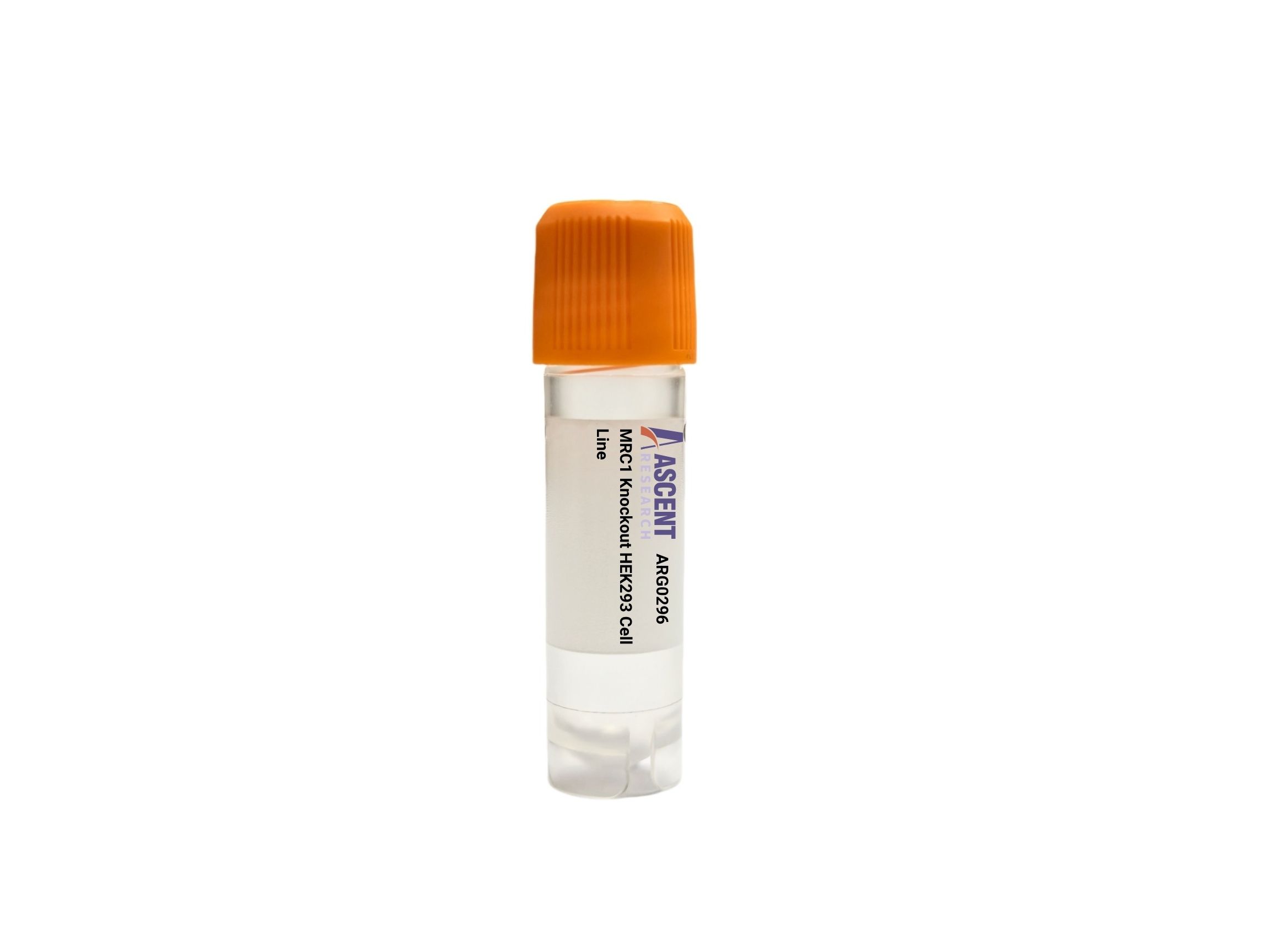
The MRC1 Knockout HEK293 Cell Line is a CRISPR/Cas9-edited loss-of-function model targeting the MRC1 gene encoding the macrophage mannose receptor (CD206). This engineered HEK293 derivative enables study of mannose receptor biology, including ligand endocytosis and immune-modulatory signaling, in a human embryonic kidney epithelial background. MRC1 functions as a C-type lectin receptor that internalizes mannosylated ligands and coordinates anti-inflammatory responses through PI3K/Akt activation and crosstalk with Toll-like receptors. This knockout cell line is suitable for investigating MRC1-mediated phagocytosis, cytokine regulation, and pathogen recognition, as well as screening receptor-targeted therapeutics.
 GORASP1 Knockout Hela Polyclonal Cells
Cat. No. ARG25466
C16orf74 Knockout HEK293T Polyclonal Cells
Cat. No. ARG25870
IQGAP1 Knockout jurkat Polyclonal Cells
Cat. No. ARG34350
C12orf10 Knockout SKOV3 Polyclonal Cells
Cat. No. ARG36715
DNAJA2 Knockout 786-O Polyclonal Cells
Cat. No. ARG39063
COMMD10 Knockout 786-O Polyclonal Cells
Cat. No. ARG5112
GORASP1 Knockout Hela Polyclonal Cells
Cat. No. ARG25466
C16orf74 Knockout HEK293T Polyclonal Cells
Cat. No. ARG25870
IQGAP1 Knockout jurkat Polyclonal Cells
Cat. No. ARG34350
C12orf10 Knockout SKOV3 Polyclonal Cells
Cat. No. ARG36715
DNAJA2 Knockout 786-O Polyclonal Cells
Cat. No. ARG39063
COMMD10 Knockout 786-O Polyclonal Cells
Cat. No. ARG5112
The MRC1 Knockout HEK293 Cell Line is a CRISPR/Cas9-edited knockout cell line derived from HEK293, carrying a targeted disruption of the MRC1 gene that encodes the macrophage mannose receptor (CD206). This engineered model provides a loss-of-function system for investigating MRC1-dependent processes in a human embryonic kidney epithelial cell context, facilitating detailed studies of receptor-mediated endocytosis, immune regulation, and downstream signaling without interference from endogenous MRC1 expression.
HEK293 cells are an established immortalized line originating from human embryonic kidney tissue transformed with sheared adenovirus type 5 DNA, valued for their high transfection efficiency and robust protein production. As an embryonic kidney epithelial cell model, they support diverse applications including recombinant protein expression, viral packaging, and investigation of signaling pathways, making them a versatile host for CRISPR/Cas9-mediated gene disruption to interrogate specific molecular functions.
The MRC1 gene product, CD206, functions as a pattern recognition receptor with a carbohydrate-recognition domain that binds mannose, fucose, and N-acetylglucosamine residues on microbial surfaces and endogenous glycoproteins, facilitating clathrin-mediated endocytosis and delivery to lysosomal compartments. Its expression is transcriptionally regulated by IL-4 and IL-13 via STAT6 activation, as well as by IL-10, PPAR??, and KLF4. Downstream, MRC1 engagement modulates intracellular signaling by activating PI3K/Akt and small GTPases Rac1 and Cdc42, while interacting with coreceptors such as CD14 and TLR2 to influence inflammatory outcomes. This signaling promotes expression of anti-inflammatory mediators like TGF-??1 and IL-10, and suppresses pro-inflammatory pathways, thereby shaping innate immune responses.
Although MRC1 is predominantly expressed in macrophages and dendritic cells, its exogenous or basal expression in engineered HEK293 systems permits reductionist analysis of receptor trafficking and signal transduction in a tractable epithelial background. Disruption of MRC1 in HEK293 cells eliminates receptor-mediated ligand internalization and downstream signaling, enabling researchers to study MRC1-dependent processes such as mannosylated ligand uptake, phagocytosis of zymosan particles, and modulation of PI3K/Akt/mTOR pathway dynamics without confounding inputs from other innate immune receptors.
This knockout cell line is applicable to functional studies of mannose receptor endocytosis and ligand binding, investigation of MRC1-mediated immune modulation, screening of MRC1-targeted drug delivery systems, and analysis of pathogen-host interactions. Representative assays include Western blotting for MRC1 protein, RT-qPCR for MRC1 mRNA, fluorescent mannosylated ligand uptake assays, phagocytosis assays using zymosan particles, ELISA for cytokines such as IL-10 and TGF-??, immunofluorescence staining, and flow cytometry for surface receptor expression. For further details or to inquire about licensing or custom derivatives, please contact Ascent Research.