Genome-edited Cells
Kidney
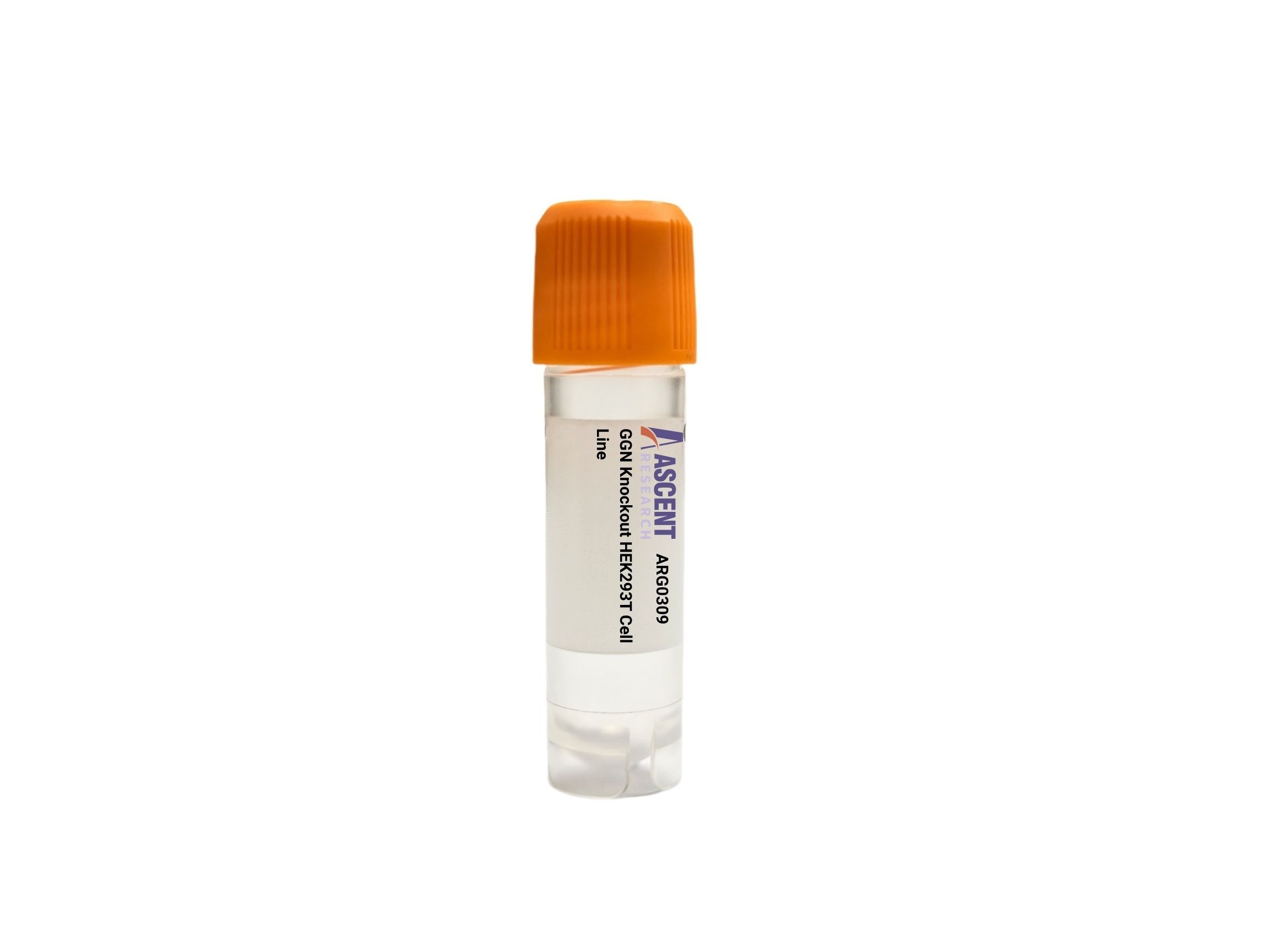
The GGN Knockout HEK293T Cell Line is a precisely engineered CRISPR/Cas9-edited knockout model that abolishes gametogenetin protein expression in the high-transfection-efficiency HEK293T background. This human embryonic kidney epithelial-derived cell line facilitates detailed study of GGN's function within the ubiquitin-proteasome system, where gametogenetin is targeted for degradation through RNF216-mediated ubiquitination. Regulated by transcription factors CREM and DMRT1, as well as androgen receptor and FSH signaling, this knockout cell line supports mechanistic research into spermatogenesis, male infertility, and protein turnover pathways. Researchers can employ standard techniques such as western blotting, co-immunoprecipitation, and ubiquitination assays to dissect gametogenetin's molecular interactions and screen compounds for fertility-related therapeutic development.
 GCDH Knockout A2780 Polyclonal Cells
Cat. No. ARG19109
MLF2 Knockout jurkat Polyclonal Cells
Cat. No. ARG13671
ARL14EP Knockout Hela Polyclonal Cells
Cat. No. ARG20907
AMDHD2 Knockout huh-7 Polyclonal Cells
Cat. No. ARG27882
LCMT2 Knockout HEK293T Polyclonal Cells
Cat. No. ARG3663
GCDH Knockout A2780 Polyclonal Cells
Cat. No. ARG19109
MLF2 Knockout jurkat Polyclonal Cells
Cat. No. ARG13671
ARL14EP Knockout Hela Polyclonal Cells
Cat. No. ARG20907
AMDHD2 Knockout huh-7 Polyclonal Cells
Cat. No. ARG27882
LCMT2 Knockout HEK293T Polyclonal Cells
Cat. No. ARG3663
 Human Type II Alveolar Epithelial Cells
Cat. No. ARP1007
Human Type II Alveolar Epithelial Cells
Cat. No. ARP1007
The GGN Knockout HEK293T Cell Line is a CRISPR/Cas9-edited knockout cell line designed for loss-of-function studies of the gametogenetin-encoding GGN gene. This model enables examination of the molecular consequences of gametogenetin ablation in a controlled in vitro setting. As a stable knockout, it eliminates the need for transient suppression methods and ensures reproducible interrogation of GGN-dependent cellular processes, particularly ubiquitin-mediated proteolysis and protein interaction networks.
HEK293T cells are a highly transfectable derivative of human embryonic kidney HEK293 cells, constitutively expressing the SV40 large T antigen. This feature enhances plasmid replication, yielding exceptional transfection efficiency and robust recombinant protein expression. Widely used for protein production, viral packaging, and functional genomics, HEK293T cells provide a well-characterized host for gene-editing applications. Their rapid growth facilitates high-throughput biochemical assays.
GGN encodes gametogenetin, a testis-specific protein critical for spermatogenesis and germ cell development. Its expression is regulated by upstream transcription factors CREM and DMRT1, and by androgen receptor and FSH signaling. At the protein level, gametogenetin physically interacts with the E3 ubiquitin ligase RNF216, which catalyzes its ubiquitination and targets it for degradation by the 26S proteasome. This places gametogenetin within the RNF216?Cubiquitin conjugating enzyme?Cproteasome axis, a system essential for protein quality control during germ cell maturation. Disruption of GGN thus removes a key node, enabling dissection of gametogenetin’s role in ubiquitin-dependent turnover.
Although gametogenetin is not natively expressed in HEK293T cells, this host provides distinct experimental advantages for GGN knockout studies. The lack of endogenous gametogenetin creates a blank background ideal for reconstitution experiments with wild-type or mutant GGN constructs to map functional domains and assess protein stability. High transfection efficiency allows co-expression of RNF216 or ubiquitin mutants, facilitating study of gametogenetin’s interplay with the ubiquitin-proteasome system. This model thus serves as a versatile platform for investigating protein degradation mechanisms relevant to reproductive biology.
Researchers can use this knockout cell line for applications such as western blotting and RT-qPCR to assess gene and protein expression, co-immunoprecipitation to verify protein interactions, and immunofluorescence for localization studies. Ubiquitination assays and proteasome inhibition experiments directly probe gametogenetin turnover. These tools support research into male infertility, spermatogenic failure, and azoospermia, and enable drug screening for modulators of the ubiquitin-proteasome pathway with fertility applications. For additional information or technical support, please contact Ascent Research.