Genome-edited Cells
Kidney
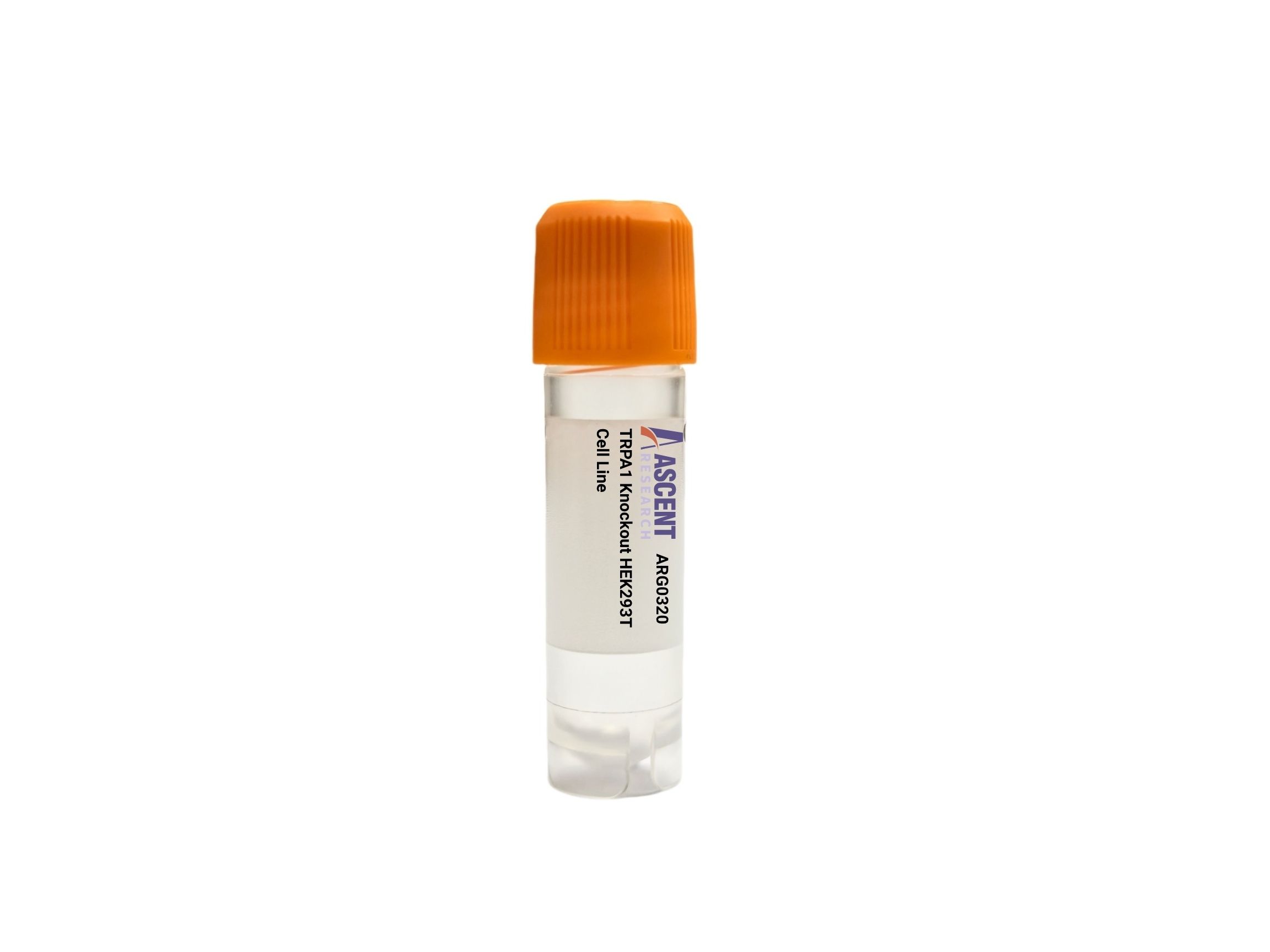
The TRPA1 Knockout HEK293T Cell Line is a CRISPR/Cas9-edited knockout human embryonic kidney cell line with targeted disruption of the TRPA1 gene. TRPA1 encodes a calcium-permeable cation channel activated by noxious stimuli such as allyl isothiocyanate, cinnamaldehyde, and inflammatory mediators, and functions downstream of protein kinase C and phospholipase C signaling. In this model, loss of TRPA1 expression enables dissection of its role in calcium influx, pain sensation, and inflammatory responses. This cell line is a versatile tool for calcium imaging, electrophysiology, and drug screening assays targeting TRPA1-mediated pathways. It supports research into chronic pain, neurogenic inflammation, and sensory transduction, and is suitable for validating antagonist specificity and studying TRPA1-dependent signaling in an epithelial cell context.
 PACSIN2 Knockout SK-HEP-1 Polyclonal Cells
Cat. No. ARG16106
GALT Knockout Raji Polyclonal Cells
Cat. No. ARG0910
PACSIN2 Knockout SK-HEP-1 Polyclonal Cells
Cat. No. ARG16106
GALT Knockout Raji Polyclonal Cells
Cat. No. ARG0910
 METTL3 Knockout PC-9 Cell Line
Cat. No. ARG43976
MMP8 Knockout NCI-H1703 Polyclonal Cells
Cat. No. ARG12614
OPA3 Knockout A549 Polyclonal Cells
Cat. No. ARG10681
C12orf29 Knockout NCI-H1299 Polyclonal Cells
Cat. No. ARG30564
METTL3 Knockout PC-9 Cell Line
Cat. No. ARG43976
MMP8 Knockout NCI-H1703 Polyclonal Cells
Cat. No. ARG12614
OPA3 Knockout A549 Polyclonal Cells
Cat. No. ARG10681
C12orf29 Knockout NCI-H1299 Polyclonal Cells
Cat. No. ARG30564
The TRPA1 Knockout HEK293T Cell Line is a CRISPR/Cas9-edited knockout cell line with targeted disruption of the TRPA1 gene, providing a stable loss-of-function model for studying TRPA1-mediated signaling. This model enables investigation of pain sensation, neurogenic inflammation, and calcium-dependent cellular responses without endogenous TRPA1 activity. The knockout was established via CRISPR/Cas9-mediated gene disruption, ensuring heritable ablation of TRPA1 expression in a defined genetic background.
The HEK293T host is a human embryonic kidney epithelial cell line that stably expresses the SV40 large T antigen. Derived from HEK293 cells via adenovirus 5 transformation, HEK293T is prized for high transfection efficiency and robust protein expression. Its epithelial origin and genetic tractability make it an excellent platform for ion channel heterologous expression and functional studies, facilitating reproducible assays such as electrophysiology and calcium imaging.
TRPA1 encodes a non-selective cation channel that detects noxious stimuli including allyl isothiocyanate, cinnamaldehyde, cold, and inflammatory mediators like bradykinin and prostaglandins. Upstream regulation involves protein kinase A, protein kinase C, and phospholipase C-mediated PIP2 hydrolysis. TRPA1 interacts with TRPV1, calmodulin, and ankyrin, and its activation drives calcium influx, membrane depolarization, and signaling through calcineurin, NFAT, MAPK pathways, and nitric oxide synthase. Consequently, TRPA1 integrates irritant and pain signals to evoke neurogenic inflammation and cellular stress responses.
In HEK293T cells, TRPA1 knockout eliminates a primary calcium entry pathway, allowing precise interrogation of TRPA1-specific contributions to downstream signaling such as MAPK activation and cytokine production. Although not neuronal, HEK293T cells harbor PLC/PKC and calcium cascades, making them responsive to TRPA1-activating stimuli. This model aids in distinguishing TRPA1-mediated effects from those of other channels and in validating pharmacological agent selectivity.
Applications include calcium imaging, patch-clamp electrophysiology, RT-qPCR, western blotting, and ELISA for inflammatory mediators. The knockout is valuable for drug screening of TRPA1 antagonists, off-target analysis, and research into chronic pain, migraine, asthma, allergic inflammation, and irritable bowel syndrome. Flow cytometry and cell viability assays further support compound testing. For more information or to request customized knockout cell lines, please contact Ascent Research.