Genome-edited Cells
Kidney
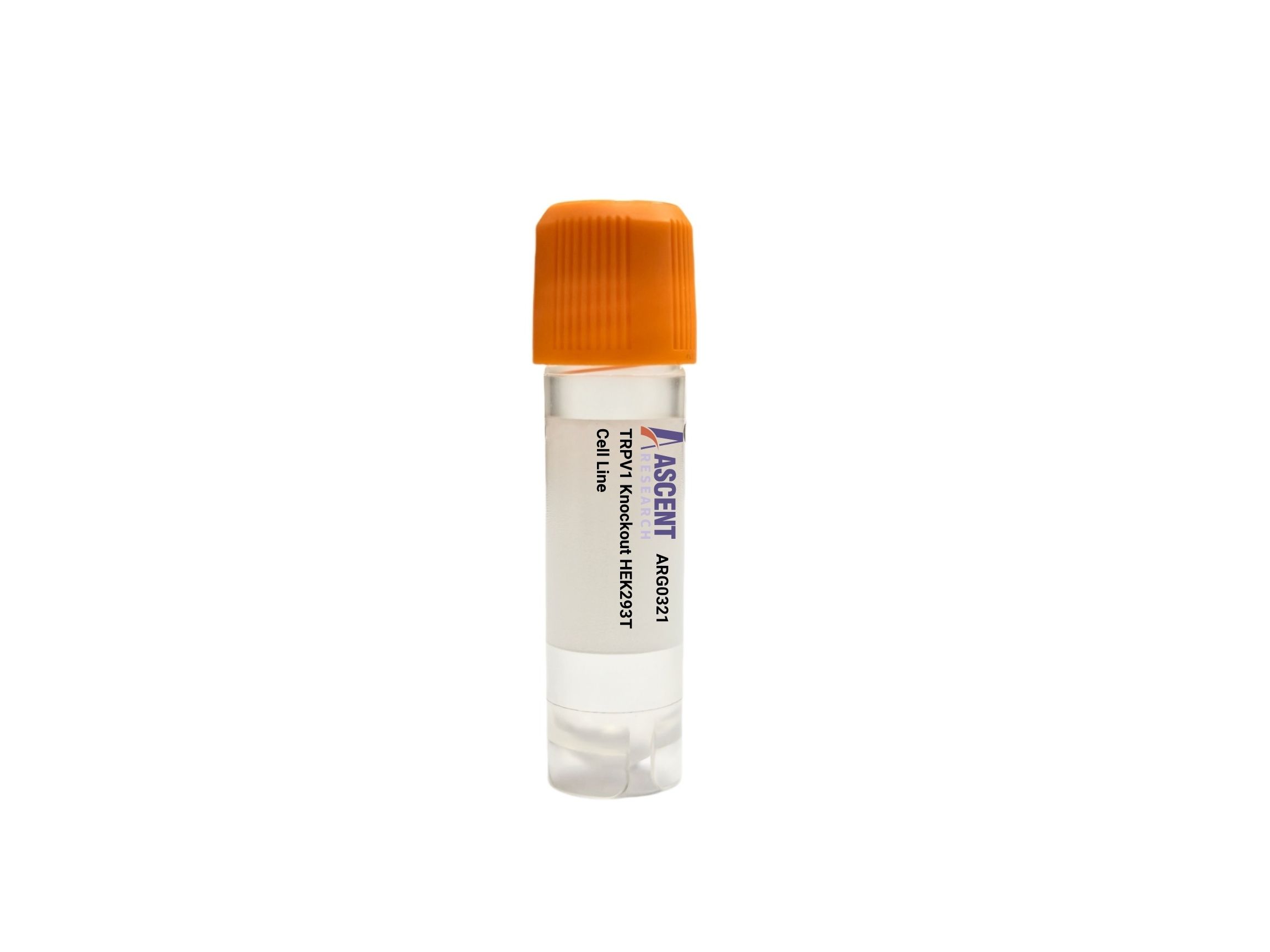
The TRPV1 Knockout HEK293T Cell Line is a CRISPR/Cas9-edited human knockout cell line eliminating TRPV1 channel function in HEK293T cells. This model enables study of pain and inflammatory signaling by removing capsaicin- and heat-induced calcium influx, CGRP release, and NF-??B activation. Key upstream regulators include NGF, bradykinin, and PKA, while interacting factors such as PIP2 and calmodulin modulate channel activity. Applications include calcium flux assays, patch clamp, and drug screening for TRPV1 antagonists in neuropathic pain and migraine research. The line provides a clean background for reconstituting TRPV1 variants and dissecting calcium-dependent pathways in a tractable epithelial model.
 MTMR12 Knockout A2780 Polyclonal Cells
Cat. No. ARG18449
IMMP1L Knockout A549 Polyclonal Cells
Cat. No. ARG34121
BCL2L11 Knockout DLD-1 Polyclonal Cells
Cat. No. ARG35522
CA2 Knockout MES-OV Polyclonal Cells
Cat. No. ARG41644
EFCAB14 Knockout HEK293T Polyclonal Cells
Cat. No. ARG40603
MTMR12 Knockout A2780 Polyclonal Cells
Cat. No. ARG18449
IMMP1L Knockout A549 Polyclonal Cells
Cat. No. ARG34121
BCL2L11 Knockout DLD-1 Polyclonal Cells
Cat. No. ARG35522
CA2 Knockout MES-OV Polyclonal Cells
Cat. No. ARG41644
EFCAB14 Knockout HEK293T Polyclonal Cells
Cat. No. ARG40603
 HCC827 Luciferase Stable Cell Line
Cat. No. ARG0263
HCC827 Luciferase Stable Cell Line
Cat. No. ARG0263
The TRPV1 Knockout HEK293T Cell Line is a CRISPR/Cas9-edited human knockout cell line featuring targeted disruption of the TRPV1 gene in HEK293T cells. This stable loss-of-function model enables precise investigation of TRPV1-mediated signaling pathways by eliminating endogenous channel activity, allowing researchers to dissect thermal and chemical nociception mechanisms without interference. The cell line is well-suited for heterologous expression, pharmacological screening, and mechanistic studies.
HEK293T cells, derived from HEK293 cells, are a human embryonic kidney epithelial line stably expressing SV40 large T antigen, which enhances transient protein expression and plasmid replication. Their ease of transfection and robust growth make them a preferred host for ion channel and calcium signaling studies, offering a relevant cellular context for TRPV1 knockout analyses.
TRPV1 (transient receptor potential vanilloid 1) encodes a non-selective cation channel activated by capsaicin, heat (>43??C), and acidic pH. Its activity is modulated by upstream regulators such as NGF, bradykinin, PKA, PKC, and anandamide. Channel activation drives calcium influx, which triggers CGRP and substance P release, neuronal depolarization, and NF-??B activation. TRPV1 functionally interacts with PIP2, calmodulin, AKAP79/150, ??-arrestin, and Src kinase. Representative pathway components include TRPV1, PIP2, PKA, PKC, CaMKII, NF-??B, and MAP kinases, integrating pain and inflammatory signaling through calcium-dependent cascades.
In the HEK293T background, TRPV1 knockout abolishes capsaicin- and heat-induced calcium responses, eliminating downstream signaling events such as CGRP and substance P release, and NF-??B activation, thereby providing a clean null background. This model is ideal for reconstituting mutant TRPV1 variants, studying protein-protein interactions with factors like PIP2 and calmodulin, and testing pharmacological agents targeting TRPV1-mediated pathways. It directly addresses mechanisms of neuropathic pain, inflammatory pain, migraine, cancer pain, and thermal hyperalgesia in a tractable cellular system.
The knockout cell line supports diverse assays, including calcium flux measurement, patch clamp electrophysiology, capsaicin-induced calcium imaging, FLIPR assays, as well as biochemical techniques such as western blotting, RT-qPCR, and immunofluorescence to quantify pathway markers. Primary applications include pain research, high-throughput drug screening for TRPV1 antagonists, mechanism-of-action studies, and investigation of calcium signaling and neuroinflammation. For further information or to inquire about custom knockout cell line services, contact Ascent Research.