Genome-edited Cells
Kidney
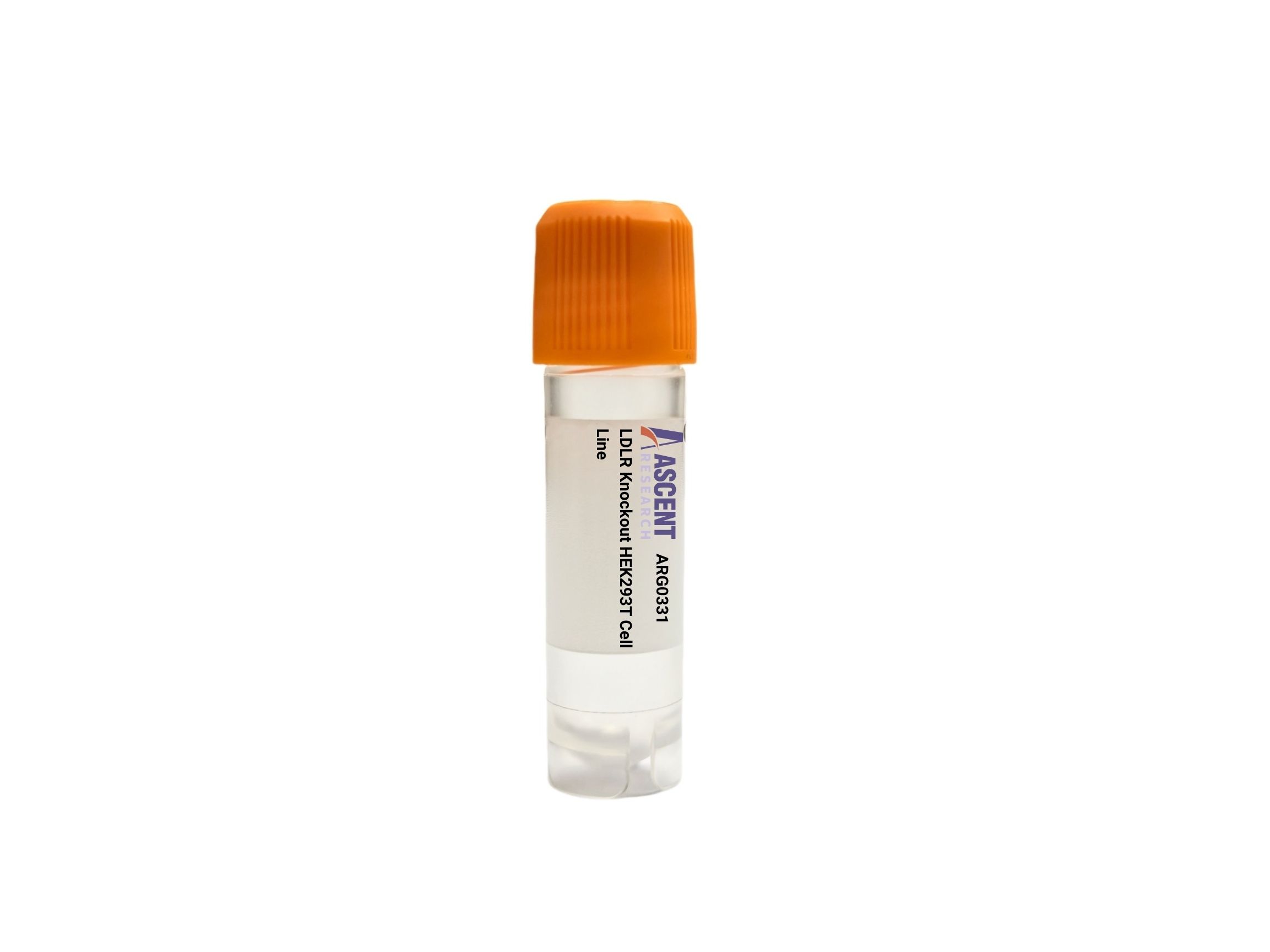
The LDLR Knockout HEK293T Cell Line is a CRISPR/Cas9-edited human cell model with targeted disruption of the low-density lipoprotein receptor (LDLR) gene. LDLR mediates cellular LDL uptake and plays a central role in cholesterol homeostasis. The HEK293T host line is a widely used embryonic kidney cell line with high transfection efficiency and robust protein expression. This knockout model abolishes LDL internalization, recapitulating key features of familial hypercholesterolemia, and is regulated by factors such as SREBP-2 and PCSK9. It is ideal for studying cholesterol metabolism, receptor-mediated endocytosis, and lipid-lowering drug screening.
 C5orf24 Knockout NCI-H1299 Polyclonal Cells
Cat. No. ARG30589
NRG4 Knockout T47D Polyclonal Cells
Cat. No. ARG11966
BMP2K Knockout HEK293T Polyclonal Cells
Cat. No. ARG38009
PARS2 Knockout HEK293T Polyclonal Cells
Cat. No. ARG3790
PDP1 Knockout HEK293T Polyclonal Cells
Cat. No. ARG3731
C5orf24 Knockout NCI-H1299 Polyclonal Cells
Cat. No. ARG30589
NRG4 Knockout T47D Polyclonal Cells
Cat. No. ARG11966
BMP2K Knockout HEK293T Polyclonal Cells
Cat. No. ARG38009
PARS2 Knockout HEK293T Polyclonal Cells
Cat. No. ARG3790
PDP1 Knockout HEK293T Polyclonal Cells
Cat. No. ARG3731
 Rabbit Intrahepatic Bile Duct Epithelial Cells
Cat. No. ARP0718
Rabbit Intrahepatic Bile Duct Epithelial Cells
Cat. No. ARP0718
The LDLR Knockout HEK293T Cell Line is a CRISPR/Cas9-edited human cell model engineered for constitutive loss of the low-density lipoprotein receptor (LDLR) gene. This cell line offers a genetically defined system to study LDLR-dependent processes without interference from endogenous receptor activity. It serves as a robust tool for investigating cholesterol metabolism, receptor-mediated endocytosis, and the molecular pathology of dyslipidemias.
The host cell line, HEK293T, is a derivative of human embryonic kidney 293 cells that stably expresses the SV40 large T antigen. These cells are widely utilized in biomedical research due to their high transfection efficiency, ease of maintenance, and capacity for high-level recombinant protein expression and viral vector production. The HEK293T background thus enables versatile experimental manipulations, including transient overexpression and reporter gene assays, to dissect LDLR signaling networks.
LDLR functions as the primary receptor for apolipoprotein B- and E-containing lipoproteins, mediating their cellular internalization via clathrin-coated pits. Disruption of LDLR blocks LDL particle uptake, leading to extracellular LDL accumulation and a deficit in intracellular cholesterol. This triggers compensatory activation of the sterol regulatory element-binding protein 2 (SREBP-2) transcription factor, which upregulates cholesterol biosynthetic genes such as HMG-CoA reductase (HMGCR). Key regulators of LDLR include the proprotein convertase subtilisin/kexin type 9 (PCSK9), which targets the receptor for lysosomal degradation, and the inducible degrader of LDLR (IDOL), an E3 ubiquitin ligase. The receptor also interacts with the adaptor protein LDLRAP1 for efficient endocytosis.
In the HEK293T context, LDLR knockout creates a model that mimics the hepatic phenotype of familial hypercholesterolemia, providing a simplified system to study cholesterol sensing and feedback mechanisms. The transformed nature of the cells does not fully recapitulate hepatocyte-specific functions, yet the core regulatory circuits??including SREBP-2 activation and PCSK9-mediated receptor degradation??remain intact. This cell line is particularly useful for examining statin-induced gene expression changes and PCSK9 biology, as the lack of LDLR eliminates confounding receptor interactions. It also facilitates co-immunoprecipitation studies to map LDLR-partner interactions under controlled conditions.
Researchers can employ this knockout line for a range of applications, including DiI-LDL uptake assays, flow cytometry to confirm cell surface receptor absence, and western blot analysis. The model supports mechanistic studies of cholesterol synthesis, evaluation of lipid-lowering compounds, and functional assessment of PCSK9 inhibitors. Co-culture experiments and complementation studies with LDLR variants are also feasible. For additional technical details or custom gene editing services, please contact Ascent Research.