Genome-edited Cells
Uterus (cervix)
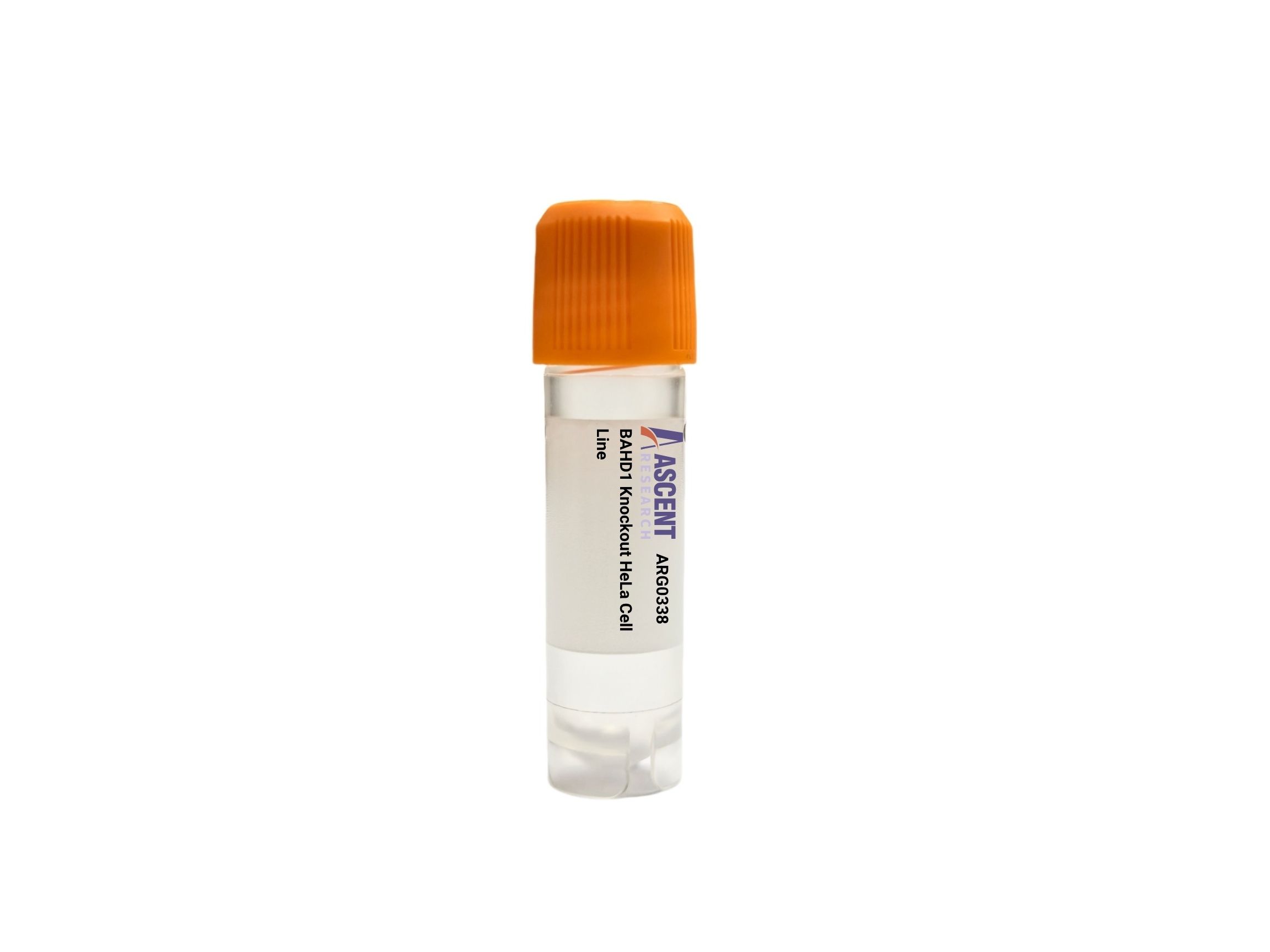
The BAHD1 Knockout HeLa Cell Line is a CRISPR/Cas9-edited loss-of-function model derived from the classic HeLa cervical adenocarcinoma cell line. BAHD1 encodes a chromatin-associated transcriptional repressor that assembles multi-protein complexes with HDAC1, HDAC2, and HP1 proteins to drive heterochromatin formation and gene silencing. This knockout line supports research into epigenetic dysregulation in cancer, enabling studies of transcriptional repression, cell cycle control, and genome stability. Applications include ChIP-qPCR, RNA-seq, and proliferation assays to investigate BAHD1-dependent pathways and identify novel therapeutic targets.
 CYP20A1 Knockout jurkat Polyclonal Cells
Cat. No. ARG13456
ESYT1 Knockout CAL27 Polyclonal Cells
Cat. No. ARG11561
INPP5B Knockout Raji Polyclonal Cells
Cat. No. ARG23815
IP6K1 Knockout AGS Polyclonal Cells
Cat. No. ARG27051
ARFGAP2 Knockout Hela Polyclonal Cells
Cat. No. ARG37226
EFNA1 Knockout A549 Polyclonal Cells
Cat. No. ARG40664
CYP20A1 Knockout jurkat Polyclonal Cells
Cat. No. ARG13456
ESYT1 Knockout CAL27 Polyclonal Cells
Cat. No. ARG11561
INPP5B Knockout Raji Polyclonal Cells
Cat. No. ARG23815
IP6K1 Knockout AGS Polyclonal Cells
Cat. No. ARG27051
ARFGAP2 Knockout Hela Polyclonal Cells
Cat. No. ARG37226
EFNA1 Knockout A549 Polyclonal Cells
Cat. No. ARG40664
The BAHD1 Knockout HeLa Cell Line is a CRISPR/Cas9-edited human knockout cell line with targeted disruption of the BAHD1 gene, creating a stable loss-of-function model. This cell-based platform enables detailed functional studies of BAHD1-dependent processes in a widely used epithelial cancer system.
HeLa cells, the first immortalized human cell line, originate from cervical adenocarcinoma and contain integrated HPV-18 sequences. These aneuploid, highly proliferative cells provide a robust model for cancer research, particularly for studying oncogenic signaling and epigenetic regulation.
BAHD1 is a chromatin-associated transcriptional repressor that promotes heterochromatin formation and gene silencing. It acts as a scaffold, interacting with histone deacetylases HDAC1 and HDAC2, heterochromatin proteins HP1?? and HP1??, and methyl-CpG-binding protein MBD1. This repressor complex is recruited to genomic loci marked by H3K9me3, including pericentromeric regions and promoters of cell cycle genes, where it facilitates histone deacetylation and further H3K9 methylation, leading to chromatin compaction. Upstream regulators include DNA damage response kinases and cell cycle signals, while downstream targets encompass repetitive DNA sequences and E2F-responsive genes, linking chromatin organization to proliferation and genome integrity.
In the HeLa cervical cancer background, BAHD1 knockout allows interrogation of how disruption of this silencing factor influences the transformed phenotype. Loss of BAHD1 may derepress genes involved in cell cycle control or alter heterochromatin structure, offering insights into epigenetic vulnerabilities in cancer cells and the role of HPV-18 in modulating chromatin-based repression. Given the interactions between BAHD1 and histone deacetylases, its depletion may perturb global histone acetylation patterns, thereby revealing epigenetic dependencies in tumor cells.
This KO cell line is suited for diverse assays, including western blotting and RT-qPCR for expression analysis, ChIP-qPCR to probe histone modification changes and protein occupancy, and functional tests such as proliferation, colony formation, flow cytometry, and comet assays to assess cell cycle defects and DNA damage responses. Transcriptomic analysis via RNA-seq can reveal global gene expression shifts upon BAHD1 loss. These applications make the line a valuable tool for epigenetic and cancer research. For more information, contact Ascent Research.