Genome-edited Cells
Uterus (cervix)
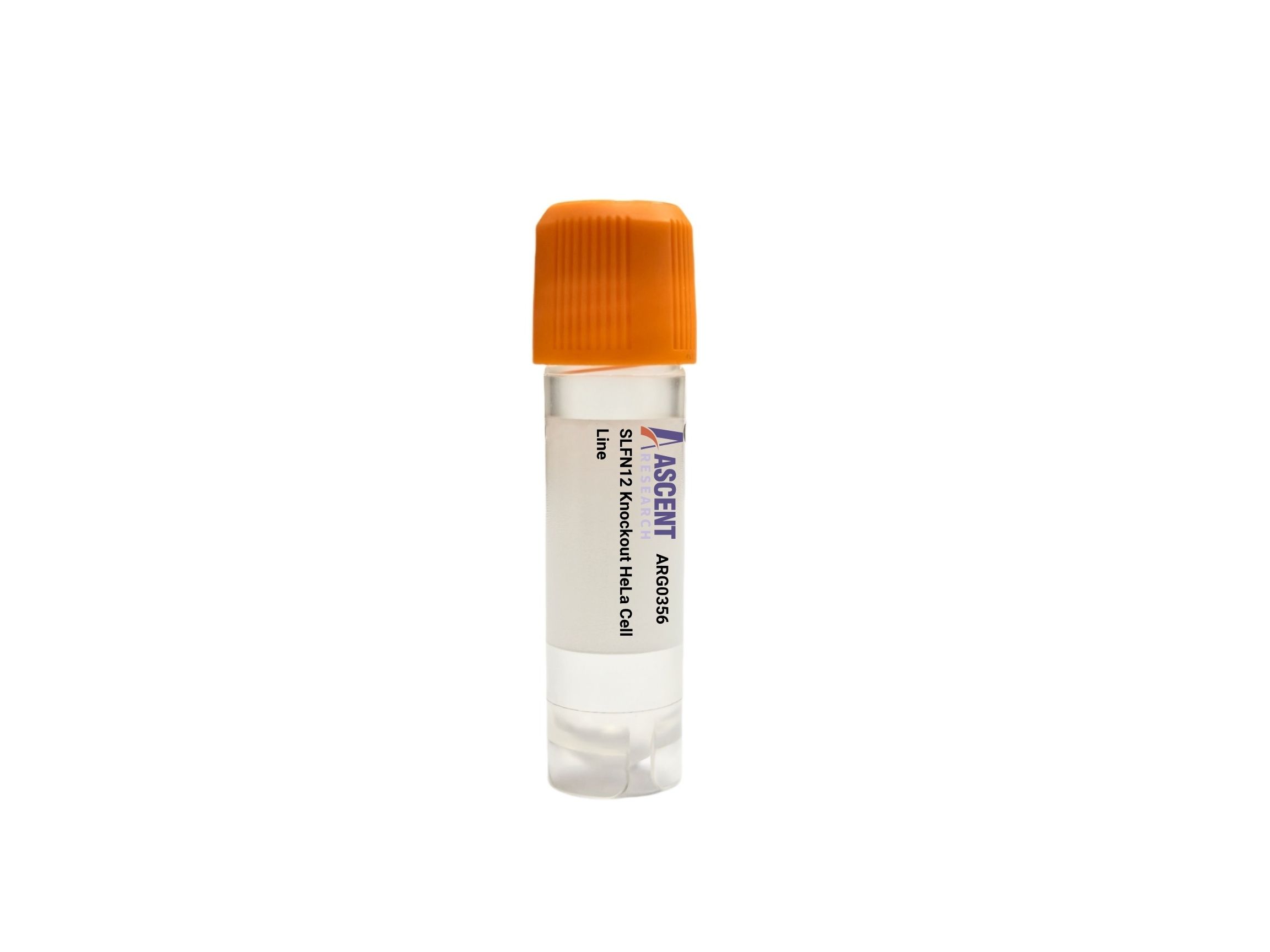
The SLFN12 Knockout HeLa Cell Line is a CRISPR/Cas9-edited human cervical adenocarcinoma epithelial cell line with targeted disruption of the SLFN12 gene. SLFN12 regulates c-Myc stability and global protein translation via its tRNA endonuclease activity and interaction with protein phosphatase 2A (PP2A). Induced by interferons through STAT1/STAT2/IRF9, SLFN12 links innate immunity to oncogenic signaling. This model is ideal for studying c-Myc regulation, antiviral immunity, and translational control in a HPV18-positive background. Applications include western blotting, co-immunoprecipitation, translation assays, and drug response profiling, supporting research in cervical cancer and related malignancies.
 C5orf22 Knockout HAP1 Polyclonal Cells
Cat. No. ARG41492
HBP1 Knockout Raji Polyclonal Cells
Cat. No. ARG23645
KIF16B Knockout 786-O Polyclonal Cells
Cat. No. ARG25422
AGPAT5 Knockout jurkat Polyclonal Cells
Cat. No. ARG33770
CMTM7 Knockout MES-OV Polyclonal Cells
Cat. No. ARG6179
C5orf22 Knockout HAP1 Polyclonal Cells
Cat. No. ARG41492
HBP1 Knockout Raji Polyclonal Cells
Cat. No. ARG23645
KIF16B Knockout 786-O Polyclonal Cells
Cat. No. ARG25422
AGPAT5 Knockout jurkat Polyclonal Cells
Cat. No. ARG33770
CMTM7 Knockout MES-OV Polyclonal Cells
Cat. No. ARG6179
 NCI-H209
Cat. No. ARC0608
NCI-H209
Cat. No. ARC0608
The SLFN12 Knockout HeLa Cell Line is a CRISPR/Cas9-edited cell line derived from the HeLa human cervical adenocarcinoma epithelial cell line, featuring targeted disruption of the SLFN12 gene. This loss-of-function model enables precise investigation of SLFN12-dependent regulatory mechanisms in cellular processes such as protein translation, c-Myc stability, and antiviral immunity. Through CRISPR/Cas9-mediated gene disruption, researchers can dissect the functional roles of SLFN12 in a well-characterized epithelial cancer background.
The HeLa parental line is a widely used model of cervical adenocarcinoma, established from an HPV18-positive tumor. Retaining key features of epithelial transformation, HeLa cells exhibit robust growth and are amenable to genetic manipulation, making them an ideal platform for studying oncogenic signaling. The HPV18-driven background provides a relevant context for exploring how SLFN12 modulates pathways frequently dysregulated in cervical and other HPV-associated cancers. Moreover, the epithelial origin and well-characterized genome of HeLa cells facilitate precise experimental dissection of molecular interactions.
SLFN12 functions as a tRNA endonuclease that regulates global protein translation and controls c-Myc protein stability through its interaction with protein phosphatase 2A (PP2A). Under basal conditions, SLFN12 inhibits PP2A activity, thereby maintaining c-Myc phosphorylation and preventing its degradation. SLFN12 expression is induced by type I and II interferons via STAT1, STAT2, and IRF9, linking innate immune signaling to translational control. Downstream of SLFN12, altered translational output impacts cell cycle progression and apoptosis. In the knockout model, loss of SLFN12 releases PP2A inhibition, leading to c-Myc dephosphorylation and degradation, while the absence of its tRNA endonuclease activity enhances global translation. The molecular network involves c-Myc, PP2A, JAK1, TYK2, IFNAR, and ISGF3, situating SLFN12 at the intersection of interferon responses and oncogenic signaling.
In HPV18-positive cervical adenocarcinoma cells, SLFN12 disruption is particularly pertinent given the central role of c-Myc in oncogenesis. The loss of SLFN12 may alter c-Myc dynamics through PP2A-mediated degradation, potentially sensitizing cells to therapeutic agents targeting the PI3K/AKT pathway. The knockout line thus provides a powerful system to dissect SLFN12’s contribution to translation reprogramming and c-Myc-dependent tumor cell survival in a disease-relevant context, supporting research into novel intervention strategies for cervical and other malignancies.
Researchers can employ the SLFN12 Knockout HeLa Cell Line in a variety of functional studies, including assessments of c-Myc regulation via western blotting and co-immunoprecipitation, translation rate measurement by puromycin incorporation, and cell viability or colony formation assays under drug treatment. The line is suited for investigating interferon-induced translational arrest and antiviral mechanisms using RT-qPCR and luciferase reporter systems. Additionally, flow cytometry enables analysis of cell cycle perturbations. These applications support cervical cancer research, c-Myc signaling studies, and antiviral immunity elucidation. For technical inquiries and ordering information, please contact Ascent Research.