Genome-edited Cells
Liver
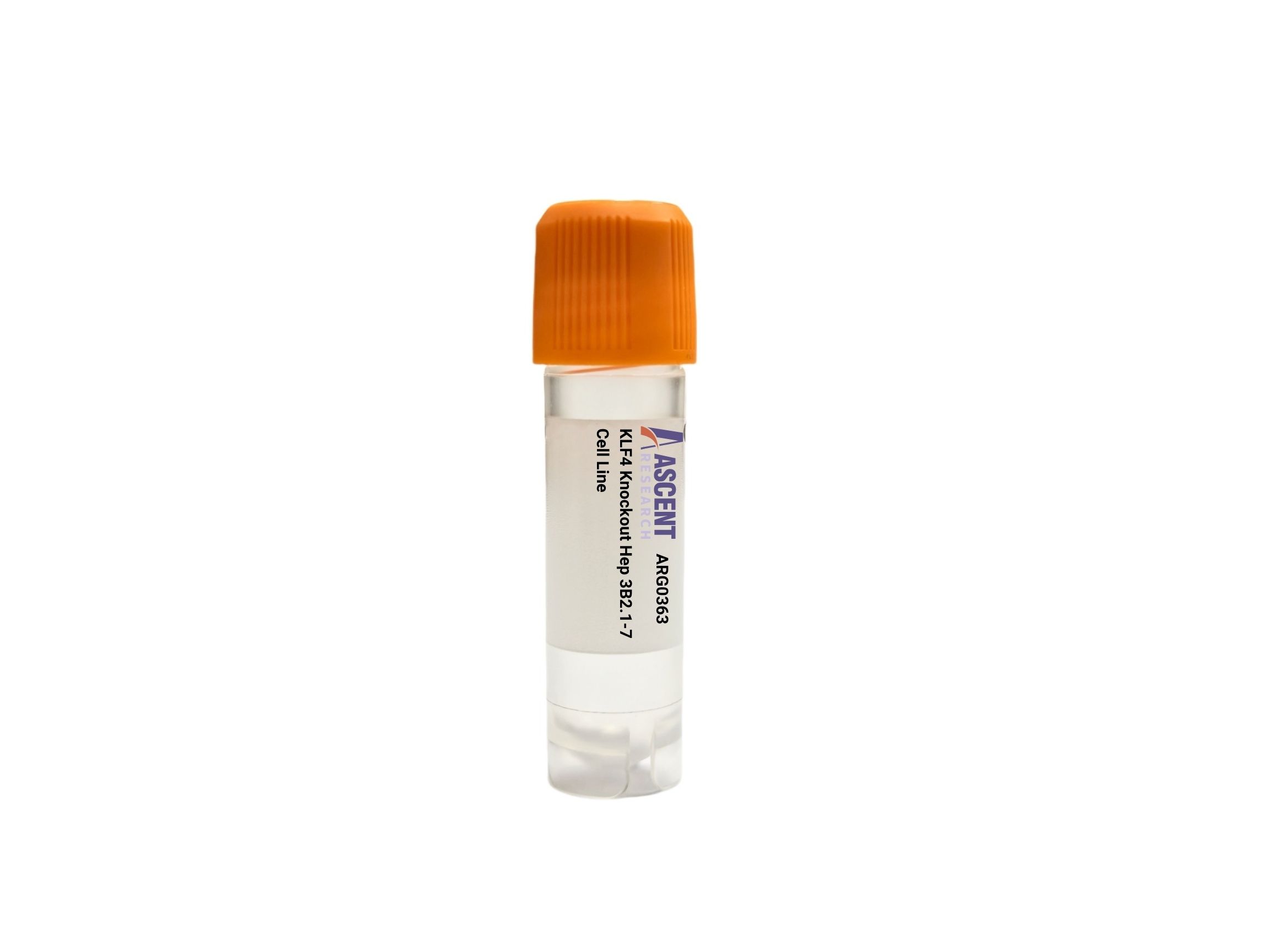
The KLF4 Knockout Hep 3B2.1-7 Cell Line is a CRISPR/Cas9-edited knockout cell line in which KLF4 gene disruption has been introduced in the human hepatocellular carcinoma Hep 3B2.1-7 cell line. This model enables loss-of-function studies of the KLF4 zinc finger transcription factor, which regulates proliferation, apoptosis, and epithelial-mesenchymal transition through downstream targets such as p21 and E-cadherin. The parental Hep 3B2.1-7 cells harbor integrated hepatitis B virus DNA and retain active Wnt/??-catenin, TGF-??, and p53 signaling pathways. The KLF4 knockout line is suited for hepatocellular carcinoma research, including drug screening, cell migration assays, and analysis of tumor suppressor networks.
 CAB39L Knockout K562 Polyclonal Cells
Cat. No. ARG20368
HLA-DPA1 Knockout HAP1 Polyclonal Cells
Cat. No. ARG22537
ABHD10 Knockout AGS Polyclonal Cells
Cat. No. ARG26412
ACSS2 Knockout huh-7 Polyclonal Cells
Cat. No. ARG27794
AMOT Knockout HAP1 Polyclonal Cells
Cat. No. ARG34609
NCOA7 Knockout 786-O Polyclonal Cells
Cat. No. ARG5444
CAB39L Knockout K562 Polyclonal Cells
Cat. No. ARG20368
HLA-DPA1 Knockout HAP1 Polyclonal Cells
Cat. No. ARG22537
ABHD10 Knockout AGS Polyclonal Cells
Cat. No. ARG26412
ACSS2 Knockout huh-7 Polyclonal Cells
Cat. No. ARG27794
AMOT Knockout HAP1 Polyclonal Cells
Cat. No. ARG34609
NCOA7 Knockout 786-O Polyclonal Cells
Cat. No. ARG5444
The KLF4 Knockout Hep 3B2.1-7 Cell Line is a CRISPR/Cas9-mediated gene disruption model derived from the human hepatocellular carcinoma cell line Hep 3B2.1-7. This knockout cell line contains a targeted disruption of the KLF4 gene, which encodes a zinc finger transcription factor implicated in cell proliferation, differentiation, apoptosis, and pluripotency. The cell line provides a defined loss-of-function platform to investigate KLF4-dependent signaling mechanisms and tumor-suppressive functions in liver cancer biology. It is supplied as a ready-to-use cell line suitable for a range of functional assays.
The Hep 3B2.1-7 host cell line is a widely used human hepatocellular carcinoma cell line originally isolated from an 8-year-old male patient. These cells harbor integrated hepatitis B virus DNA and exhibit epithelial and hepatocyte-like features, making them a relevant model for liver cancer research. The parental Hep 3B2.1-7 cell line retains components of many key signaling pathways active in hepatocellular carcinoma, including Wnt/??-catenin, TGF-??, and p53 pathways, providing a clinically relevant background to study the consequences of KLF4 loss.
KLF4 functions as a dual regulator in cancers, acting as a tumor suppressor or oncogene depending on cellular context. It transcriptionally regulates genes by binding to GC-rich promoter elements. In hepatocellular carcinoma, KLF4 promotes the expression of the cyclin-dependent kinase inhibitor CDKN1A (p21) and the cell adhesion molecule CDH1 (E-cadherin), thereby restraining proliferation and maintaining an epithelial phenotype. Its activity is modulated by upstream signals including TGF-??, p53, and ??-catenin, and it forms transcriptional complexes with cofactors such as p300/CBP and HDAC1/2. KLF4 also interfaces with pluripotency networks through interactions with Oct4, Sox2, and c-Myc, influencing stemness and differentiation. Loss of KLF4 disrupts these regulatory interactions, often leading to upregulation of mesenchymal markers like vimentin and downregulation of pro-apoptotic BAX, contributing to epithelial-mesenchymal transition and altered apoptosis.
The KLF4 knockout in Hep 3B2.1-7 cells is a powerful tool for dissecting the tumor-suppressive roles of KLF4 in hepatocellular carcinoma. Given the host cell??s HBV integration and tumorigenic properties, this model is well-suited to study how loss of KLF4 cooperates with viral and genetic factors to drive carcinogenesis. It enables examination of KLF4-dependent control of the epithelial-mesenchymal transition, a key process in metastasis, and the interplay between KLF4 and major signaling pathways such as Wnt/??-catenin, TGF-??, and p53. Researchers can use this system to investigate how KLF4 affects drug responses, cell motility, and apoptosis in the context of liver cancer.
This knockout cell line is designed for diverse experimental applications, including functional studies using western blotting, RT-qPCR, and ChIP-qPCR to profile gene and protein expression changes. Cell behavior assays such as MTT/BrdU proliferation, colony formation, and Transwell migration/invasion assays allow quantitative assessment of growth and motility phenotypes. Apoptosis assays (Annexin V/PI) and luciferase reporter assays can dissect signaling pathways. The line also supports transcriptome-wide analyses via RNA-seq and drug screening. It is an essential resource for hepatocellular carcinoma research, tumor suppressor gene analysis, and epithelial-mesenchymal transition studies. For further technical details, please contact Ascent Research.