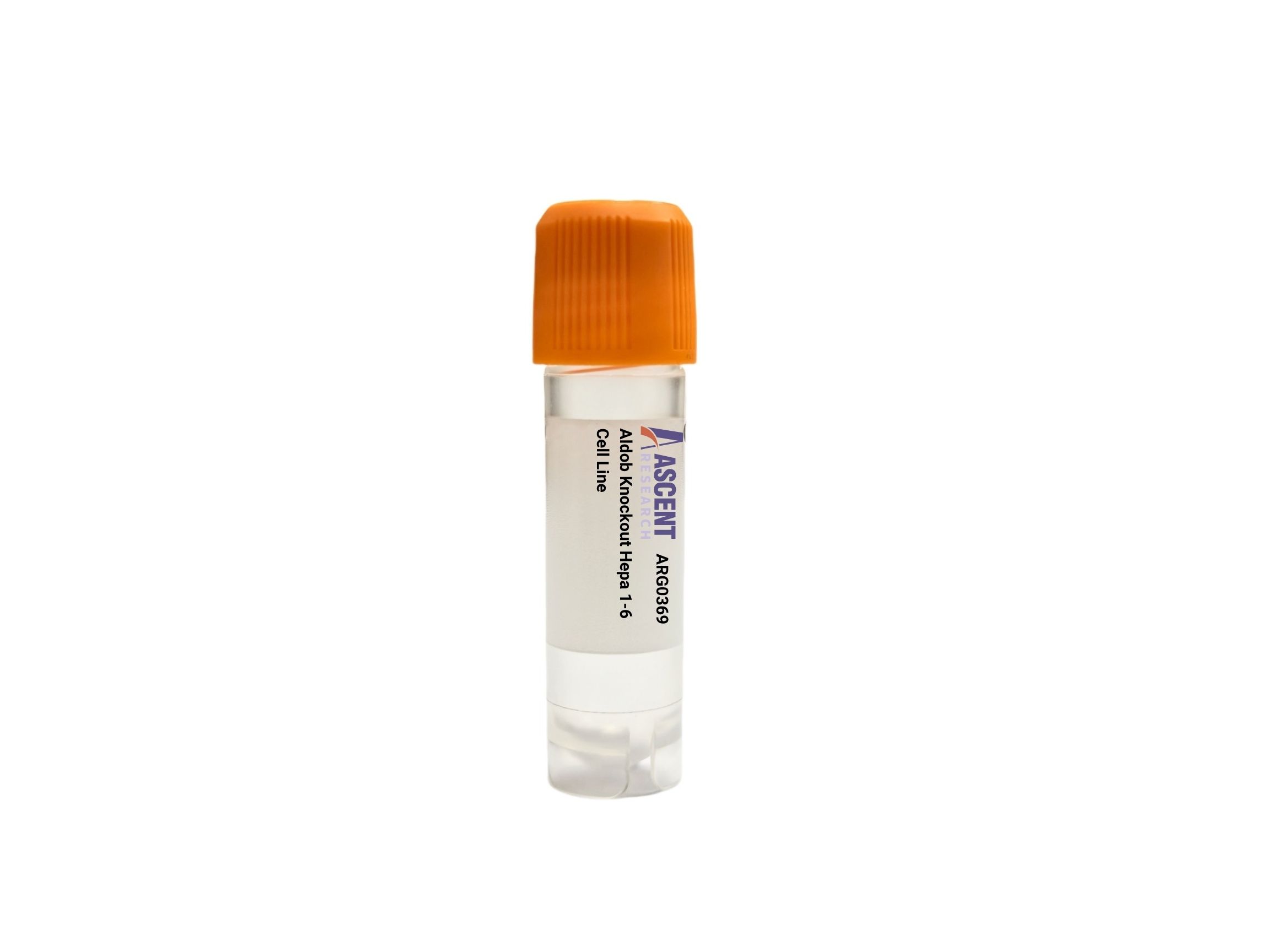
Genome-edited Cells
Liver
The Aldob Knockout Hepa 1-6 Cell Line is a CRISPR/Cas9-edited mouse hepatoma cell line lacking functional ALDOB, a central enzyme in fructose metabolism. Derived from the C57L strain Hepa 1-6 hepatocellular carcinoma model, it enables targeted study of fructose-induced metabolic stress and related disorders. Aldob disruption impairs glycolysis/gluconeogenesis, downstream of KHK and upstream of TKFC, and is regulated by ChREBP and SREBP1. This model is ideal for hereditary fructose intolerance and NAFLD research, with applications in metabolic profiling, lipid accumulation assays, and drug discovery.
 MTFR2 Knockout HT29 Polyclonal Cells
Cat. No. ARG14341
KCTD2 Knockout HAP1 Polyclonal Cells
Cat. No. ARG22983
ARMC9 Knockout A2780 Polyclonal Cells
Cat. No. ARG28782
ARID4A Knockout HGC-27 Polyclonal Cells
Cat. No. ARG29607
LBR Knockout 786-O Polyclonal Cells
Cat. No. ARG5136
MTFR2 Knockout HT29 Polyclonal Cells
Cat. No. ARG14341
KCTD2 Knockout HAP1 Polyclonal Cells
Cat. No. ARG22983
ARMC9 Knockout A2780 Polyclonal Cells
Cat. No. ARG28782
ARID4A Knockout HGC-27 Polyclonal Cells
Cat. No. ARG29607
LBR Knockout 786-O Polyclonal Cells
Cat. No. ARG5136
 SNU-739
Cat. No. ARC0880
SNU-739
Cat. No. ARC0880
The Aldob Knockout Hepa 1-6 Cell Line is a robust CRISPR/Cas9-edited knockout cell line designed to disrupt the Aldob gene in Mus musculus hepatoma-derived cells. This model eliminates functional ALDOB protein, enabling precise dissection of fructose metabolism and related pathologies. The stable cell line constitutes an in vitro system that bypasses primary hepatocyte limitations, offering a reproducible platform for investigating aldolase B deficiency in a malignant hepatic background.
The parental Hepa 1-6 cell line was established from a spontaneously immortalized hepatoma isolated from the C57L mouse strain. These cells retain key hepatocellular characteristics, including expression of liver-specific metabolic enzymes and signaling networks, making them a widely employed model for hepatocellular carcinoma research. Their robust proliferative capacity and compatibility with genetic manipulation make them an ideal recipient for CRISPR/Cas9-mediated gene editing, facilitating reproducible loss-of-function studies in a cancer-relevant context.
ALDOB catalyzes the reversible cleavage of fructose-1,6-bisphosphate into dihydroxyacetone phosphate and glyceraldehyde-3-phosphate, a pivotal step in glycolysis and gluconeogenesis. Within the fructose metabolism pathway, it operates downstream of ketohexokinase (KHK) and upstream of triokinase (TKFC), linking dietary fructose to glycolytic intermediates and lipogenic substrates. Its expression is transcriptionally regulated by ChREBP (MLXIPL) and SREBP1 (SREBF1) in response to insulin, glucagon, and fructose levels. ALDOB functionally interacts with glyceraldehyde-3-phosphate dehydrogenase (GAPDH) and fructose-1,6-bisphosphatase, and its activity modulates flux through pathways including triglyceride synthesis and amino acid biosynthesis. Knockout-induced loss of function disrupts hepatic energy homeostasis, phosphate balance, and lipid metabolism.
In the Hepa 1-6 hepatocellular carcinoma model, Aldob knockout recapitulates the metabolic hallmarks of hereditary fructose intolerance (HFI) and amplifies fructose-induced cellular stress. The loss of ALDOB leads to accumulation of fructose-1-phosphate, phosphate depletion, and impaired ATP regeneration, mirroring clinical fructose metabolism disorders. This cell line is particularly valuable for dissecting the contribution of aldolase B to non-alcoholic fatty liver disease (NAFLD) progression, as it enables separation of fructose-driven lipogenesis from oncogenic metabolic reprogramming in a controlled in vitro environment.
Researchers can employ this knockout model for fructose challenge experiments, coupling ATP depletion measurements with metabolomic profiling of fructose-1-phosphate accumulation. Lipid accumulation can be assessed by Oil Red O staining, and glycogen content assays provide metabolic readouts. Viability assays under fructose stress facilitate drug discovery for HFI. Standard validation techniques include Western blotting for ALDOB and RT-qPCR analysis of Aldob mRNA. For further technical details, please contact Ascent Research.