Genome-edited Cells
Liver
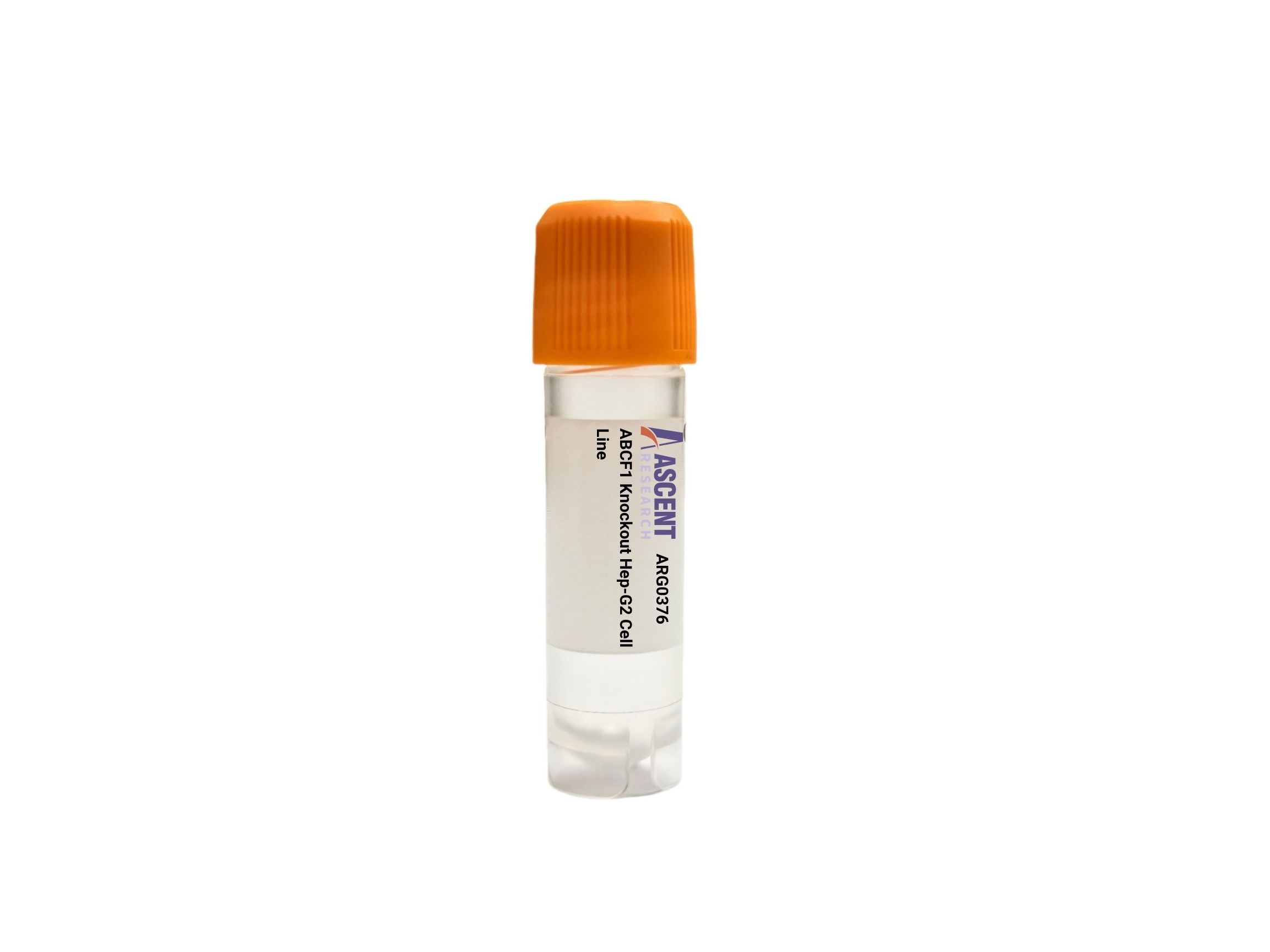
The ABCF1 Knockout Hep-G2 Cell Line is a CRISPR/Cas9-edited human hepatocellular carcinoma model with targeted disruption of ABCF1, a gene that coordinates translation initiation and NF-??B-mediated innate immune responses. Loss of ABCF1 function impairs the production of key inflammatory cytokines, including IL-6, IL-8, and TNF. This cell line enables dissection of hepatic inflammatory signaling governed by mediators such as TNF and LPS, making it suitable for research on hepatitis, liver inflammation, and hepatocellular carcinoma. Applications include NF-??B pathway analysis, cytokine profiling, and drug screening.
 CYB561A3 Knockout Hela Polyclonal Cells
Cat. No. ARG8128
ABL2 Knockout Raji Polyclonal Cells
Cat. No. ARG21008
BCL7A Knockout HEK293T Polyclonal Cells
Cat. No. ARG25826
BRMS1L Knockout jurkat Polyclonal Cells
Cat. No. ARG34028
GPATCH3 Knockout HAP1 Polyclonal Cells
Cat. No. ARG27500
CALU Knockout HAP1 Polyclonal Cells
Cat. No. ARG27467
CYB561A3 Knockout Hela Polyclonal Cells
Cat. No. ARG8128
ABL2 Knockout Raji Polyclonal Cells
Cat. No. ARG21008
BCL7A Knockout HEK293T Polyclonal Cells
Cat. No. ARG25826
BRMS1L Knockout jurkat Polyclonal Cells
Cat. No. ARG34028
GPATCH3 Knockout HAP1 Polyclonal Cells
Cat. No. ARG27500
CALU Knockout HAP1 Polyclonal Cells
Cat. No. ARG27467
The ABCF1 Knockout Hep-G2 Cell Line is a CRISPR/Cas9-edited knockout cell line derived from Hep-G2 human hepatocellular carcinoma cells, featuring disrupted ABCF1 gene expression. This model provides a loss-of-function system to explore ABCF1??s role in translation initiation and innate immune modulation.
Hep-G2 cells are a well-characterized human hepatocellular carcinoma line that retains hepatocyte-like features, including responsiveness to inflammatory cytokines such as TNF, LPS, and IL-1??. Their cancerous phenotype and hepatic signaling competence make them ideal for investigating inflammation-driven liver pathologies and cross-talk between oncogenic and immune pathways.
ABCF1 intersects translational control and NF-??B-mediated innate immune signaling. It interacts with the eIF2 complex to modulate translation initiation and engages the NF-??B pathway through physical association with FADD and NF-??B subunits. Upon stimulation by upstream mediators TNF, LPS, interferon-gamma, or IL-1??, ABCF1 facilitates signal relay via the TLR4/MyD88/IRAK1/TRAF6 cascade, activating the IKK complex to phosphorylate I??B??, thereby enabling NF-??B p65 nuclear translocation. This results in transcriptional induction of downstream targets IL-6, IL-8, and TNF. ABCF1 may further support the expression of these cytokines at the level of mRNA translation, ensuring robust inflammatory output. Overall, ABCF1 coordinates translation initiation with NF-??B activation to govern the cellular response to inflammatory stimuli.
In Hep-G2 cells, ABCF1 knockout markedly reduces inflammatory cytokine output and alters translation profiles, offering a pertinent model for hepatic immune disorders. This disruption allows dissection of NF-??B-dependent and translation-driven mechanisms in liver inflammation, hepatitis, and hepatocellular carcinoma progression. It also aids in studying links between aberrant translation and autoimmune liver conditions such as primary biliary cholangitis.
Researchers can utilize this knockout cell line to evaluate small-molecule inhibitors targeting the NF-??B pathway or to perform genetic rescue experiments. Typical assays include Western blotting and immunofluorescence for NF-??B pathway components and p65 nuclear localization; RT-qPCR and ELISA for IL-6/IL-8 mRNA and protein levels; NF-??B luciferase reporter assays; ribosome profiling to map translational changes; and flow cytometry or cell viability assays under TNF/LPS stimulation for drug screening. For further inquiries, please contact Ascent Research.