Genome-edited Cells
Liver
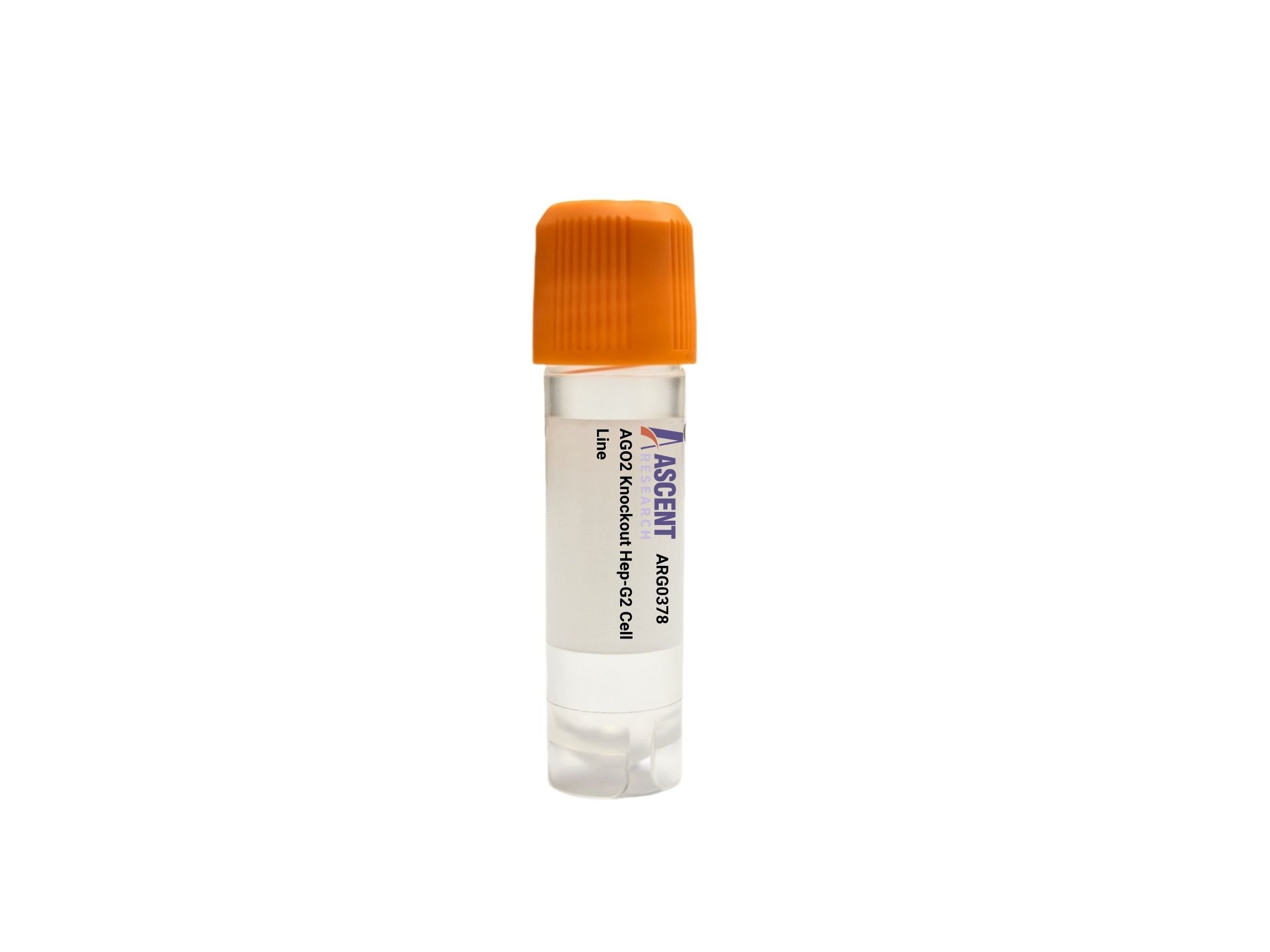
The AGO2 Knockout Hep-G2 Cell Line is a CRISPR/Cas9-edited loss-of-function model in the Hep-G2 human hepatocellular carcinoma background, designed for studying RNA interference and miRNA-mediated gene silencing. By disrupting the Argonaute-2 (AGO2) gene, the catalytic core of the RISC complex, this cell line enables investigation of how miRNAs and siRNAs regulate target mRNAs in liver cancer cells. AGO2 normally interacts with Dicer, TRBP, GW182, and miRNA/siRNA duplexes to mediate translational repression or mRNA cleavage. Knockout of AGO2 in Hep-G2 cells offers a powerful tool for dissecting miRNA?Ctarget relationships, validating miRNA function in hepatocarcinogenesis, and screening RNAi-based therapeutics via assays such as dual-luciferase reporters, RNA-seq, and drug sensitivity testing.
 CREB1 Knockout jurkat Polyclonal Cells
Cat. No. ARG13460
IKZF3 Knockout HAP1 Polyclonal Cells
Cat. No. ARG22738
GOLGA4 Knockout A2780 Polyclonal Cells
Cat. No. ARG29016
GZF1 Knockout SK-HEP-1 Polyclonal Cells
Cat. No. ARG32534
EEF1E1 Knockout HEK293T Polyclonal Cells
Cat. No. ARG40569
BRCC3 Knockout AGS Polyclonal Cells
Cat. No. ARG26771
CREB1 Knockout jurkat Polyclonal Cells
Cat. No. ARG13460
IKZF3 Knockout HAP1 Polyclonal Cells
Cat. No. ARG22738
GOLGA4 Knockout A2780 Polyclonal Cells
Cat. No. ARG29016
GZF1 Knockout SK-HEP-1 Polyclonal Cells
Cat. No. ARG32534
EEF1E1 Knockout HEK293T Polyclonal Cells
Cat. No. ARG40569
BRCC3 Knockout AGS Polyclonal Cells
Cat. No. ARG26771
The AGO2 Knockout Hep-G2 Cell Line is a human hepatocellular carcinoma-derived cell line in which the AGO2 gene has been disrupted via CRISPR/Cas9-mediated genome editing, resulting in loss of AGO2 function. This adherent epithelial cell line serves as a powerful tool for studying the roles of Argonaute-2 in RNA interference and post-transcriptional gene silencing within a liver cancer background.
The parental Hep-G2 cell line was originally isolated from a 15-year-old male patient with hepatocellular carcinoma and is widely employed as an in vitro model for hepatocyte biology, drug metabolism, and hepatocarcinogenesis. These cells exhibit typical epithelial morphology, grow in adherent monolayers, and retain many hepatic functions, making them suitable for investigating liver-specific gene regulation and the molecular mechanisms underlying liver cancer. The Hep-G2 background is particularly relevant for studying miRNA-mediated control of oncogenes and tumor suppressors in the liver.
AGO2 is the catalytic engine of the RNA-induced silencing complex (RISC) and is essential for miRNA- and siRNA-directed gene silencing. After primary miRNA processing by the Drosha/DGCR8 complex and export from the nucleus by Exportin-5, precursor miRNAs are cleaved by Dicer in association with TRBP, generating mature miRNA duplexes that are loaded onto AGO2. Within RISC, AGO2 interacts with GW182 (TNRC6A) and PABP to mediate translational repression or mRNA cleavage, while Hsp90 participates in RISC assembly. AGO2 thus directly controls the expression of target mRNAs, including numerous oncogenes and tumor suppressors, and is a central node in the miRNA biogenesis and RNA interference pathways.
In the Hep-G2 hepatocellular carcinoma model, loss of AGO2 function disrupts miRNA-mediated gene regulation, potentially altering the expression of oncogenes and tumor suppressors that are controlled by liver-enriched miRNAs. This knockout model enables systematic evaluation of miRNA functions in hepatic cell proliferation, apoptosis, and drug sensitivity, as well as the identification of direct miRNA targets through differential transcriptomic and proteomic approaches. By disrupting AGO2-dependent silencing, researchers can dissect the contributions of individual miRNAs to liver cancer biology and uncover compensatory regulatory mechanisms.
Key applications of the AGO2 Knockout Hep-G2 Cell Line include mechanistic studies of miRNA function in hepatocellular carcinoma, validation of miRNA?Ctarget interactions, and screening for miRNA-based therapeutics. The cell line is compatible with a wide array of assays, such as Western blotting to confirm AGO2 absence, RT-qPCR for miRNA and target mRNA quantification, dual-luciferase reporter assays to measure miRNA activity, RNA immunoprecipitation (RIP) and CLIP-seq for mapping AGO2?CRNA interactions, as well as RNA-seq to analyze global transcriptomic changes. Additional functional assays, including cell viability, apoptosis, and drug sensitivity tests, allow researchers to connect post-transcriptional regulation to phenotypic outcomes. For further details, please contact Ascent Research.