Genome-edited Cells
Liver
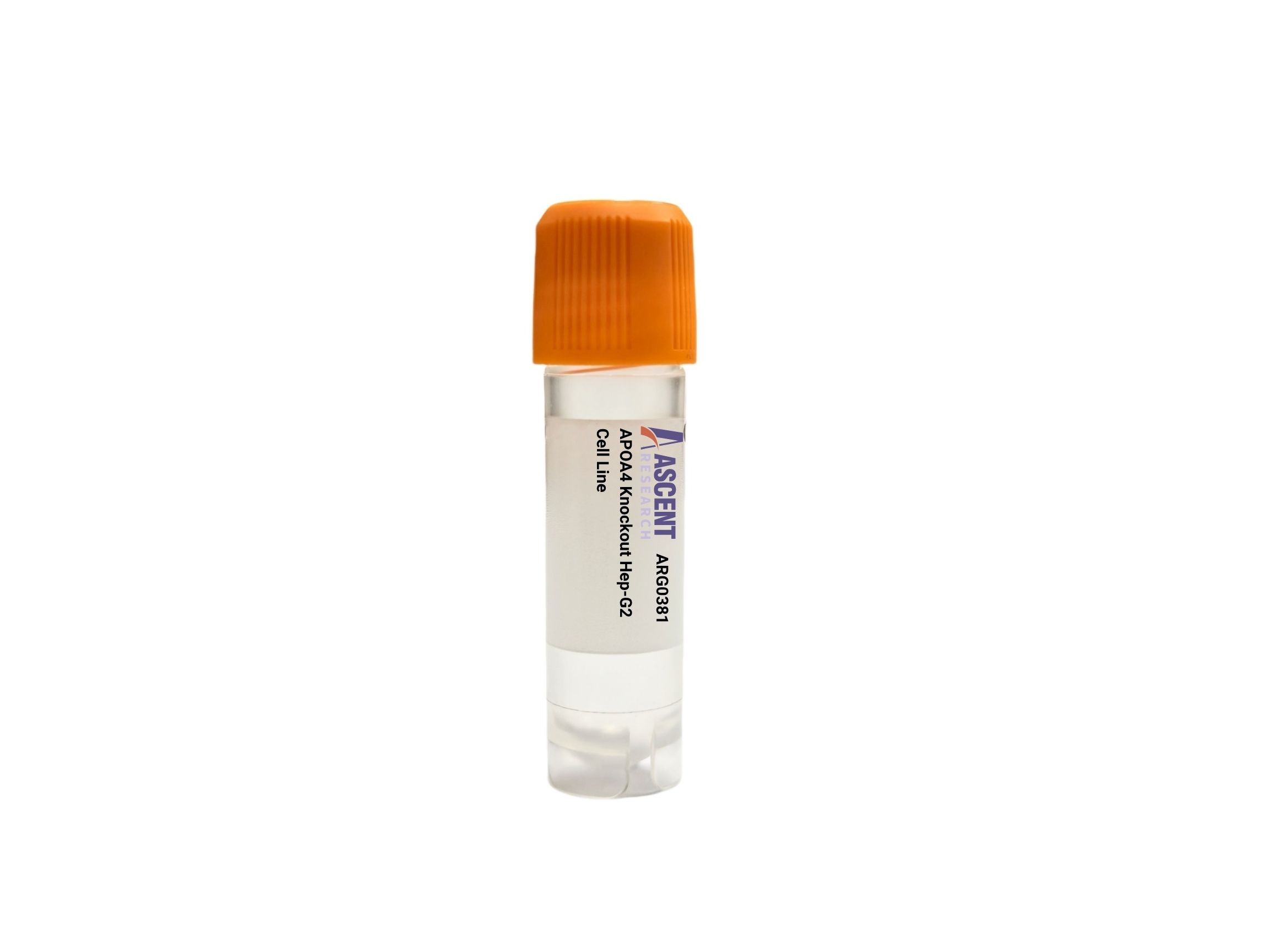
The APOA4 Knockout Hep-G2 Cell Line is a CRISPR/Cas9-edited human hepatocellular carcinoma cell line with targeted disruption of the APOA4 gene. It provides a loss-of-function model for apolipoprotein A-IV, a structural component of chylomicrons and HDL that activates LCAT and promotes cholesterol efflux. APOA4 expression is controlled by PPARA and other nuclear receptors. This model is suited for lipid metabolism and reverse cholesterol transport research, including cholesterol efflux assays, LCAT activity measurements, and drug screening for metabolic disorders. It supports mechanistic investigations into atherosclerosis and cardiovascular disease. For further information, contact Ascent Research.
The APOA4 Knockout Hep-G2 Cell Line is a CRISPR/Cas9-edited knockout cell line derived from the human Hep-G2 hepatocarcinoma line, enabling disruption of the APOA4 gene. It offers a stable loss-of-function model for apolipoprotein A-IV research. The cell line format ensures genetic consistency. CRISPR-mediated gene disruption abolishes APOA4 expression without altering hepatic phenotype. This model is suitable for mechanistic and translational lipid metabolism studies.
Hep-G2 is a well-characterized human hepatocellular carcinoma cell line derived from a male Caucasian patient. These cells retain many features of liver parenchymal cells, including the ability to secrete plasma proteins and lipoproteins, making them a widely used model for hepatocyte function and lipid metabolism. They express key apolipoproteins and respond to metabolic stimuli, providing a physiologically relevant context for gene perturbation studies. The male origin and tumorigenic background should be considered when interpreting results, but Hep-G2 remains a standard in vitro platform for liver biology.
APOA4 encodes apolipoprotein A-IV, a component of chylomicrons and HDL that activates LCAT and mediates cholesterol efflux. Its transcription is regulated by nuclear receptors PPARA, PPARG, LXRA, and HNF4A, as well as insulin. Downstream, it modulates LCAT, ABCA1, and LPL activities. APOA4 physically interacts with APOB, APOC2, and LCAT within lipoprotein particles. Cooperating with APOA1, CETP, and ABCA1, APOA4 facilitates reverse cholesterol transport and HDL remodeling. Knockout of APOA4 disrupts these interconnected lipid handling pathways.
In Hep-G2 cells, knockout of APOA4 abrogates its contribution to lipoprotein structure and function, leading to impaired cholesterol efflux and altered lipoprotein remodeling. This engineered deficiency models aspects of dyslipidemic states observed in metabolic syndrome, obesity, and cardiovascular disease. The loss of APOA4??s LCAT-activating function and its interactions with APOB and APOC2 likely perturbs HDL maturation and triglyceride-rich lipoprotein metabolism. Consequently, this cell line serves as a powerful in vitro system to recapitulate lipid transport defects and to explore compensatory mechanisms within the apolipoprotein network.
This cell line is ideal for lipid metabolism investigations, including quantitative cholesterol efflux assays, LCAT activity measurements, and lipid uptake studies. Transcriptomic analysis via RNA-seq characterizes adaptive responses. It supports drug screening for metabolic disease, functional genomics, and atherosclerosis research. Standard confirmation by Western blotting and RT-qPCR, along with lipoprotein profiling, validates the knockout phenotype. For additional details or custom inquiries, please contact Ascent Research.