Genome-edited Cells
Liver
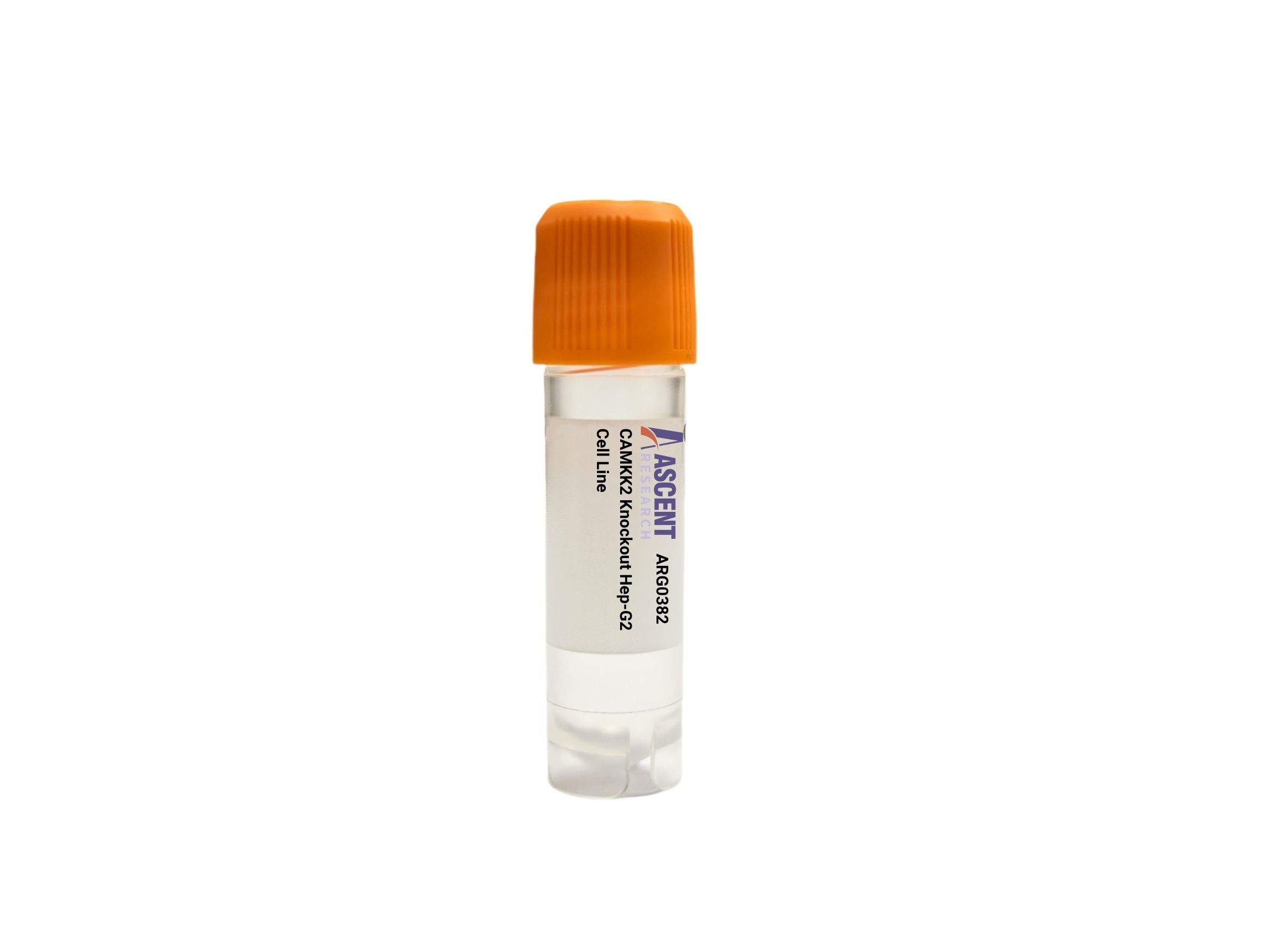
The CAMKK2 Knockout Hep-G2 Cell Line provides a CRISPR/Cas9-edited loss-of-function model in the human hepatocellular carcinoma Hep-G2 background. CAMKK2 is a calcium/calmodulin-dependent kinase that phosphorylates CAMK1, CAMK4, and AMPK, integrating calcium signals with energy metabolism and autophagy. This knockout line is suitable for dissecting hepatic glucose and lipid metabolism, insulin signaling, and AMPK-dependent pathways. Representative assays include phospho-AMPK western blotting, Seahorse metabolic flux analysis, and lipid accumulation studies, supporting research into metabolic syndrome, NAFLD, and liver cancer.
 COA1 Knockout NCI-H1975 Polyclonal Cells
Cat. No. ARG17127
CPEB2 Knockout HT29 Polyclonal Cells
Cat. No. ARG14463
MAP4 Knockout jurkat Polyclonal Cells
Cat. No. ARG13775
CHD2 Knockout jurkat Polyclonal Cells
Cat. No. ARG12956
IL27 Knockout HGC-27 Polyclonal Cells
Cat. No. ARG36141
COA1 Knockout NCI-H1975 Polyclonal Cells
Cat. No. ARG17127
CPEB2 Knockout HT29 Polyclonal Cells
Cat. No. ARG14463
MAP4 Knockout jurkat Polyclonal Cells
Cat. No. ARG13775
CHD2 Knockout jurkat Polyclonal Cells
Cat. No. ARG12956
IL27 Knockout HGC-27 Polyclonal Cells
Cat. No. ARG36141
 SNU-475
Cat. No. ARC0871
SNU-475
Cat. No. ARC0871
The CAMKK2 Knockout Hep-G2 Cell Line is a CRISPR/Cas9-edited knockout cell line designed for the disruption of the CAMKK2 gene in the Hep-G2 hepatocellular carcinoma background. This cell line provides a loss-of-function model for studying CAMKK2-dependent signaling and metabolic regulation. The CRISPR/Cas9-mediated gene disruption eliminates functional CAMKK2 protein expression, enabling researchers to dissect its role in calcium-mediated signaling cascades and energy homeostasis.
The parental Hep-G2 cell line is a well-characterized human hepatocellular carcinoma line isolated from a 15-year-old male patient. Hep-G2 cells exhibit hepatocyte-like morphology and retain key liver-specific metabolic functions, including gluconeogenesis, lipid metabolism, and insulin responsiveness, making them a widely used model for hepatic metabolic studies and liver cancer research.
CAMKK2 encodes a calcium/calmodulin-dependent serine/threonine kinase that serves as an upstream activator of CAMK1, CAMK4, and AMPK in response to elevated intracellular calcium. It is regulated by upstream factors such as intracellular calcium, calmodulin, and metabolic stress, and it phosphorylates downstream targets including CAMK1, CAMK4, and AMPK. Activation of AMPK by CAMKK2 leads to phosphorylation of acetyl-CoA carboxylase (ACC) and TSC2, thereby modulating mTORC1 activity and autophagy. CAMKK2 also interacts with 14-3-3 proteins and AMPK subunits, integrating calcium and energy status signals to control cell growth, metabolism, and stress responses.
In liver-derived Hep-G2 cells, CAMKK2 is critically positioned at the intersection of calcium signaling and metabolic pathways. Its disruption impairs AMPK activation in response to metabolic stress, altering hepatic glucose production, lipid accumulation, and insulin signaling. The CAMKK2 knockout Hep-G2 line therefore serves as a relevant model for dissecting mechanisms underlying non-alcoholic fatty liver disease, metabolic syndrome, and hepatocellular carcinoma, where dysregulation of calcium/CaM-dependent kinase signaling contributes to pathogenesis.
Researchers can employ this knockout cell line in a variety of functional assays, including western blotting for CAMKK2 and phospho-AMPK, glucose uptake and output measurements, lipid accumulation assays, and Seahorse metabolic flux analysis to assess oxidative phosphorylation and glycolysis. It is also suited for AMPK phosphorylation assays, autophagy flux monitoring, and cell proliferation studies. Applications extend to drug toxicity testing, cancer metabolism investigation, and insulin signaling analysis. For further inquiries or technical details, please contact Ascent Research.