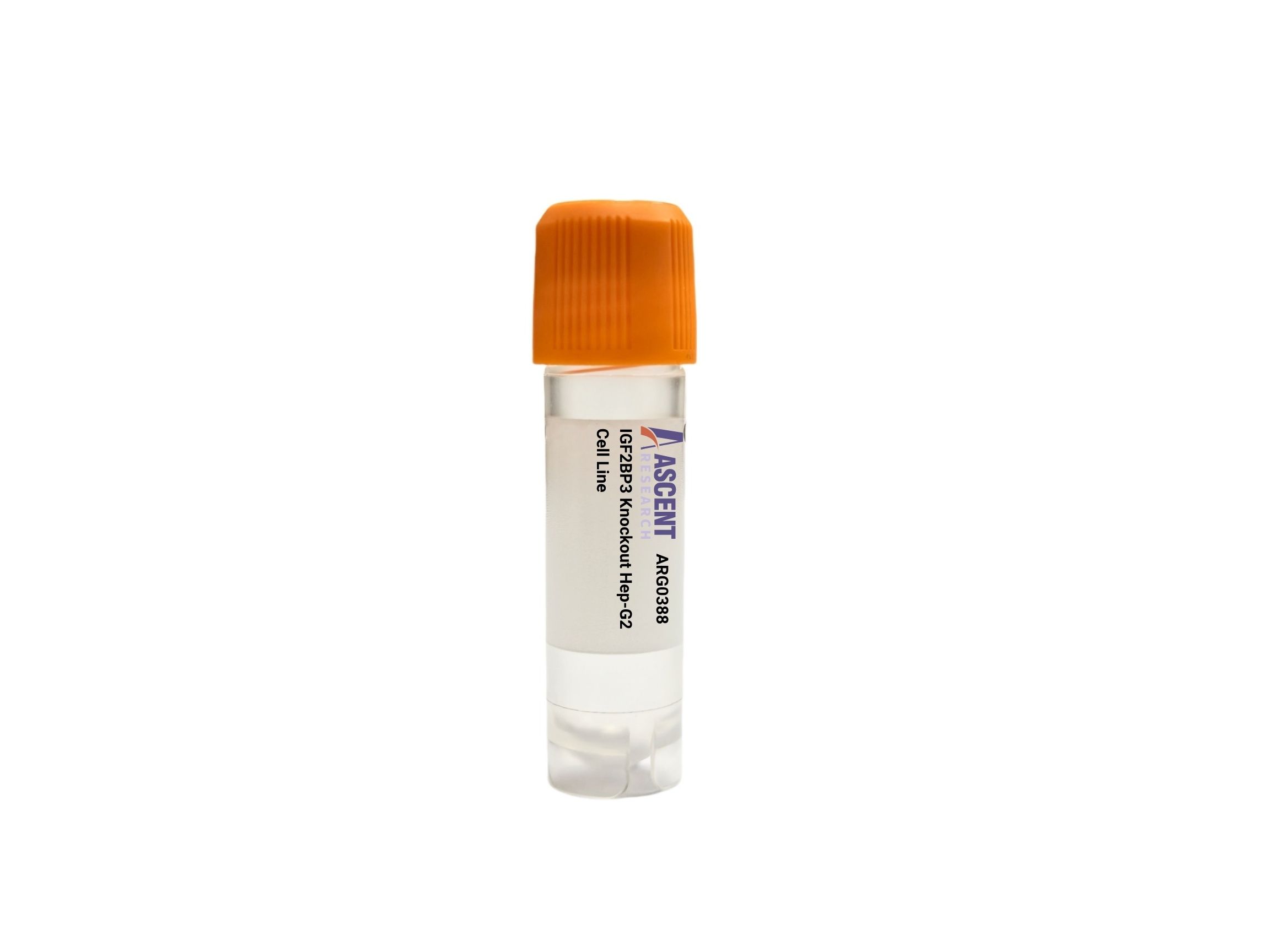
Genome-edited Cells
Liver
The IGF2BP3 Knockout Hep-G2 Cell Line is a CRISPR/Cas9-edited hepatocellular carcinoma model with targeted disruption of the RNA-binding protein IGF2BP3. This protein stabilizes oncogenic mRNAs such as MYC and CD44, and its expression is driven by c-Myc and EGF/Wnt signaling, promoting tumorigenesis. This knockout cell line enables functional dissection of IGF2BP3-mediated post-transcriptional regulation in liver cancer. Applications include proliferation, migration, mRNA stability, and drug resistance studies, using assays like RIP-seq, xenografts, and RT-qPCR.
 NEXN Knockout A549 Polyclonal Cells
Cat. No. ARG10302
HHAT Knockout HAP1 Polyclonal Cells
Cat. No. ARG22510
JAG2 Knockout Raji Polyclonal Cells
Cat. No. ARG23862
CCDC71L Knockout huh-7 Polyclonal Cells
Cat. No. ARG43061
ARPC1B Knockout HAP1 Polyclonal Cells
Cat. No. ARG27330
NEXN Knockout A549 Polyclonal Cells
Cat. No. ARG10302
HHAT Knockout HAP1 Polyclonal Cells
Cat. No. ARG22510
JAG2 Knockout Raji Polyclonal Cells
Cat. No. ARG23862
CCDC71L Knockout huh-7 Polyclonal Cells
Cat. No. ARG43061
ARPC1B Knockout HAP1 Polyclonal Cells
Cat. No. ARG27330
 Immortalized Mouse Corneal Stromal Cell
Cat. No. ARI0169
Immortalized Mouse Corneal Stromal Cell
Cat. No. ARI0169
The IGF2BP3 Knockout Hep-G2 Cell Line is a CRISPR/Cas9-edited knockout cell line designed for targeted disruption of the IGF2BP3 gene in the human Hep-G2 hepatocellular carcinoma cell background. This engineered loss-of-function model enables precise interrogation of IGF2BP3??s roles in post-transcriptional gene regulation and oncogenic signaling without overexpression artifacts.
The parental Hep-G2 cell line, isolated from the hepatoblastoma of a 15-year-old male, exhibits an epithelial morphology and serves as a well-established in vitro system for studying hepatic tumorigenesis and drug metabolism. Its widespread use in hepatocellular carcinoma research provides a robust platform for dissecting molecular mechanisms of liver cancer progression.
IGF2BP3 encodes an RNA-binding protein that recognizes and binds to the 3?? untranslated regions of target mRNAs, thereby enhancing their stability and translation. Key downstream targets include the oncogenic transcripts MYC, CD44, KRAS, CDK6, and IGF2. Upstream, IGF2BP3 expression is transcriptionally regulated by c-Myc and is responsive to epidermal growth factor (EGF) and Wnt/??-catenin signaling. The protein interacts with mRNA processing factors such as IGF2BP1, IGF2BP2, ELAVL1 (HuR), and poly(A)-binding protein PABPC1, forming ribonucleoprotein complexes that shield mRNAs from degradation. Through these interactions, IGF2BP3 promotes cell cycle progression, proliferation, and tumorigenesis.
In the context of hepatocellular carcinoma, IGF2BP3 overexpression correlates with aggressive tumor characteristics, making its knockout in Hep-G2 cells particularly informative. This model facilitates the dissection of IGF2BP3-dependent pathways driving proliferation, migration, and drug resistance. Researchers can assess how loss of IGF2BP3 alters the stability and translational output of key oncogenic drivers, providing a clean genetic background to validate direct mRNA targets and downstream phenotypic changes.
Typical research applications include mechanistic studies of liver cancer proliferation, metastasis, and mRNA stability. The knockout cell line is compatible with a range of assays: western blotting and RT-qPCR for target expression, RNA-seq for transcriptome-wide profiling, RNA immunoprecipitation (RIP) for binding analysis, MTT/BrdU proliferation assays, migration/invasion assays, and xenograft tumor growth studies. It also supports investigations into drug sensitivity and resistance mechanisms. For further technical information or inquiries, please contact Ascent Research.