Genome-edited Cells
Liver
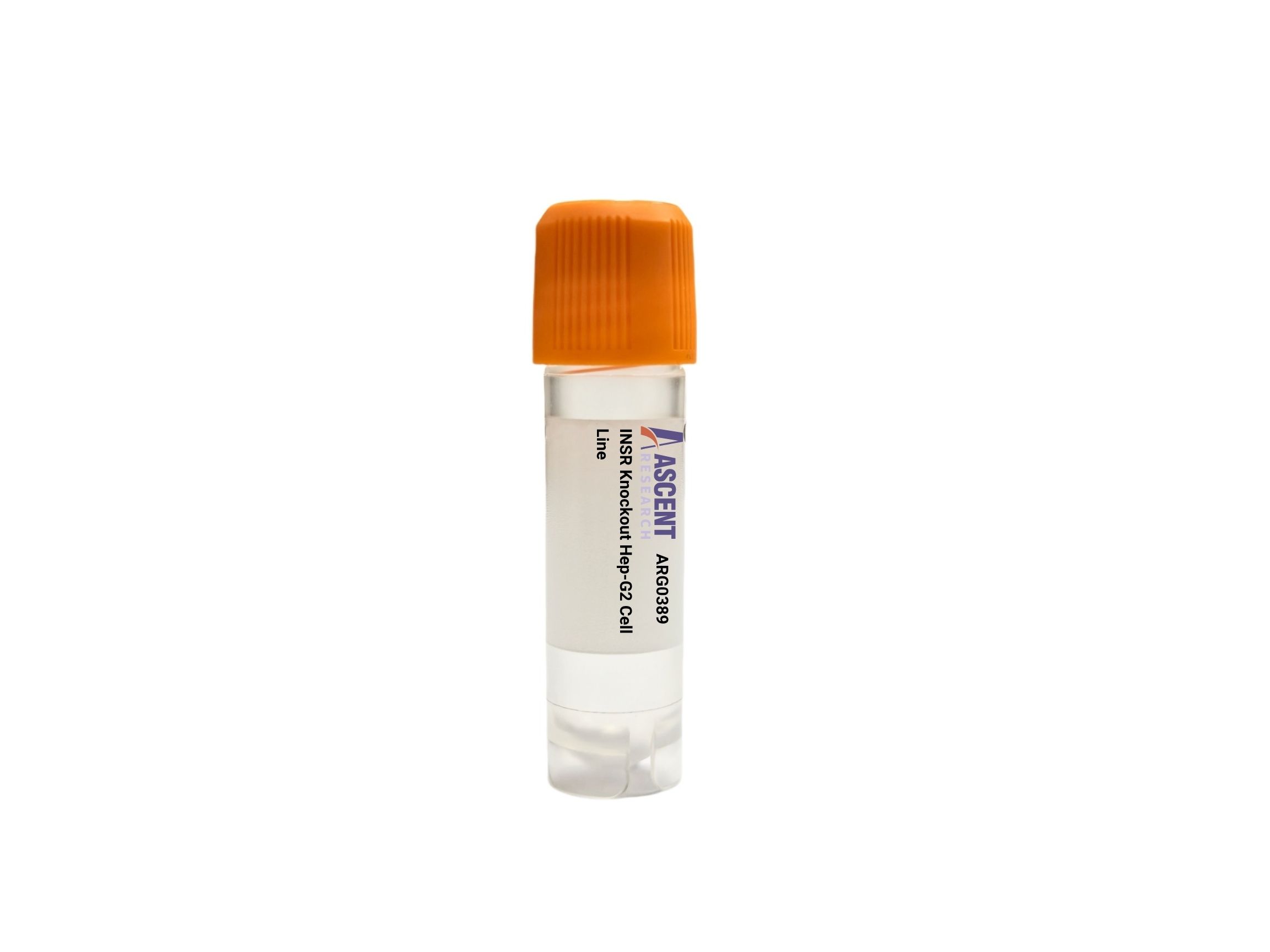
The INSR Knockout Hep-G2 Cell Line is a CRISPR/Cas9-edited human hepatocellular carcinoma cell line with disrupted expression of the insulin receptor (INSR) gene. This model enables investigation of insulin signaling dysfunction in liver cells, as INSR loss ablates the PI3K-AKT cascade, blocking phosphorylation of downstream effectors such as IRS1, AKT, and FOXO1. Key applications include hepatic insulin resistance studies, type 2 diabetes modeling, screening of insulin sensitizers, and cancer metabolism research. The cell line supports glucose uptake, phospho-signaling analysis, and metabolic assays.
 AK3 Knockout Hela Polyclonal Cells
Cat. No. ARG20596
NUDCD2 Knockout NCI-H1299 Polyclonal Cells
Cat. No. ARG17631
ALDH4A1 Knockout HGC-27 Polyclonal Cells
Cat. No. ARG29492
FAM83G Knockout MES-OV Polyclonal Cells
Cat. No. ARG5862
CEP78 Knockout HEK293T Polyclonal Cells
Cat. No. ARG3948
AK3 Knockout Hela Polyclonal Cells
Cat. No. ARG20596
NUDCD2 Knockout NCI-H1299 Polyclonal Cells
Cat. No. ARG17631
ALDH4A1 Knockout HGC-27 Polyclonal Cells
Cat. No. ARG29492
FAM83G Knockout MES-OV Polyclonal Cells
Cat. No. ARG5862
CEP78 Knockout HEK293T Polyclonal Cells
Cat. No. ARG3948
 GP2-293
Cat. No. ARI0039
GP2-293
Cat. No. ARI0039
The INSR Knockout Hep-G2 Cell Line is a human hepatocellular carcinoma-derived cell line in which the INSR gene has been disrupted by CRISPR/Cas9-mediated genome editing. This knockout cell line provides a loss-of-function model for studying insulin receptor signaling in a hepatic context. The INSR gene encodes the insulin receptor, a transmembrane tyrosine kinase that is essential for metabolic regulation. Disruption of INSR eliminates receptor expression, enabling researchers to dissect insulin-dependent pathways and their roles in liver metabolism, cancer biology, and signal transduction.
The parental Hep-G2 cell line was originally established from a hepatocellular carcinoma of a 15-year-old Caucasian male. Hep-G2 cells are well-differentiated hepatic epithelial cells that retain many liver-specific functions, making them a widely used in vitro model for hepatocyte biology, drug metabolism, and hepatocellular carcinoma research. These cells express key components of the insulin signaling machinery and respond to insulin stimulation, providing a physiologically relevant background for INSR knockout studies.
The insulin receptor, encoded by INSR, is a tyrosine kinase activated by insulin, IGF1, and IGF2. Upon ligand binding, the receptor autophosphorylates and recruits IRS1 and SHC, which then engage PI3K and GRB2 to propagate signals via the PI3K-AKT and MAPK pathways. Activated AKT phosphorylates FOXO1 and GSK3, promoting GLUT4 translocation and glycogen synthesis, while mTORC1 mediates metabolic and growth responses. In the absence of INSR, this signaling cascade is disrupted, resulting in impaired insulin-stimulated glucose uptake, altered transcriptional regulation by FOXO1, and defective glycogen accumulation.
In the Hep-G2 background, INSR knockout recapitulates features of hepatic insulin resistance, a hallmark of type 2 diabetes and metabolic syndrome. The loss of insulin receptor function in these liver-derived cells impairs glucose uptake and glycogen synthesis, mirroring the metabolic defects observed in insulin-resistant states. Moreover, because Hep-G2 cells are cancerous, this model also allows investigation of the interplay between insulin signaling and hepatocellular carcinoma proliferation. INSR deficiency may modulate cancer cell metabolism and growth factor responsiveness, providing insights into tumor metabolism. This cell line thus serves as a valuable tool for dissecting the dual roles of insulin signaling in normal liver metabolism and in the pathogenesis of liver cancer.
Researchers can utilize the INSR Knockout Hep-G2 Cell Line for western blotting, phospho-signaling analysis, glucose uptake assays, and insulin stimulation experiments to dissect insulin pathway dysfunction. Metabolic assays, cell proliferation studies, and flow cytometry enable phenotypic characterization. This model is ideal for insulin sensitizer screening, investigation of insulin resistance syndromes such as Rabson-Mendenhall and Donohue, and cancer metabolism research. RT-qPCR and transcriptomic analyses can further identify INSR-regulated gene networks. For further technical information or to discuss custom applications, please contact Ascent Research.