Genome-edited Cells
Liver
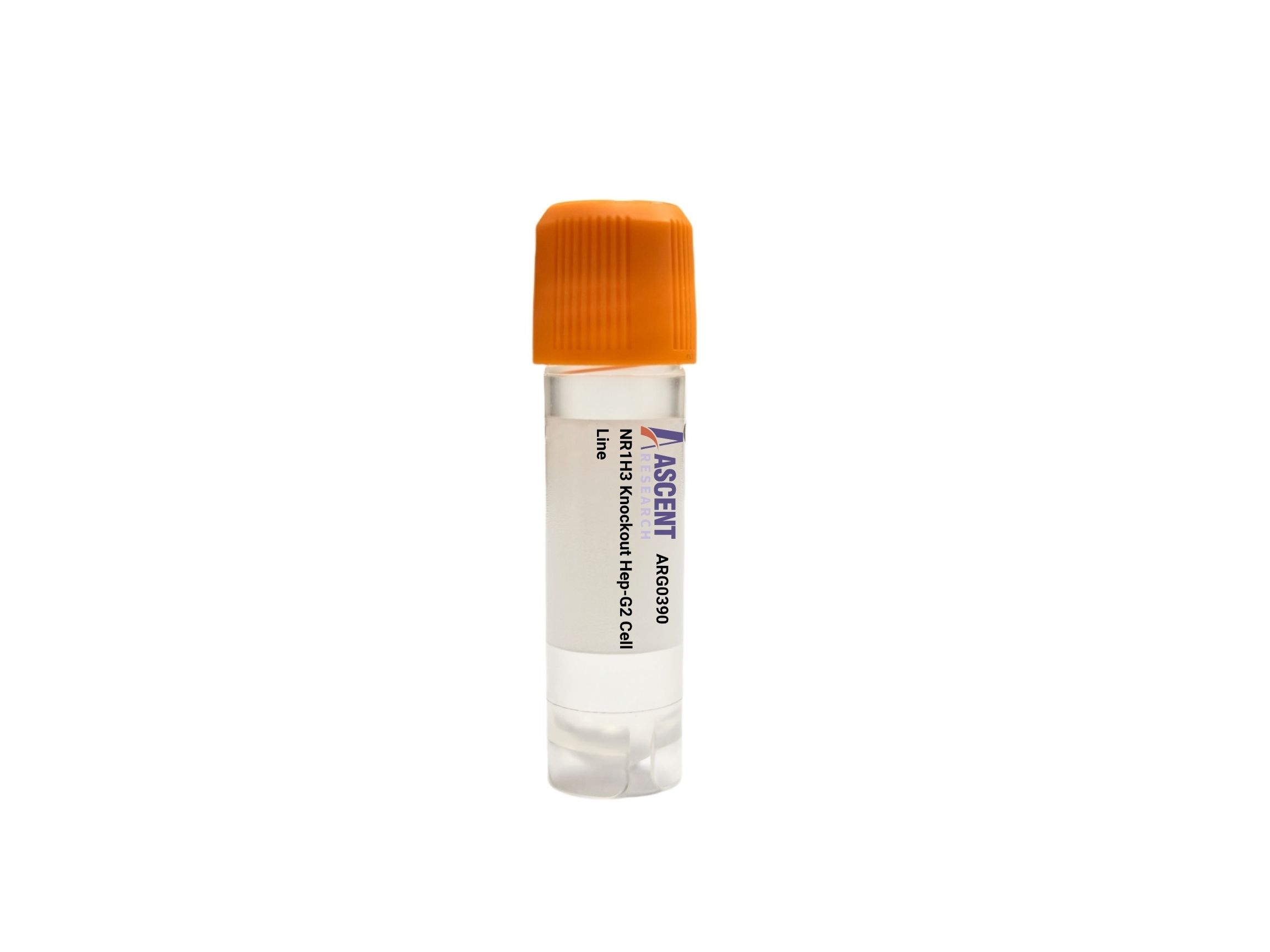
The NR1H3 Knockout Hep-G2 Cell Line is a CRISPR/Cas9-edited hepatic knockout model disrupting LXR?? (NR1H3). It uses the Hep-G2 hepatocellular carcinoma host, providing a relevant background for lipid metabolism studies. LXR?? forms a heterodimer with RXR and, upon oxysterol binding, induces target genes such as ABCA1 and SREBP-1c, governing cholesterol efflux and lipogenesis. This model supports research on NAFLD, atherosclerosis, and metabolic syndrome, and enables LXR modulator screening. Standard assays include cholesterol efflux, RT-qPCR, and Oil Red O staining to evaluate LXR??-dependent pathways.
 CHSY1 Knockout NCI-H1975 Polyclonal Cells
Cat. No. ARG16899
PARVB Knockout NCI-H1975 Polyclonal Cells
Cat. No. ARG16397
FTSJ1 Knockout 143B Polyclonal Cells
Cat. No. ARG11927
KATNA1 Knockout MES-OV Polyclonal Cells
Cat. No. ARG24696
ANKRD12 Knockout huh-7 Polyclonal Cells
Cat. No. ARG27893
CHSY1 Knockout NCI-H1975 Polyclonal Cells
Cat. No. ARG16899
PARVB Knockout NCI-H1975 Polyclonal Cells
Cat. No. ARG16397
FTSJ1 Knockout 143B Polyclonal Cells
Cat. No. ARG11927
KATNA1 Knockout MES-OV Polyclonal Cells
Cat. No. ARG24696
ANKRD12 Knockout huh-7 Polyclonal Cells
Cat. No. ARG27893
 Sp2/mIL-6
Cat. No. ARC0892
Sp2/mIL-6
Cat. No. ARC0892
The NR1H3 Knockout Hep-G2 Cell Line is a CRISPR/Cas9-edited human cell line in which the NR1H3 gene has been disrupted, resulting in functional ablation of liver X receptor alpha (LXR??). This stable knockout model enables precise dissection of LXR??-dependent transcriptional programs in a hepatic carcinoma context, providing a critical tool for studying cholesterol and fatty acid metabolism as well as inflammatory signaling without confounding endogenous receptor activity.
Hep-G2 is a widely used human hepatocellular carcinoma cell line originally derived from a male adolescent. It retains many differentiated liver functions, including protein synthesis, lipoprotein metabolism, and detoxification pathways, making it a valuable model for hepatocyte biology and toxicology research. The Hep-G2 background offers a relevant cellular environment for dissecting hepatic nuclear receptor functions, particularly those governing lipid and cholesterol homeostasis central to metabolic diseases.
NR1H3 encodes LXR??, a ligand-activated nuclear receptor that heterodimerizes with retinoid X receptor (RXR). Oxysterol ligands such as 24(S)-hydroxycholesterol and 27-hydroxycholesterol activate the LXR??-RXR complex, which binds LXRE motifs in target gene promoters, recruiting coactivators like SRC-1 while releasing corepressors NCOR1 and SMRT. This induces transcription of cholesterol efflux transporters ABCA1 and ABCG1, apolipoprotein APOE, the lipogenic transcription factor SREBF1 (encoding SREBP-1c) and its target FASN, as well as CYP7A1 for bile acid synthesis. LXR?? also modulates LPL and PLTP, integrating signals from insulin, glucose, and retinoic acid, and interacting with PPAR pathways.
In the Hep-G2 hepatocellular context, loss of NR1H3 ablates LXR??-mediated hepatic lipid regulation, enabling dissection of LXR??-specific functions in reverse cholesterol transport and lipogenesis independent of LXR??. This model is ideal for studying how NR1H3 knockout alters ABCA1 and SREBP-1c expression, impairs cholesterol efflux, and affects lipid droplet formation??processes directly implicated in non-alcoholic fatty liver disease, metabolic syndrome, and atherosclerosis. The hepatocellular carcinoma origin also supports investigations into cancer cell lipid metabolism and drug response.
This knockout cell line is suited for a broad range of applications, including cholesterol efflux assays to quantify ABCA1/ABCG1-mediated transport, RT-qPCR and western blotting to monitor downstream target gene and protein levels, and LXRE-driven luciferase reporter assays for high-throughput screening of LXR agonists or antagonists. In NAFLD research, Oil Red O staining can visualize lipid accumulation, while cell viability and hepatotoxicity tests allow evaluation of metabolic stressors. Transcriptomic profiling by RNA-seq can uncover global changes in lipid metabolism and inflammatory gene networks. For detailed technical specifications, sample preparation protocols, or ordering information, please contact Ascent Research.