Genome-edited Cells
Liver
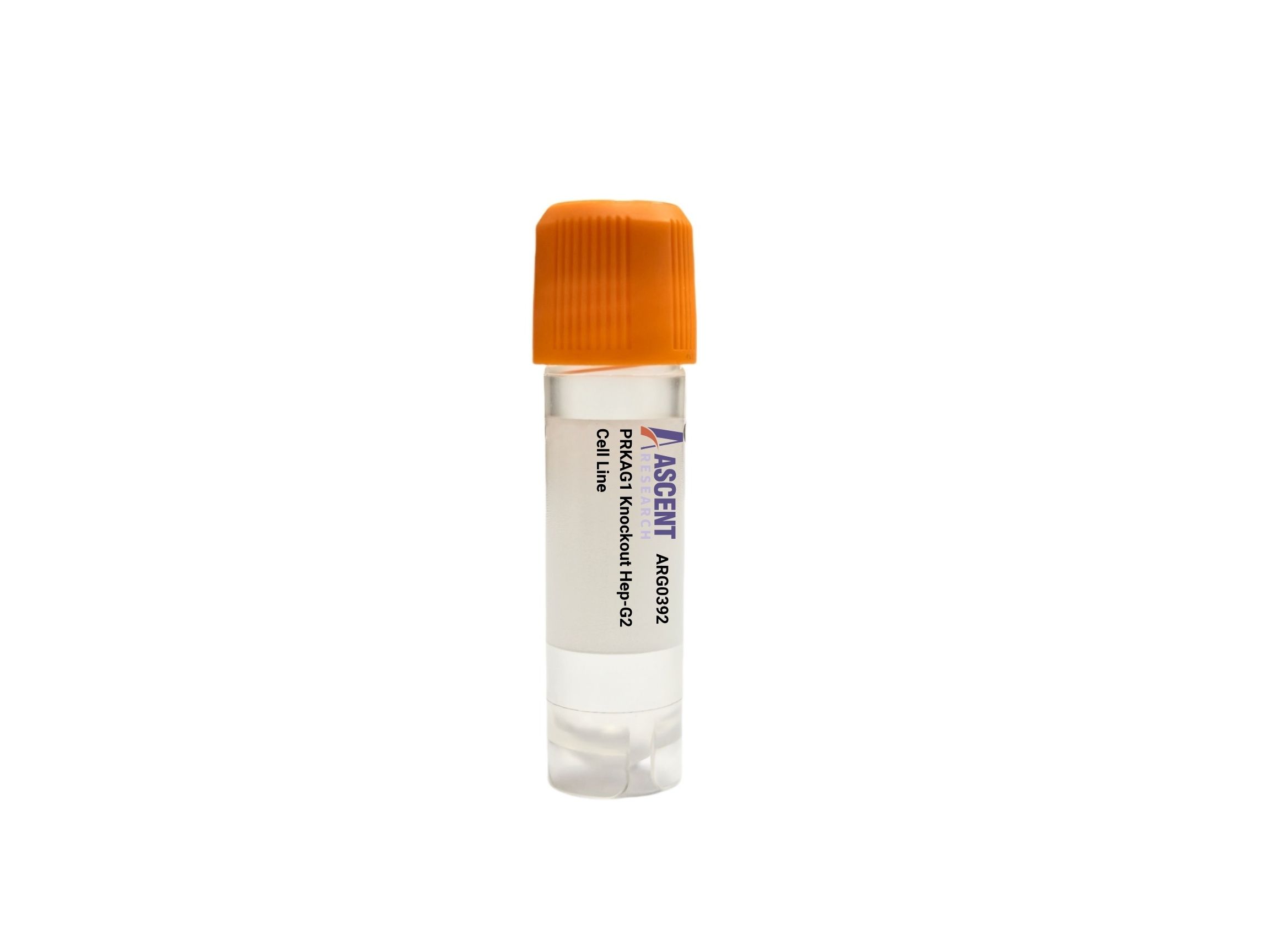
The PRKAG1 Knockout Hep-G2 Cell Line is a CRISPR/Cas9-edited human hepatocellular carcinoma model with targeted disruption of the gene encoding the AMPK ??1 subunit. This loss-of-function system enables study of energy sensing and metabolic signaling in a hepatic context, relevant to liver cancer and metabolic disorders. PRKAG1 knockout disrupts AMPK heterotrimer formation and downstream pathways including mTORC1 and autophagy, impairing responses to AMPK activators like metformin. Key applications include investigating AMPK signaling, drug screening, and metabolic phenotyping using assays such as Seahorse analysis, Western blotting, and kinase activity measurements.
 GNE Knockout NCI-H1975 Polyclonal Cells
Cat. No. ARG16653
MAPK7 Knockout Jurkat Polyclonal Cells
Cat. No. ARG13038
DBNL Knockout Hela Polyclonal Cells
Cat. No. ARG8553
KCTD12 Knockout AGS Polyclonal Cells
Cat. No. ARG27099
C12orf29 Knockout A2780 Polyclonal Cells
Cat. No. ARG28933
HMOX1 Knockout jurkat Polyclonal Cells
Cat. No. ARG34266
GNE Knockout NCI-H1975 Polyclonal Cells
Cat. No. ARG16653
MAPK7 Knockout Jurkat Polyclonal Cells
Cat. No. ARG13038
DBNL Knockout Hela Polyclonal Cells
Cat. No. ARG8553
KCTD12 Knockout AGS Polyclonal Cells
Cat. No. ARG27099
C12orf29 Knockout A2780 Polyclonal Cells
Cat. No. ARG28933
HMOX1 Knockout jurkat Polyclonal Cells
Cat. No. ARG34266
The PRKAG1 Knockout Hep-G2 Cell Line is a CRISPR/Cas9-edited human hepatic knockout model featuring targeted disruption of the PRKAG1 gene. This cell line enables loss-of-function studies of the AMPK ??1 regulatory subunit in a hepatocellular carcinoma background. By eliminating PRKAG1 expression, the model disrupts AMPK heterotrimer assembly and abolishes ??1-dependent energy sensing, providing a defined system to dissect AMPK-mediated metabolic signaling. The knockout is generated in the Hep-G2 cell line, a widely used host for liver biology and cancer research.
The Hep-G2 cell line, derived from a 15-year-old male hepatocellular carcinoma, is a standard model for hepatic biology and liver cancer. It retains key liver functions and is widely used for metabolic and oncogenic signaling studies. Its well-characterized pathways and assay compatibility make it an optimal host for PRKAG1 knockout, providing a physiologically relevant context for dissecting AMPK roles in the liver.
PRKAG1 encodes the ??1 regulatory subunit of AMPK, which senses AMP/ATP ratios to allosterically activate the kinase. Upstream kinases LKB1/STK11 and CAMKK2 phosphorylate the ?? catalytic subunits (PRKAA1/2), while ?? subunits (PRKAB1/2) scaffold the complex. Knockout of PRKAG1 prevents AMPK heterotrimer formation, blocking phosphorylation of downstream targets such as ACC1, TSC2, and ULK1. This disrupts pathways including mTORC1, PGC-1??, and SREBP1c, impairing fatty acid oxidation, autophagy, glycolysis, and mitochondrial biogenesis. Consequently, cellular responses to AMPK modulators like metformin and AICAR are ablated.
In Hep-G2 cells, PRKAG1 knockout creates a model of disrupted energy homeostasis, with altered lipid metabolism, reduced autophagy, and mitochondrial dysfunction. This facilitates investigation of ??1-dependent AMPK contributions to hepatic glucose production, lipogenesis, and oxidative stress. The line also enables studies of AMPK’s tumor-suppressive functions in liver cancer, including mTORC1 inhibition and autophagy induction.
Applications include mechanistic AMPK signaling studies, drug screening (metformin, AICAR), Seahorse metabolic profiling, and assays for ACC phosphorylation or autophagy flux by Western blotting and immunofluorescence. The model supports research into cardiac hypertrophy, metabolic syndrome, and hepatocellular carcinoma metabolism. For technical support, contact Ascent Research.