Genome-edited Cells
Liver
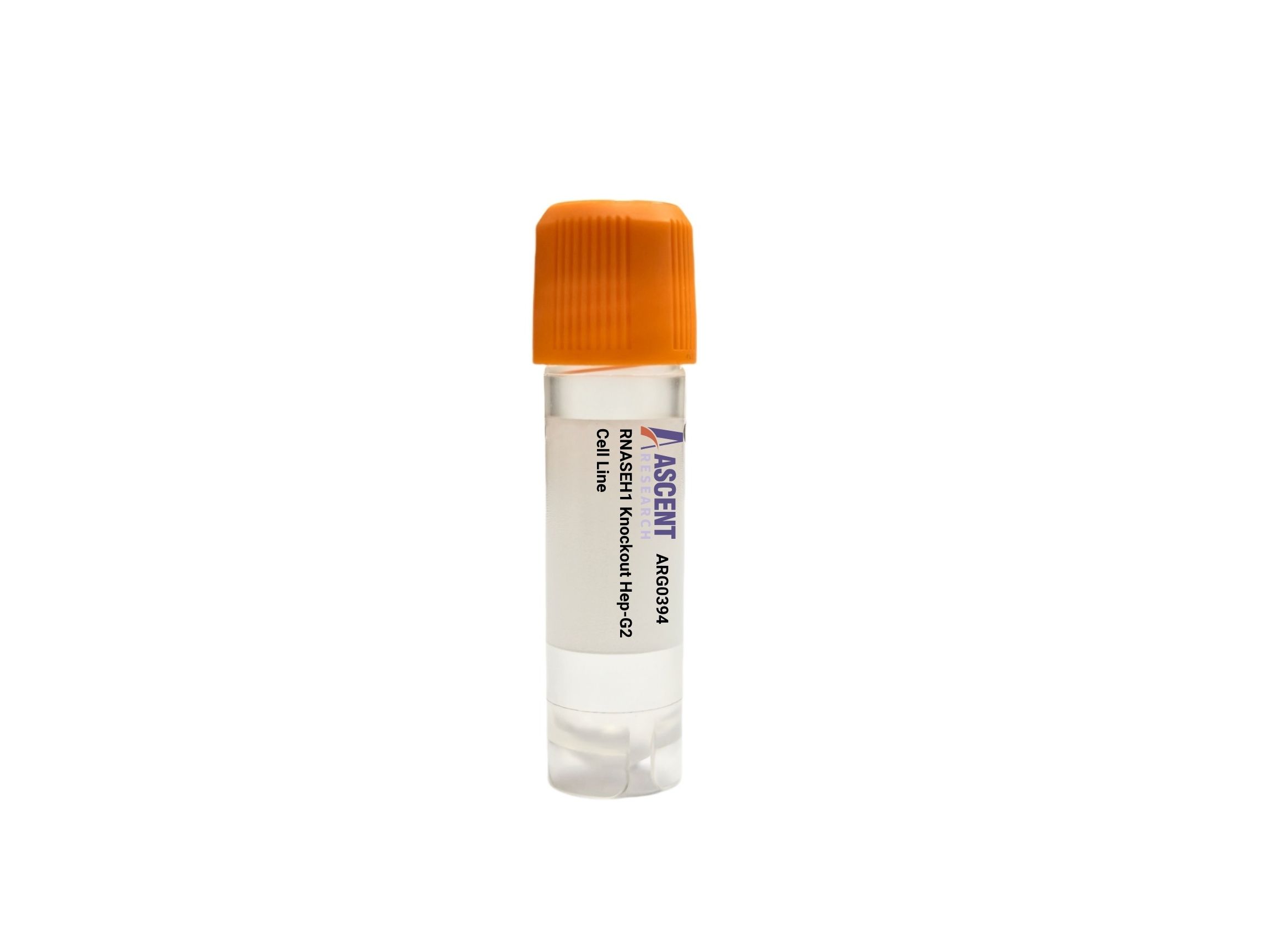
The RNASEH1 Knockout Hep-G2 Cell Line is a CRISPR/Cas9-edited human hepatic knockout model derived from Hep-G2 hepatocellular carcinoma cells. It features targeted disruption of RNASEH1, which encodes ribonuclease H1, an endonuclease that cleaves RNA in RNA-DNA hybrids to resolve R-loops and remove RNA primers during DNA replication. This cell line enables investigation of R-loop-driven genomic instability, mitochondrial DNA maintenance defects, and replication stress in liver cancer. RNASEH1 interacts with POLG, TWINKLE, and SETX. Representative assays include DRIP-seq, mitochondrial DNA copy number qPCR, and drug sensitivity screening. For more information, please contact Ascent Research.
 ACSL5 Knockout AGS Polyclonal Cells
Cat. No. ARG26451
AP1AR Knockout NCI-H1975 Polyclonal Cells
Cat. No. ARG31151
DTX3L Knockout Raji Polyclonal Cells
Cat. No. ARG39965
EEF1D Knockout K562 Polyclonal Cells
Cat. No. ARG40561
MARK1 Knockout 786-O Polyclonal Cells
Cat. No. ARG5407
CREB1 Knockout 786-O Polyclonal Cells
Cat. No. ARG5385
ACSL5 Knockout AGS Polyclonal Cells
Cat. No. ARG26451
AP1AR Knockout NCI-H1975 Polyclonal Cells
Cat. No. ARG31151
DTX3L Knockout Raji Polyclonal Cells
Cat. No. ARG39965
EEF1D Knockout K562 Polyclonal Cells
Cat. No. ARG40561
MARK1 Knockout 786-O Polyclonal Cells
Cat. No. ARG5407
CREB1 Knockout 786-O Polyclonal Cells
Cat. No. ARG5385
The RNASEH1 Knockout Hep-G2 Cell Line is a CRISPR/Cas9-edited human knockout cell line with targeted disruption of the RNASEH1 gene. This loss-of-function model enables precise investigation of ribonuclease H1 functions in DNA replication, R-loop resolution, and mitochondrial DNA maintenance within a hepatocellular carcinoma background. Derived from the widely used Hep-G2 parental line, this knockout derivative provides a controlled system for dissecting RNASEH1-dependent mechanisms relevant to cancer biology and drug discovery.
Hep-G2 is a well-characterized hepatic cell line originally isolated from a liver biopsy of a 15-year-old male with hepatocellular carcinoma. These adherent epithelial cells retain many differentiated liver functions, including the secretion of plasma proteins and expression of liver-specific enzymes, making them suitable for toxicology, metabolism, and oncology studies. Their inherent sensitivity to DNA damage and replication stress renders Hep-G2 cells an apt host for exploring the consequences of RNASEH1 loss. In this knockout model, Hep-G2 cells provide a disease-relevant platform to examine R-loop-mediated genomic instability and mitochondrial dysfunction in liver cancer.
RNASEH1 encodes ribonuclease H1, an endonuclease that specifically cleaves the RNA strand in RNA-DNA hybrids. It is essential for resolving R-loops??three-stranded structures formed during transcription??and for removing RNA primers during discontinuous DNA synthesis on the lagging strand, thereby ensuring replication fork integrity. RNASEH1 is transcriptionally regulated by E2F1 and activated by DNA damage response kinases ATM and ATR, linking its function to cell cycle progression and genome surveillance. The protein interacts with mitochondrial replisome components POLG and TWINKLE, as well as with nuclear factors replication protein A (RPA), topoisomerase I (TOP1), and senataxin (SETX). This dual localization enables RNASEH1 to process Okazaki fragment RNA primers in mitochondria and to suppress pathogenic R-loop accumulation at transcription-replication conflicts in the nucleus. Consequently, disruption of RNASEH1 impairs both nuclear genome stability and mitochondrial DNA maintenance, leading to replication stress, accumulation of DNA lesions, and potential activation of apoptotic pathways.
In the Hep-G2 hepatocellular carcinoma context, RNASEH1 knockout generates a valuable model for studying R-loop-driven genomic instability and mitochondrial dysfunction. Liver cancer cells frequently exhibit elevated replication stress and altered mitochondrial activity, and loss of RNASEH1 exacerbates these phenotypes. The resulting increase in unresolved R-loops and mitochondrial DNA lesions can sensitize cells to genotoxic chemotherapeutics and replication inhibitors. This cell line is therefore instrumental for validating drug targets in oncology and for modeling mitochondrial DNA depletion syndromes and progressive external ophthalmoplegia.
Researchers can employ this knockout cell line in a broad array of assays to probe RNASEH1 function. Western blotting and RT-qPCR enable confirmation of RNASEH1 protein and transcript levels, while R-loop immunofluorescence and DRIP-seq facilitate detection and genome-wide profiling of RNA-DNA hybrids. Mitochondrial DNA copy number qPCR and DNA fiber assays allow assessment of mtDNA depletion and replication fork dynamics, respectively. Apoptosis assays and drug sensitivity screening further support studies on therapeutic vulnerabilities. These applications are critical for advancing understanding of R-loop-related genomic instability and mitochondrial disorders. For more information, please contact Ascent Research.