Genome-edited Cells
Blood (peripheral blood)
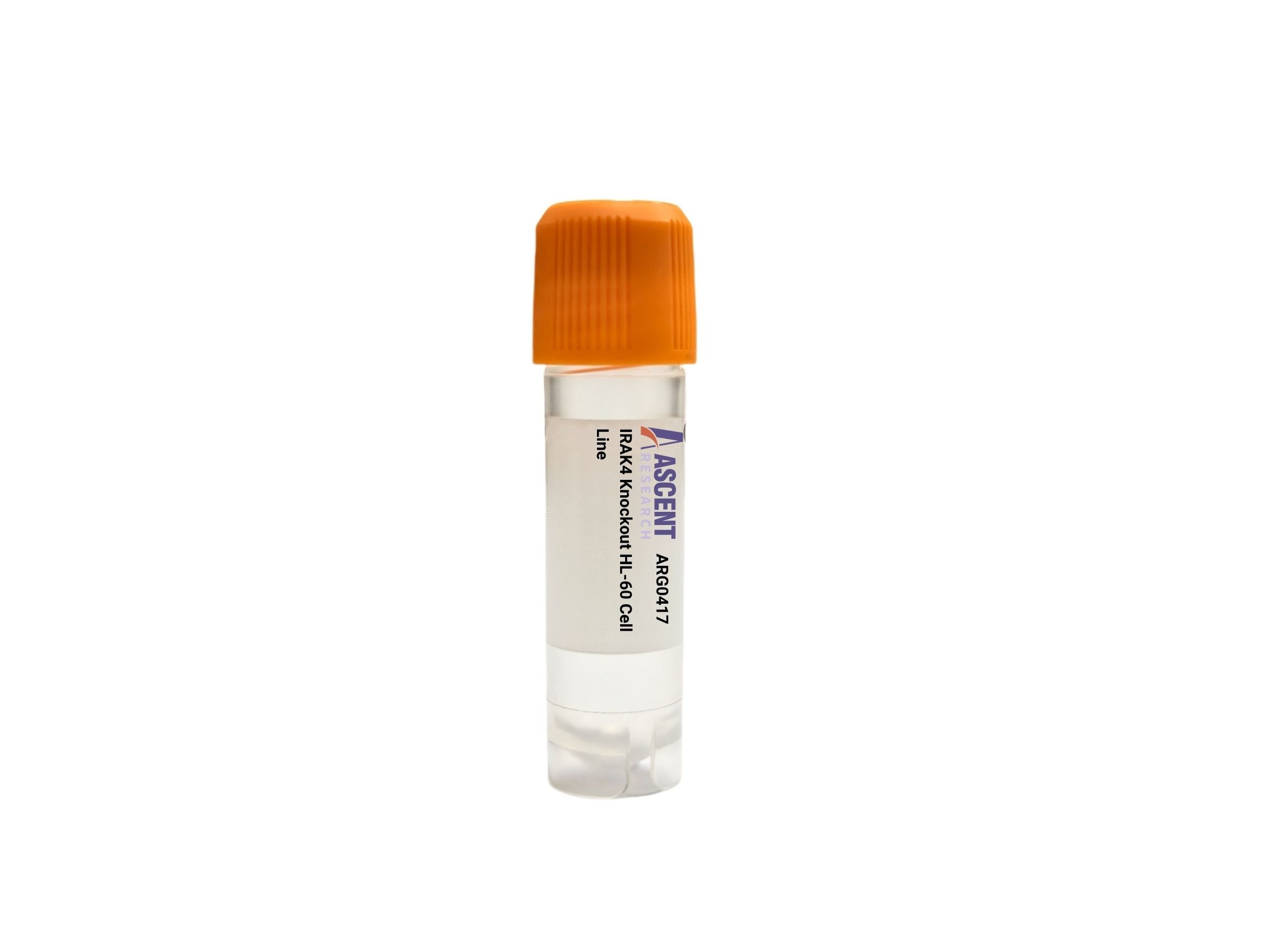
The IRAK4 Knockout HL-60 Cell Line is a CRISPR/Cas9-edited human acute promyelocytic leukemia cell line with targeted disruption of the IRAK4 gene. IRAK4 encodes a serine/threonine kinase critical for MyD88-dependent signaling downstream of Toll-like receptors and interleukin-1 receptors, where it phosphorylates IRAK1 to activate NF-??B and MAPK cascades, driving pro-inflammatory cytokine production. This model is ideal for studying innate immune signaling, myeloid differentiation, IRAK4 deficiency, and screening IRAK4 inhibitors. Typical applications include western blot detection of IRAK4 and phospho-IRAK1, RT-qPCR for IL-6 and TNF-??, NF-??B reporter assays, and differentiation assays with PMA or DMSO.
The IRAK4 Knockout HL-60 Cell Line is a CRISPR/Cas9-edited human cell line designed for loss-of-function studies of the IRAK4 gene. Based on the HL-60 acute promyelocytic leukemia line, it features targeted disruption of IRAK4, eliminating expression of the encoded serine/threonine kinase. This stable knockout model provides a uniform system for interrogating IRAK4 function in innate immune signaling without the variability of transient silencing methods.
The HL-60 cell line originates from a female patient with acute promyelocytic leukemia and serves as a classic model for myeloid differentiation. Upon treatment with DMSO or PMA, HL-60 cells differentiate into granulocyte- or monocyte/macrophage-like cells, respectively, making them valuable for studying hematopoiesis, leukemia biology, and myeloid cell function. This myeloid background is especially relevant for studying IRAK4, a key mediator of TLR and IL-1R signaling highly expressed in innate immune cells.
IRAK4 is a serine/threonine kinase essential for MyD88-dependent signaling downstream of TLRs and IL-1Rs. Ligand stimulation triggers IRAK4 recruitment to the receptor complex via MyD88, where it phosphorylates IRAK1. Activated IRAK1 engages TRAF6, leading to TAK1 and IKK activation, which promotes NF-??B nuclear translocation and MAPK (JNK, p38, ERK) signaling. This cascade induces expression of pro-inflammatory cytokines such as IL-6 and TNF-??. IRAK4 interactions with Tollip and Pellino-1/2 regulate its activity, positioning it as a non-redundant hub for innate immunity.
In the HL-60 myeloid leukemia context, IRAK4 knockout enables dissection of TLR/IL-1R pathways in a well-defined lineage model. HL-60 cells express multiple TLRs and respond to ligands like LPS and CpG DNA; IRAK4 disruption thus permits clean assessment of MyD88-dependent contributions to myeloid activation, differentiation, and leukemic cell growth. This model is particularly suited for exploring the role of innate immune signaling in AML pathogenesis and for testing IRAK4-targeted therapies in hematologic malignancies.
Applications include mechanistic studies of TLR/IL-1R signal transduction, functional complementation with wild-type or mutant IRAK4, and high-throughput screening for IRAK4 inhibitors. The line can model human IRAK4 deficiency, a primary immunodeficiency with recurrent bacterial infections. Key assays encompass western blot for IRAK4 and phospho-IRAK1, qRT-PCR for IL-6 and TNF-??, NF-??B reporter assays, cytokine ELISA, flow cytometry for TLR expression, and PMA/DMSO-driven differentiation. Additional assays such as bacterial phagocytosis and drug sensitivity can further characterize the knockout. For inquiries, please contact Ascent Research.