Genome-edited Cells
Large intestine (colon)
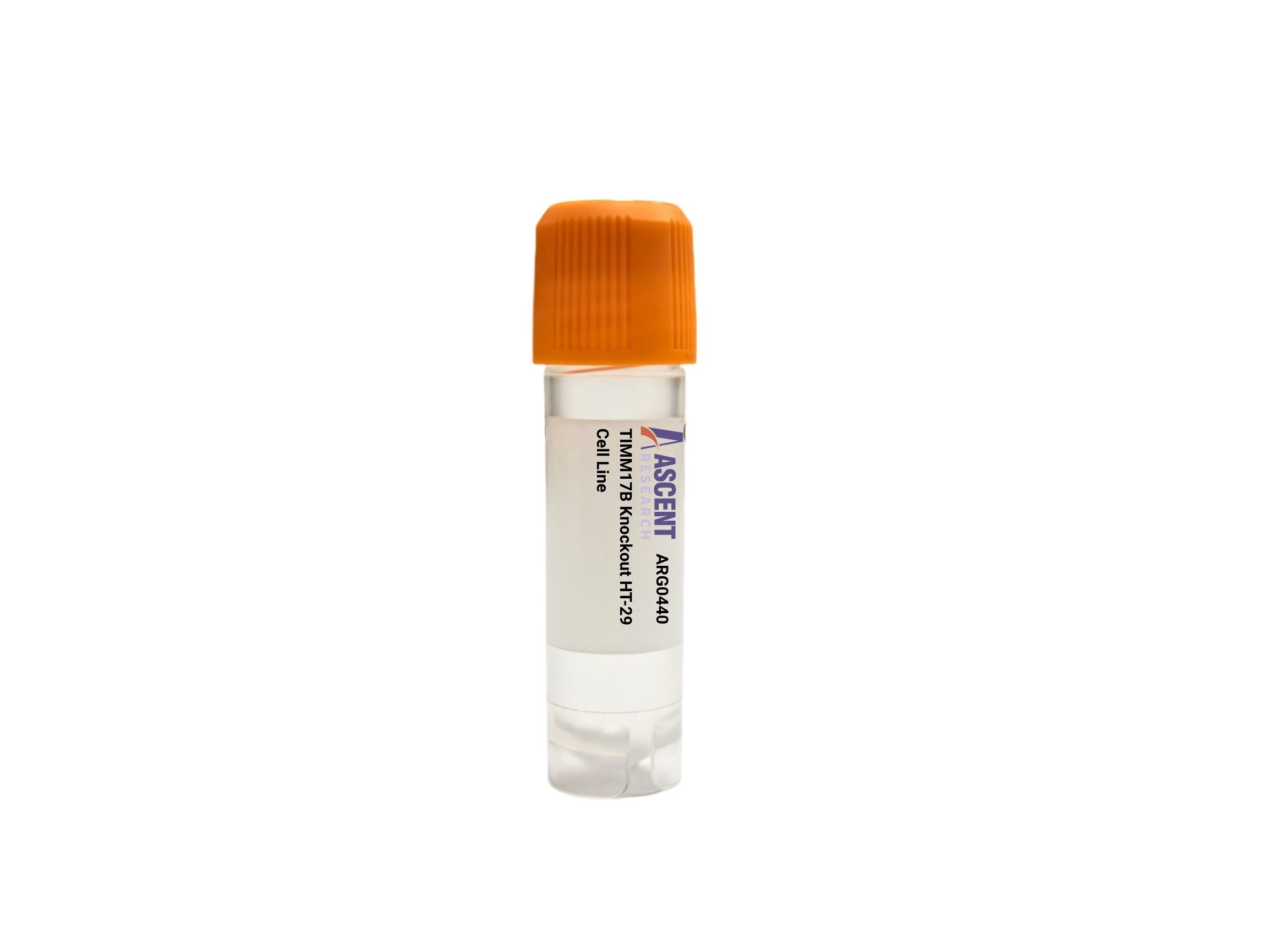
The TIMM17B Knockout HT-29 Cell Line is a CRISPR/Cas9-edited knockout cell line derived from human colorectal adenocarcinoma HT-29 cells. This model disrupts the mitochondrial TIM23 translocase subunit TIMM17B, enabling precise studies of mitochondrial protein import and its role in cellular metabolism and apoptosis. With ablation of TIMM17B, downstream interactions with TIMM23, TIMM17A, HSPA9, and PAM16 are compromised, leading to impaired respiratory chain assembly and altered apoptotic signaling. The line is ideally suited for mitochondrial dysfunction research in colorectal cancer, drug target validation, and metabolic flux analyses.
 NRG4 Knockout NCI-H1299 Polyclonal Cells
Cat. No. ARG17644
GHITM Knockout A549 Polyclonal Cells
Cat. No. ARG10249
HMG20A Knockout SK-HEP-1 Polyclonal Cells
Cat. No. ARG32581
CD3G Knockout HAP1 Polyclonal Cells
Cat. No. ARG43560
FTL Knockout AGS Polyclonal Cells
Cat. No. ARG3093
NRG4 Knockout NCI-H1299 Polyclonal Cells
Cat. No. ARG17644
GHITM Knockout A549 Polyclonal Cells
Cat. No. ARG10249
HMG20A Knockout SK-HEP-1 Polyclonal Cells
Cat. No. ARG32581
CD3G Knockout HAP1 Polyclonal Cells
Cat. No. ARG43560
FTL Knockout AGS Polyclonal Cells
Cat. No. ARG3093
 HMY-1
Cat. No. ARC0303
HMY-1
Cat. No. ARC0303
The TIMM17B Knockout HT-29 Cell Line is a CRISPR/Cas9-edited knockout cell line that provides a precise loss-of-function model for studying mitochondrial protein import. Derived through targeted disruption of the TIMM17B gene in the human HT-29 colorectal adenocarcinoma cell line, this product enables investigation of TIMM17B-dependent mitochondrial translocase activity. It serves as a robust platform for functional genomics, drug target validation, and dissecting mitochondrial biology in a defined genetic background.
The parental HT-29 cell line is a widely utilized human epithelial model originating from a colorectal adenocarcinoma. HT-29 cells retain an epithelial morphology and are extensively employed in intestinal biology and cancer research due to their well-characterized signaling pathways and suitability for metabolic studies. This host cell background provides a physiologically relevant context for examining mitochondrial function in the setting of oncogenic transformation and therapeutic resistance.
TIMM17B is an essential core subunit of the TIM23 translocase complex located in the mitochondrial inner membrane. It functions in concert with TIMM23, TIMM17A, TIMM44, and additional co-chaperones such as HSPA9 (mtHsp70), PAM16, PAM18, and DNAJC19 to mediate the ATP-driven import of nuclear-encoded mitochondrial preproteins. Upstream regulators including PGC-1??, NRF1, and TFAM transcriptionally control mitochondrial biogenesis and thus indirectly govern TIMM17B expression, while cellular stress signals modulate translocase activity. Downstream, TIMM17B disruption impairs the translocation of matrix-destined polypeptides, disrupting assembly of respiratory chain complexes, perturbing oxidative phosphorylation, and altering the mitochondrial unfolded protein response. This loss-of-function also compromises the submitochondrial localization of pro-apoptotic factors, thereby affecting cytochrome c release and downstream caspase cascades.
In the context of HT-29 colorectal cancer cells, TIMM17B knockout generates a powerful model for understanding mitochondrial dysfunction in tumor metabolism. Given the metabolic reprogramming characteristic of cancer cells, the knockout line reveals vulnerabilities linked to impaired mitochondrial import, including altered ATP homeostasis, redox imbalance, and aberrant apoptotic regulation. Thus, it is instrumental for exploring the intersection of mitochondrial biology and oncogenic signaling, potentially uncovering synthetic lethal interactions applicable to colorectal cancer therapy.
Principal applications include assessing the functional consequences of attenuated TIM23 translocase activity through mitochondrial protein import assays, measuring changes in ATP levels, and performing Seahorse metabolic flux analysis to profile oxygen consumption and glycolysis. This knockout line supports studies into the composition and assembly of the TIM23 complex using co-immunoprecipitation and immunofluorescence, and it is suitable for evaluating drug candidates targeting mitochondrial pathways in cancer. Additional uses encompass transcript profiling by RT-qPCR and protein expression analysis by Western blotting to validate downstream pathway modulation. For technical inquiries and ordering assistance, please contact Ascent Research.