Genome-edited Cells
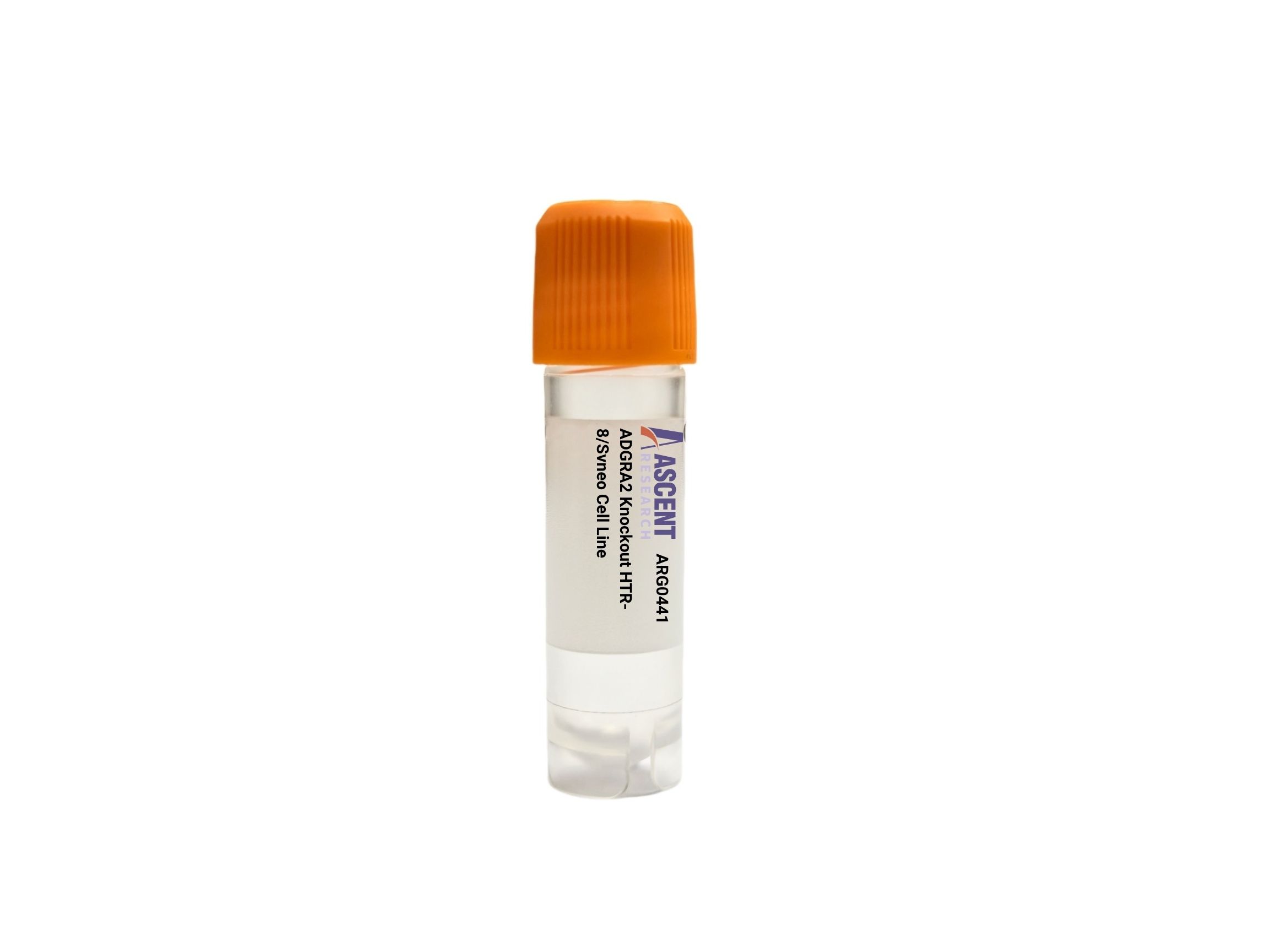
The ADGRA2 Knockout HTR-8/Svneo Cell Line is a CRISPR/Cas9-engineered human extravillous trophoblast model with targeted disruption of the ADGRA2 gene. It serves as a critical tool for studying Wnt/planar cell polarity signaling, where ADGRA2 partners with RECK and Frizzled receptors to transduce Wnt7a/Wnt7b signals through DVL to downstream effectors such as CTNNB1, RhoA, and Rac1, regulating cell adhesion, migration, and barrier function. This knockout cell line is ideal for investigating trophoblast invasion, placental development, and the role of ADGRA2 in implantation and preeclampsia pathogenesis. Researchers can employ established assays including Transwell migration, TEER measurement, immunofluorescence, and TOP/FOP Flash reporter analysis to dissect Wnt-dependent pathways and validate therapeutic targets.
The ADGRA2 Knockout HTR-8/Svneo Cell Line is a precisely engineered CRISPR/Cas9-edited knockout cell line designed to eliminate ADGRA2 (also known as GPR124) expression in a well-characterized human extravillous trophoblast model. This targeted gene disruption provides a robust loss-of-function platform for investigating the molecular mechanisms governed by ADGRA2 in placental biology. The HTR-8/Svneo background, combined with CRISPR/Cas9-mediated gene knockout, enables researchers to dissect ADGRA2-dependent signaling without confounding effects from wild-type protein, making it an invaluable tool for both mechanistic studies and translational research applications. The cell line is supplied as a stable, validated population suitable for a wide range of functional assays.
Derived from first-trimester human placental tissue and immortalized with SV40 large T antigen, the HTR-8/Svneo cell line faithfully recapitulates key properties of extravillous trophoblasts, including their capacity for migration and invasion into the maternal decidua. These processes are critical for successful placental implantation and spiral artery remodeling during early pregnancy. The parental cell line has been extensively employed to model trophoblast differentiation and to study the cellular responses that underlie pathologies such as preeclampsia and intrauterine growth restriction. The availability of an ADGRA2 knockout variant in this context allows for direct interrogation of gene function in a disease-relevant and physiologically meaningful cellular environment.
ADGRA2 functions as an endothelial-enriched adhesion G protein-coupled receptor that serves as a co-receptor for the Wnt7a and Wnt7b ligands within the Wnt/planar cell polarity (PCP) signaling cascade. At the molecular level, ADGRA2 forms a signaling complex with the glycosylphosphatidylinositol-anchored protein RECK and Frizzled receptors, including FZD4 and FZD7, as well as the co-receptors LRP5 and LRP6. This assembly recruits and activates the cytoplasmic phosphoprotein Dishevelled (DVL), which subsequently bifurcates signaling into ??-catenin-dependent (canonical) and ??-catenin-independent (non-canonical) branches. Canonical signaling results in the stabilization and nuclear accumulation of ??-catenin (CTNNB1), promoting TCF/LEF-mediated transcription, while the non-canonical arm activates small GTPases RhoA and Rac1 to orchestrate cytoskeletal rearrangements, cell adhesion, and directed migration. These interconnected pathways collectively regulate endothelial barrier integrity and angiogenic sprouting, processes that are conserved in trophoblast cell types.
Given the central role of extravillous trophoblasts in establishing the maternal-fetal interface, the ADGRA2 Knockout HTR-8/Svneo Cell Line provides a unique model to investigate how Wnt/PCP signaling controls trophoblast invasion and placental vascular remodeling. Loss of ADGRA2 in this context can illuminate the mechanistic underpinnings of failed deep placentation, a hallmark of preeclampsia and other hypertensive disorders of pregnancy. Furthermore, because ADGRA2 is implicated in broader vascular pathologies??including ischemic stroke, cerebral arteriovenous malformations, glioblastoma, and retinopathy??this cell line offers a surrogate system to explore conserved signaling requirements across endothelial and trophoblast lineages. Such comparative studies may reveal common regulatory nodes that could be targeted therapeutically to correct defective cell migration or barrier dysfunction.
Typical research applications encompass a broad spectrum of functional assays tailored to trophoblast biology. ADGRA2-dependent effects on cell migration and invasion can be quantitatively assessed using Transwell assays, while barrier integrity is directly measured by transepithelial electrical resistance (TEER). Western blotting and RT-qPCR enable confirmation of knockout efficiency and downstream target expression changes, such as CTNNB1, RhoA, and Rac1. Immunofluorescence microscopy facilitates the visualization of junctional protein localization and cytoskeletal reorganization. Reporter assays, notably TOP/FOP Flash luciferase systems, provide readouts for ??-catenin transcriptional activity, and RNA-seq can uncover global transcriptomic alterations. This cell line is particularly well-suited for drug target validation studies aimed at identifying modulators of the ADGRA2-RECK-Frizzled axis for preeclampsia intervention. For further information and technical support, please contact Ascent Research.