Genome-edited Cells
Liver
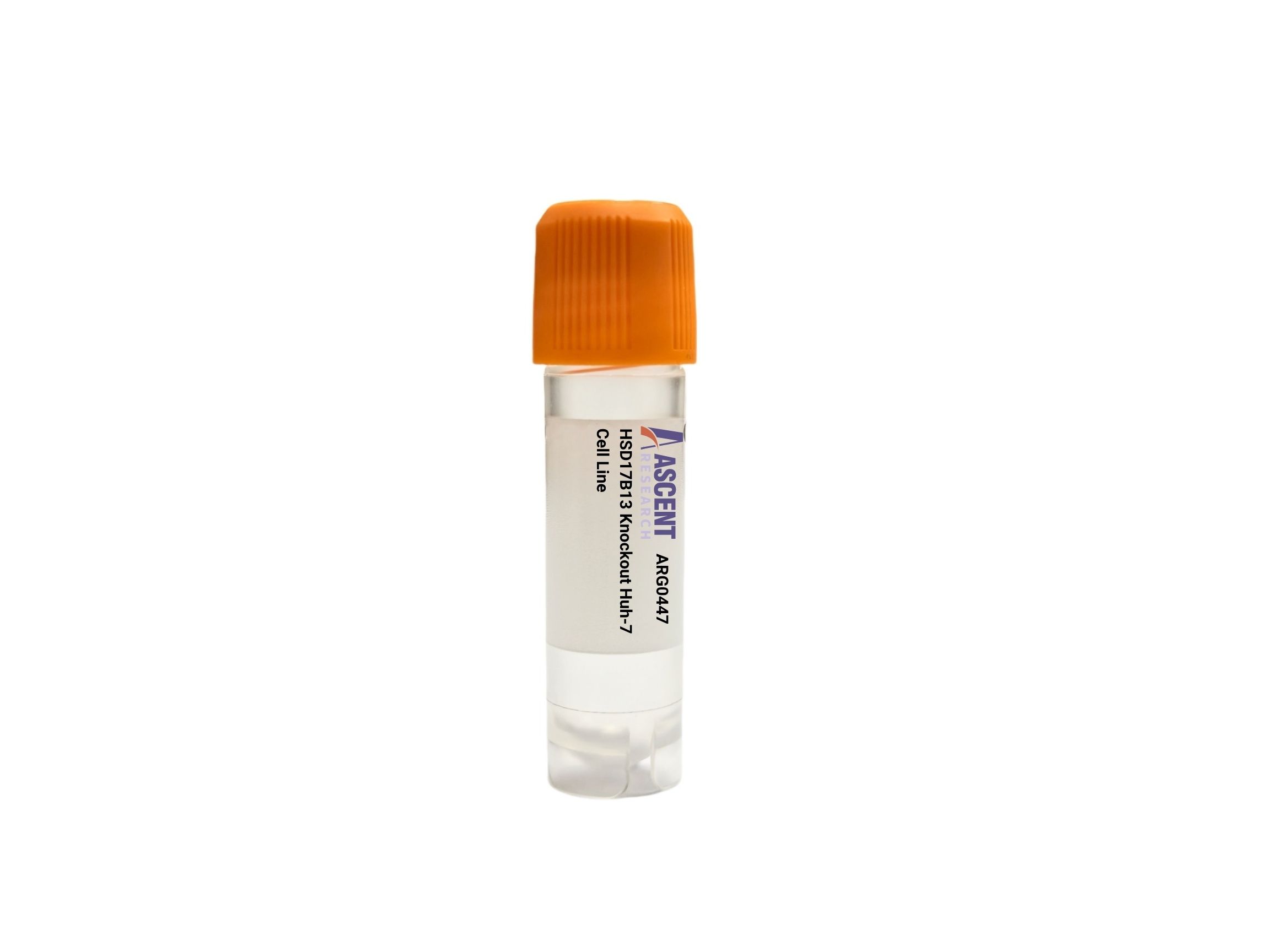
The HSD17B13 Knockout Huh-7 Cell Line is a CRISPR/Cas9-edited human hepatocellular carcinoma model offering targeted disruption of the HSD17B13 gene. Engineered in the liver-derived Huh-7 cell line, this tool enables investigation of HSD17B13??s role as a lipid droplet-associated enzyme in retinoid and steroid metabolism, linking it to hepatic lipid storage and non-alcoholic fatty liver disease (NAFLD) pathogenesis. Regulated by metabolic factors such as PPAR?? and SREBP-1c, HSD17B13 influences retinoic acid signaling through RAR/RXR and controls expression of lipogenic and inflammatory mediators. Applications include steatosis modeling, drug screening, and CRISPR-based validation using biochemical, imaging, and transcriptomic assays.
 CRIPT Knockout SK-HEP-1 Polyclonal Cells
Cat. No. ARG15877
CRIPT Knockout SK-HEP-1 Polyclonal Cells
Cat. No. ARG15877
 ACSL4 Knockout MDCK Cell Line
Cat. No. ARG43698
PCSK6 Knockout Hela Polyclonal Cells
Cat. No. ARG8462
ANKS3 Knockout NCI-H1299 Polyclonal Cells
Cat. No. ARG30338
EGFR Knockout A2780 Polyclonal Cells
Cat. No. ARG40729
ACSL4 Knockout MDCK Cell Line
Cat. No. ARG43698
PCSK6 Knockout Hela Polyclonal Cells
Cat. No. ARG8462
ANKS3 Knockout NCI-H1299 Polyclonal Cells
Cat. No. ARG30338
EGFR Knockout A2780 Polyclonal Cells
Cat. No. ARG40729
 PAC channel Gene Knockout HEK293T Cell Line
Cat. No. ARG0334
PAC channel Gene Knockout HEK293T Cell Line
Cat. No. ARG0334
The HSD17B13 Knockout Huh-7 Cell Line is a precisely engineered CRISPR/Cas9-mediated knockout cell model that disrupts the HSD17B13 gene in the well-established human hepatocellular carcinoma Huh-7 cell line. This product provides a powerful loss-of-function platform for investigating the molecular roles of HSD17B13 in hepatic lipid metabolism and disease pathogenesis. By eliminating HSD17B13 expression, researchers can dissect its contribution to retinoid and steroid metabolism, lipid droplet dynamics, and downstream signaling cascades in a liver-relevant cellular context.
Huh-7 cells originate from a well-differentiated human hepatocellular carcinoma and are widely recognized as a robust model for hepatocyte biology. They retain key hepatic functions, including lipid uptake, storage, and secretion, and are amenable to studies of viral pathogenesis, metabolic regulation, and drug metabolism. Their epithelial origin and ability to accumulate lipid droplets under appropriate conditions make them an ideal host for examining the interplay between hepatocarcinogenesis and metabolic stress.
HSD17B13 encodes a lipid droplet-associated enzyme that catalyzes redox reactions involving retinoids and steroids, thereby influencing lipid droplet morphology and cellular retinoic acid levels. Its expression is regulated by key metabolic transcription factors, including PPAR??, SREBP-1c, ChREBP, LXR, and FXR, and is responsive to insulin and glucose. Downstream, HSD17B13 activity modulates retinoic acid signaling through RAR/RXR nuclear receptors, alters droplet-associated proteins such as PLIN2, PLIN3, and CIDEC, and affects the expression of inflammatory cytokines (TNF-??, IL-6) and lipogenic genes (FASN, SCD1). In this network, HSD17B13 functions at a node connecting nutrient-sensing pathways to lipid storage and inflammatory responses.
In the Huh-7 background, HSD17B13 knockout is predicted to impair retinol metabolism, leading to reduced retinoic acid synthesis and attenuated RAR/RXR activation, ultimately dampening the expression of downstream targets like CYP26A1. This disruption also impacts lipid droplet stability and size through altered interactions with perilipin family members and ATGL. The resulting phenotype mimics protective effects observed in NAFLD and NASH models, including diminished steatosis and blunted pro-inflammatory signaling, making this cell line a valuable tool for dissecting disease mechanisms and identifying therapeutic targets.
This knockout cell line is suited for a broad array of experimental applications, including functional studies of HSD17B13 in hepatocyte lipid metabolism, NAFLD/NASH disease modeling, and screening of compounds that modulate steatosis or retinoic acid signaling. Representative workflows include western blotting and RT-qPCR for target validation, oil red O staining and triglyceride quantification for lipid assessment, retinol dehydrogenase activity and retinoic acid reporter assays for pathway analysis, as well as immunofluorescence, RNA-seq, ELISA, and flow cytometry for detailed phenotyping. For further details and technical support, please contact Ascent Research.