Genome-edited Cells
Pancreas
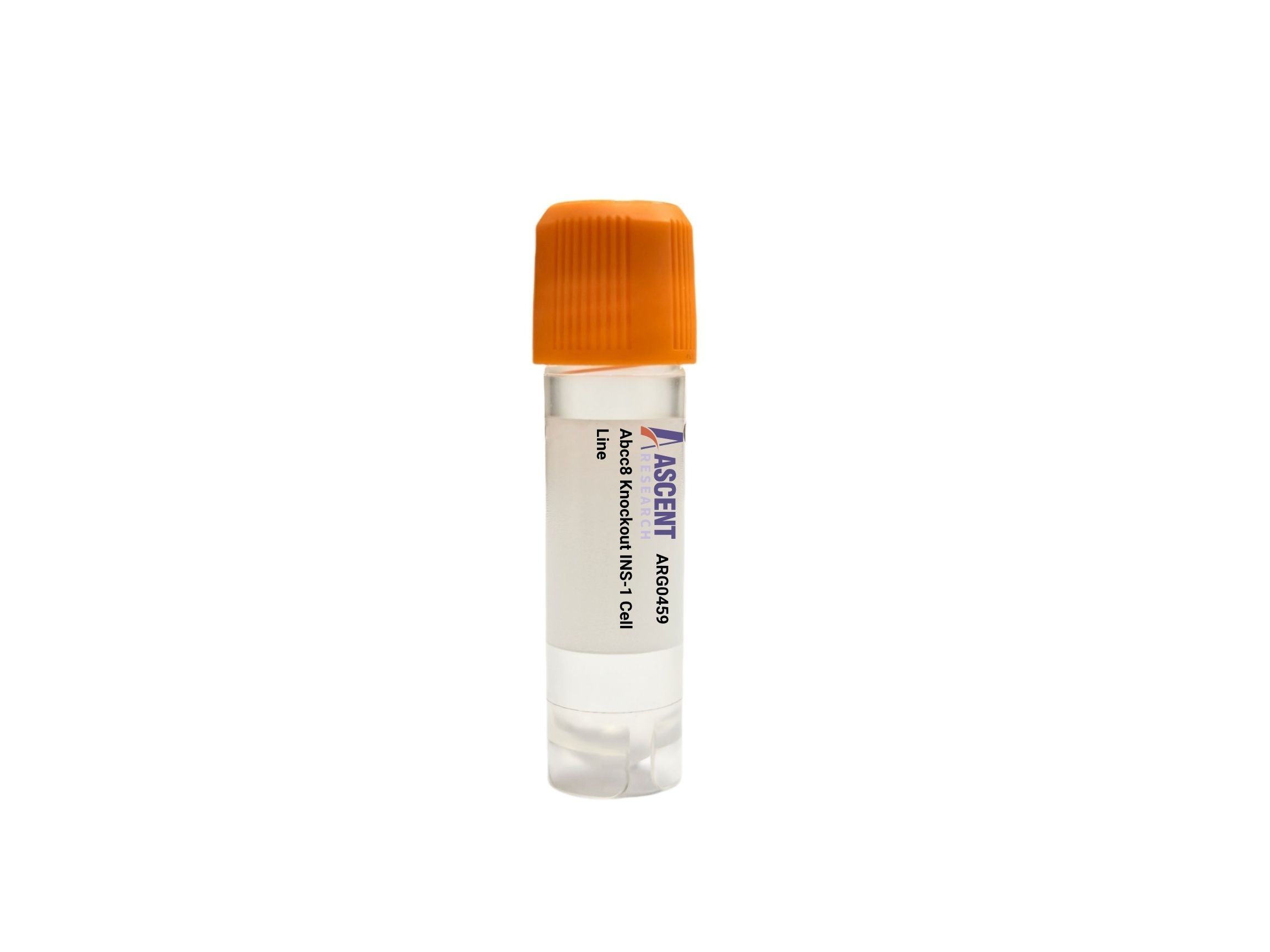
The Abcc8 Knockout INS-1 Cell Line is a CRISPR/Cas9-edited knockout cell model targeting the SUR1 regulatory subunit of K_ATP channels in rat pancreatic beta-cells. SUR1 partners with Kir6.2 to govern glucose-stimulated insulin secretion, and its disruption leads to constitutive depolarization and unregulated insulin release, mirroring human congenital hyperinsulinism. This knockout line enables mechanistic studies of K_ATP channel signaling, insulin exocytosis, and metabolic sensing. Applications include electrophysiology, calcium imaging, and drug screening for insulin secretagogues, making it a valuable tool for diabetes and beta-cell function research.
 BTN3A1 Knockout HAP1 Polyclonal Cells
Cat. No. ARG22151
FXR2 Knockout K562 Polyclonal Cells
Cat. No. ARG19417
ABCA6 Knockout Hela Polyclonal Cells
Cat. No. ARG20066
MAPK8IP3 Knockout NCI-H1299 Polyclonal Cells
Cat. No. ARG17963
BCORL1 Knockout huh-7 Polyclonal Cells
Cat. No. ARG28087
BTN3A1 Knockout HAP1 Polyclonal Cells
Cat. No. ARG22151
FXR2 Knockout K562 Polyclonal Cells
Cat. No. ARG19417
ABCA6 Knockout Hela Polyclonal Cells
Cat. No. ARG20066
MAPK8IP3 Knockout NCI-H1299 Polyclonal Cells
Cat. No. ARG17963
BCORL1 Knockout huh-7 Polyclonal Cells
Cat. No. ARG28087
 OAW28
Cat. No. ARC0680
OAW28
Cat. No. ARC0680
The Abcc8 Knockout INS-1 Cell Line is a CRISPR/Cas9-edited rat insulinoma cell line with targeted disruption of the Abcc8 gene, encoding the SUR1 regulatory subunit of ATP-sensitive potassium (K_ATP) channels. This loss-of-function model eliminates SUR1 expression, enabling dissection of K_ATP channel-dependent mechanisms in pancreatic beta-cell function.
The parental INS-1 line derives from an X-ray-induced rat insulinoma and retains glucose-responsive insulin secretion, making it a well-established model for beta-cell physiology. Its homogeneity and proliferative capacity make it ideal for knockout studies of insulin secretion and beta-cell dysfunction.
Abcc8/SUR1 partners with KCNJ11/Kir6.2 to form K_ATP channels, which are regulated by intracellular ATP/ADP ratio, MgADP, PIP2, and sulfonylureas. Channel closure upon glucose metabolism causes depolarization, opening voltage-gated Ca2+ channels (Cav1.2/1.3) and triggering Ca2+ influx. This promotes SNARE-mediated exocytosis of insulin granules. SUR1 also interacts with EPAC2 and Syntaxin-1A, linking cAMP/PKA signaling to the secretory machinery.
Abcc8 knockout disrupts K_ATP channel regulation, causing constitutive depolarization, Ca2+ influx, and unregulated insulin secretion??mimicking congenital hyperinsulinism with ABCC8 loss-of-function mutations. This model enables study of hyperinsulinemic states and counter-regulatory pathways, and facilitates pharmacological profiling of insulin secretagogues independent of K_ATP channel activity.
Applications include glucose-stimulated insulin secretion assays, patch clamp electrophysiology, Ca2+ imaging, and western blotting for downstream targets. The line supports screening of sulfonylurea analogs, investigation of SNARE-mediated exocytosis, and metabolic flux analyses. For ordering and technical support, contact Ascent Research.